On a warm late April evening, in a town a hundred kilometres north of Kyiv, the night is broken by two explosions. The first, almost muffled. The second, half a minute later, lights up the sky. In Ukraine, such blasts have become part of the night. Here, they came before the war.
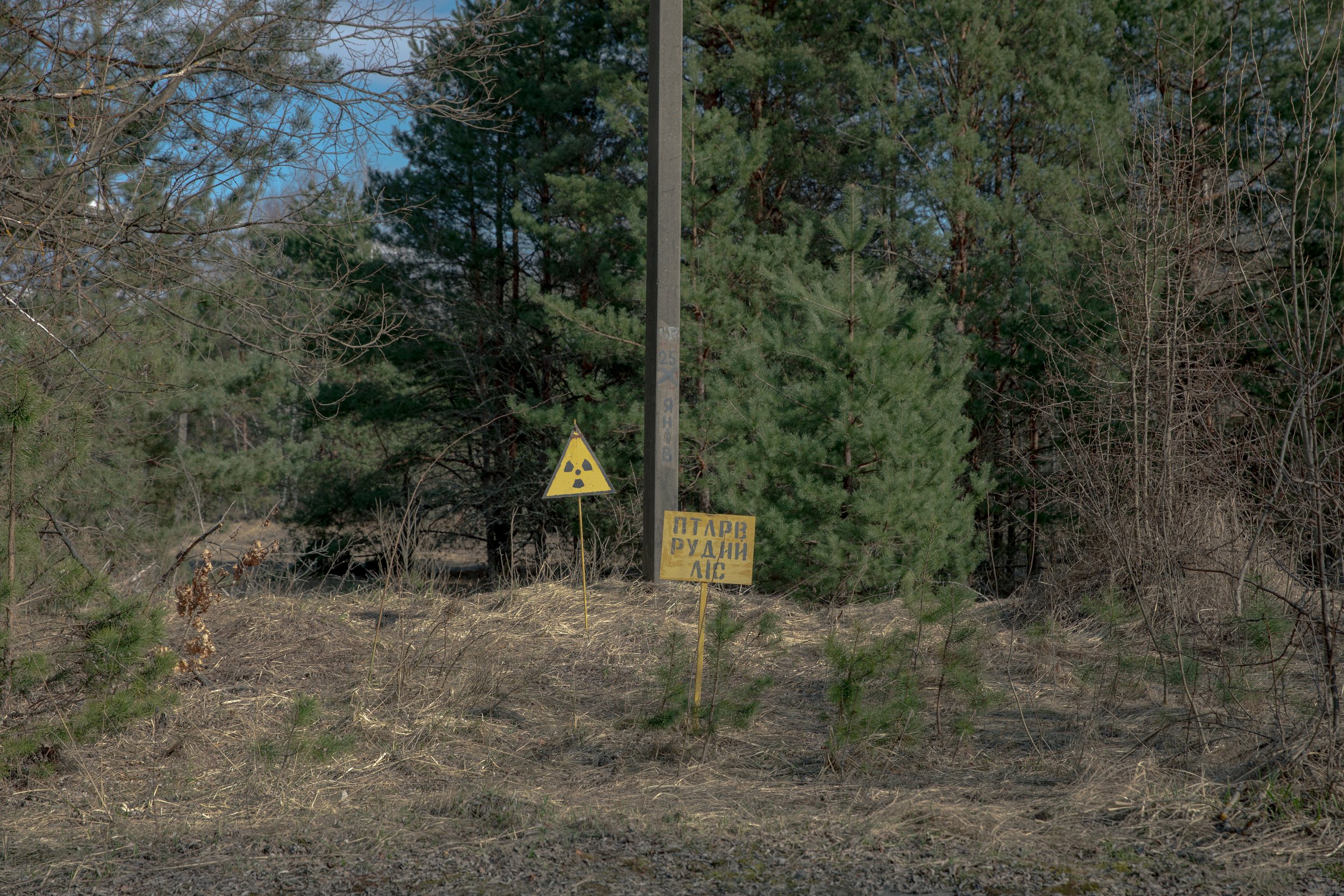
On the night of April 26, 1986, at the Chernobyl Nuclear Power Plant, a routine test was underway. Intended to simulate the reactor’s cooling capacity in the event of a blackout, it unfolded under flawed conditions. Human error meant the test went ahead despite insufficient power output, leaving the reactor in an extremely unstable state.
Design failures in the safety systems of the Soviet RBMK reactors led to a catastrophic surge when the emergency shutdown was initiated. Shortly after 1:20 a.m., reactor number four exploded, blasting its casing through the roof of the plant. A second, more powerful blast, equivalent in power to 225 tonnes of TNT, dispersed the highly radioactive core of the reactor.
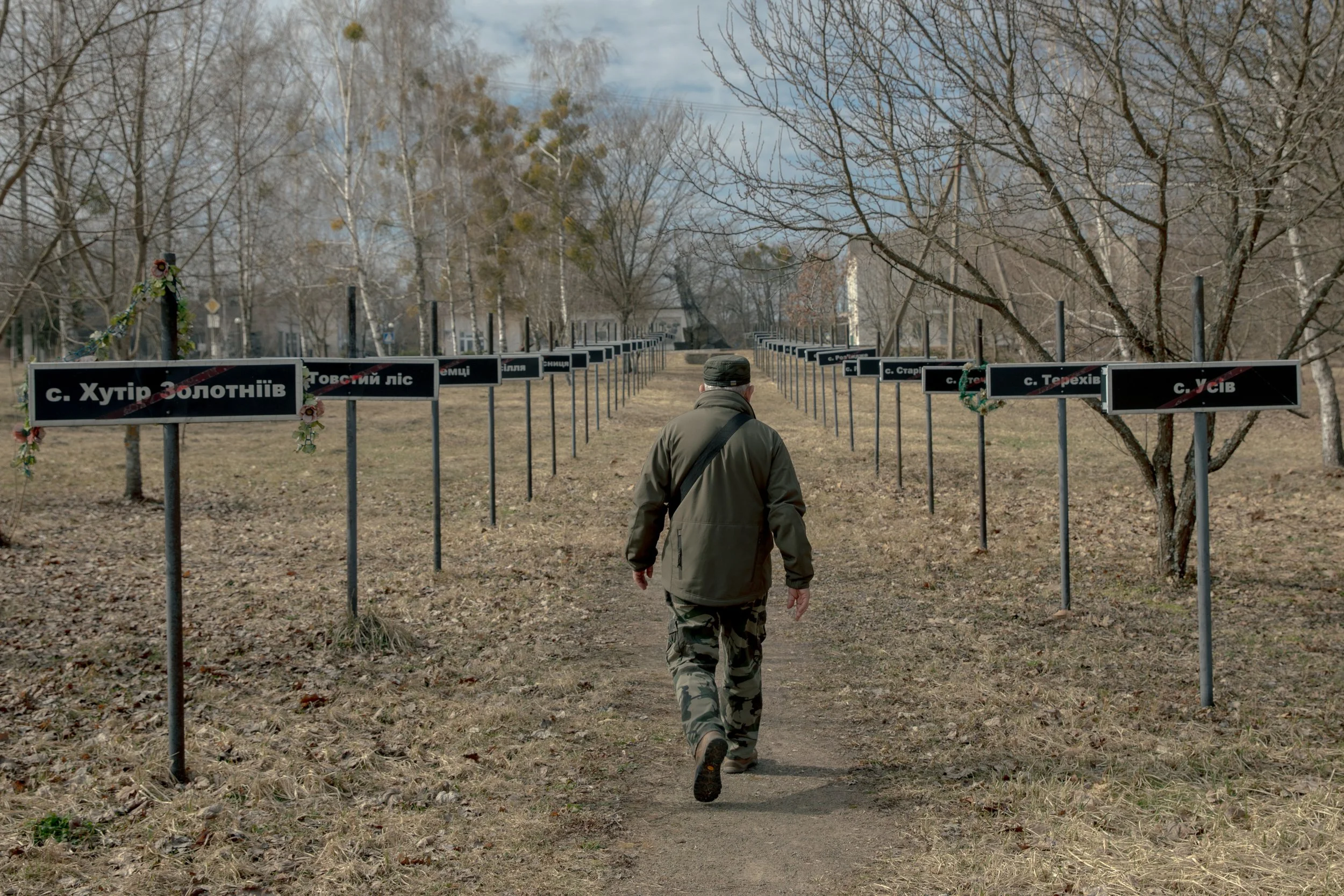
In the months that followed, more than 500,000 liquidators were mobilised by the Soviet Union to contain the fallout, sealing the reactor and stabilising the surrounding area. A thirty-kilometre perimeter was established around the plant, the Chernobyl Exclusion Zone.
The Geiger counter crackles steadily as the car winds closer to the power plant. In the forty years since the disaster, radiation levels have fallen across much of the exclusion zone, partly contained by the colossal sarcophagus encasing the damaged reactor.
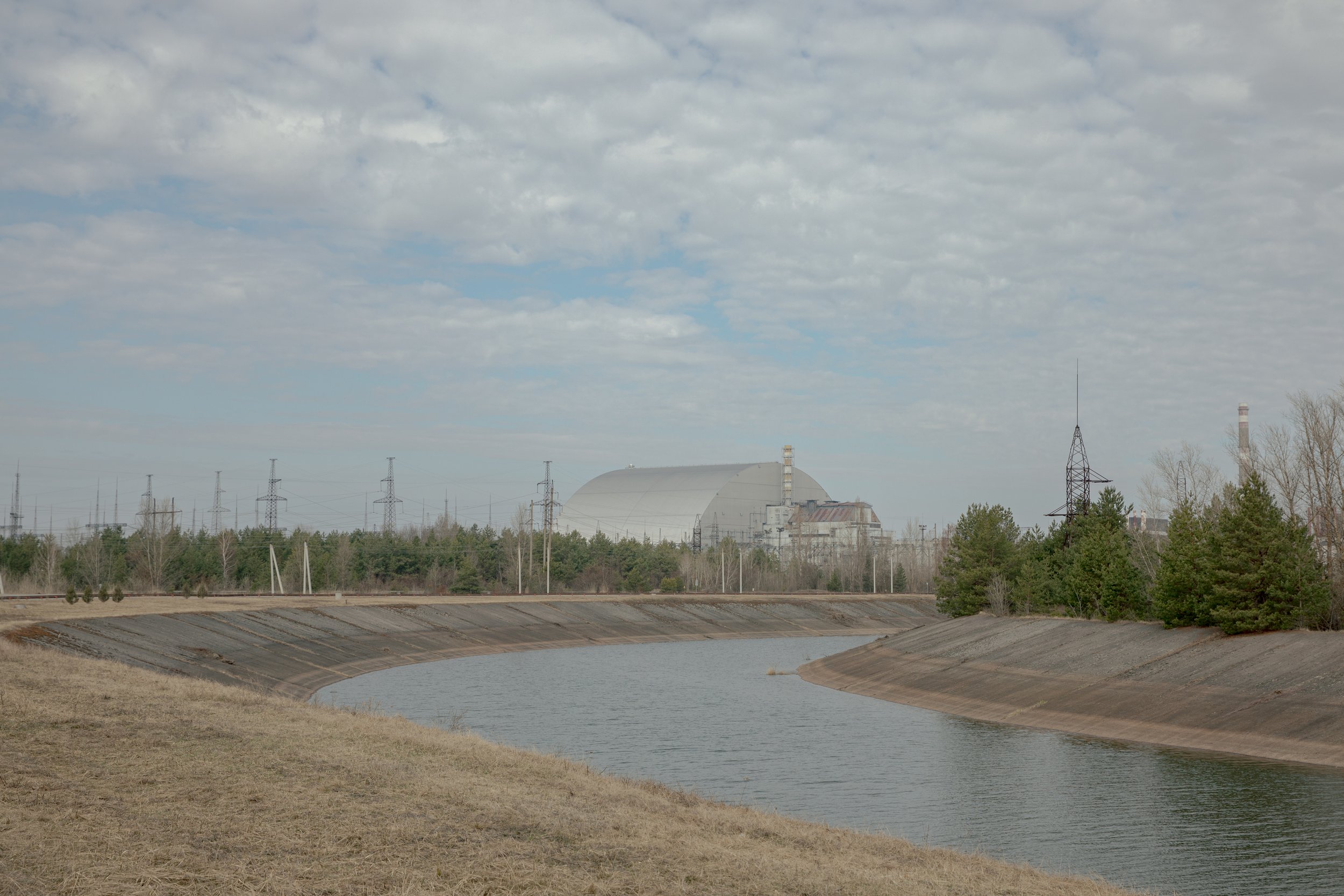
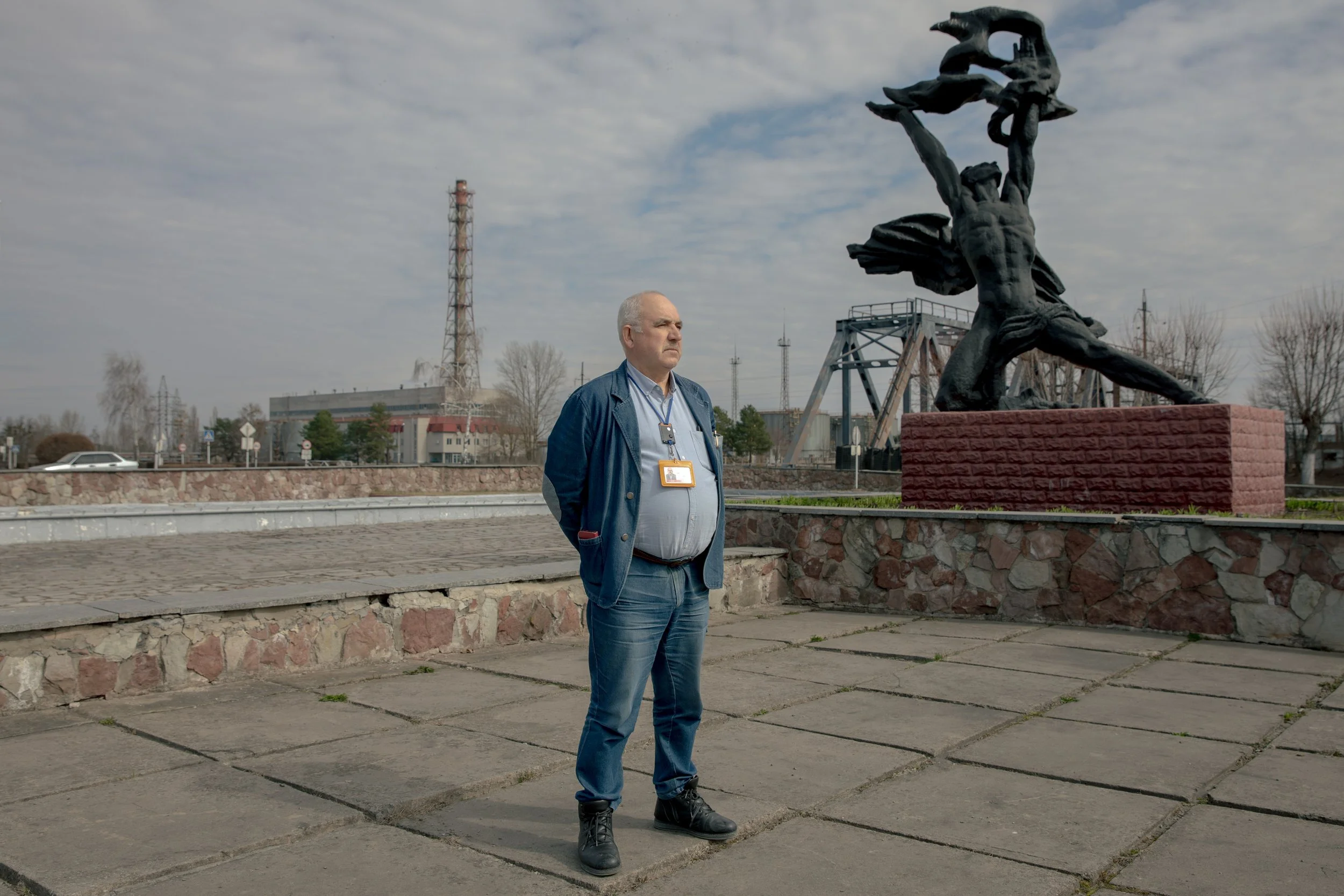
Today, it is one of Ukraine’s most restricted areas. Around 1,000 people remain on site to ensure the stability of the decommissioned power plant, located just 10 miles south of the Belarusian border. In the courtyard of the power plant, beneath a steel Soviet rendition of Prometheus, Volodymyr Falshovny, 61, looks toward the towering sarcophagus. A quartermaster at the plant, he has worked on site since the disaster.
In a double denim suit faded by time, Volodymyr has dedicated his life to the zone. “Today, we’re still working,” he says. “We’re preparing nuclear fuel storage, processing radioactive waste, and maintaining the facilities. There’s still a lot to be done.”
Volodymyr belongs to the State Nuclear Regulatory Inspectorate of Ukraine, which took over responsibility for the exclusion zone after the fall of the Soviet Union. While the initial response to the disaster focused on containing the reactor and erecting the sarcophagus, the inspectorate is now tasked with the long-term decommissioning of the plant, expected to continue until 2065.
“Like every anniversary, it brings nothing good for us, for the people of Chernobyl. The situation is only getting worse,” Volodymyr sighs as buses of plant workers arrive for their lunch break. “On the 24th of February, tanks were already in front of our administrative buildings”. Russian troops stormed and occupied the plant for a month. They ransacked the exclusion zone, compromising much of the vital monitoring installations.
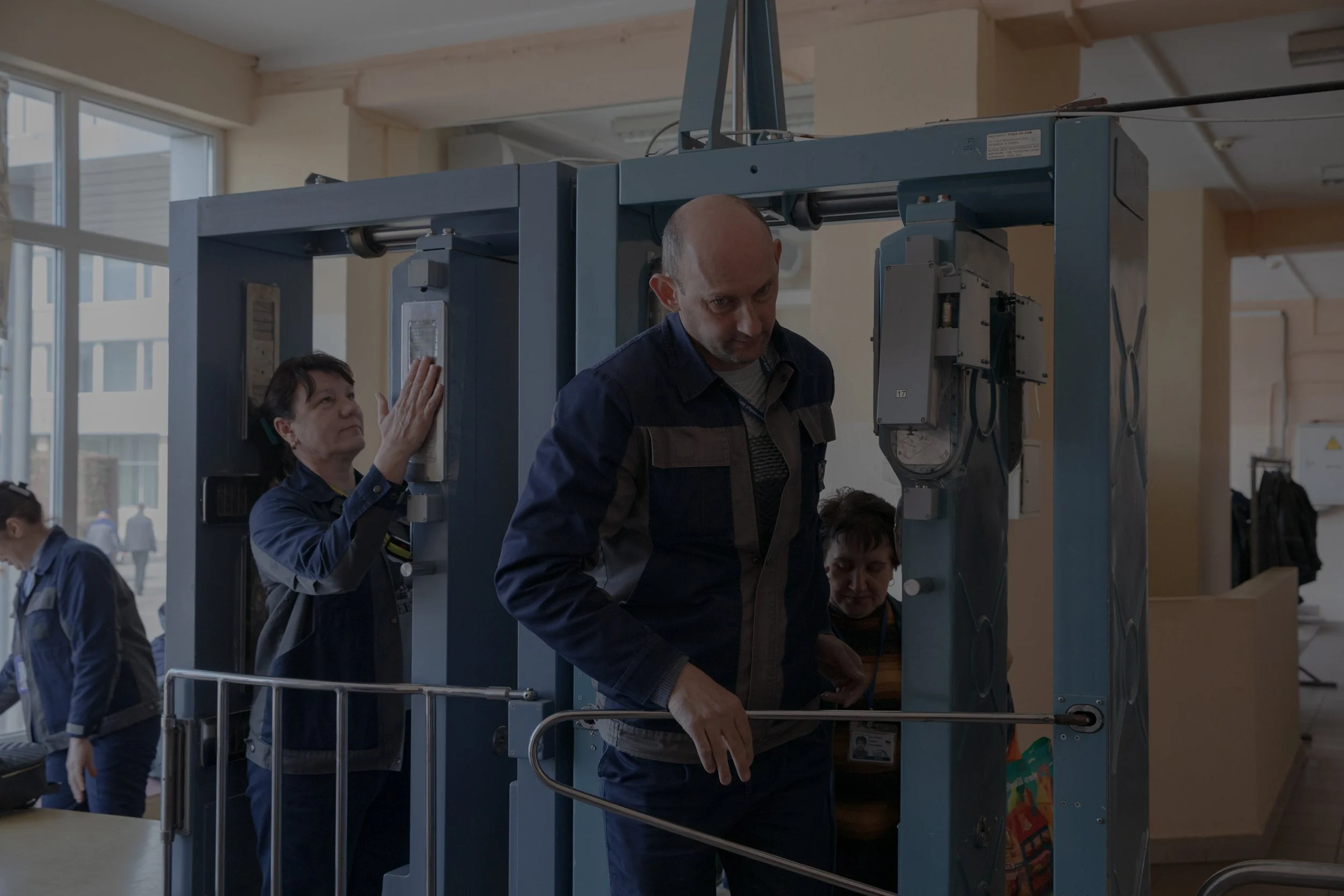
For Kirilo Akinine, 39, a chemical engineer specialised in monitoring local radiation levels, their aim was obvious. “They thought we were building an atomic bomb here,” a faint smirk forming beneath his immaculate lab coat. “They broke most computers, stole our hard drives. The Russians stole a lot of chemical agents used to detect strontium and other elements in the water. Without them, we can’t work properly. And it’s very expensive equipment.”
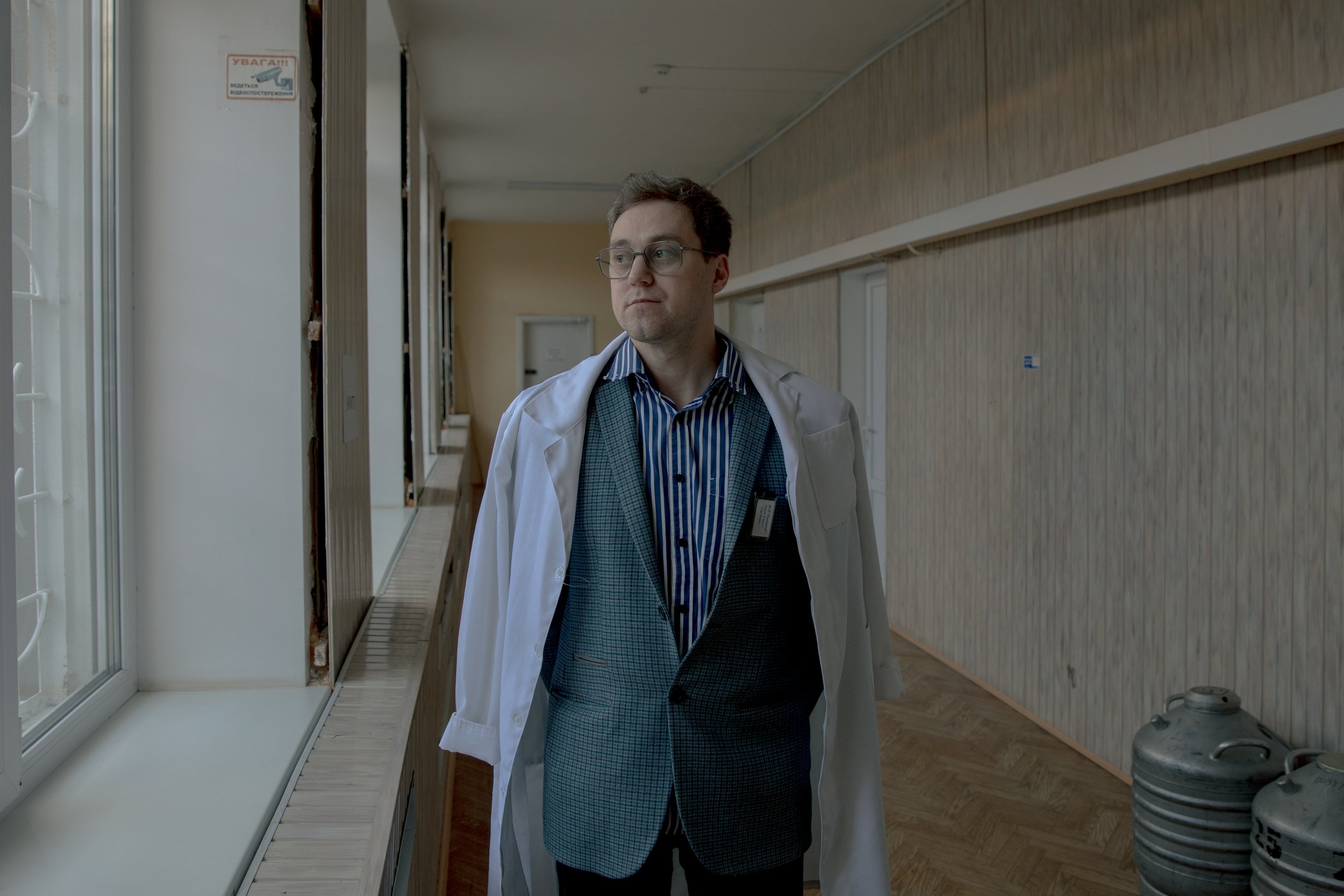
Forty years later, the threat of recontamination remains. Adapting to new threats, smaller teams now work in regular shifts across the zone. And the war keeps setting back the day the zone can be considered safe. In February 2025, a Russian drone struck the sarcophagus, damaging the integrity of its seal. No major leak occurred, but the containment system was compromised. An estimated €500 million is now required to restore it, in part pledged by international allies.
Beyond the power plant, the rest of the exclusion zone tells the scale of the disaster. The ruins of a city once home to nearly fifty thousand people blur in a maze of ruins. Khrushchevkas adorned with faded mosaics of communist ideals crumble. Through shattered windows, flaking wallpaper and rusting furniture lie at the mercy of the elements. Spiny trunks, still bare after the winter, weave their way through cracks in the concrete.
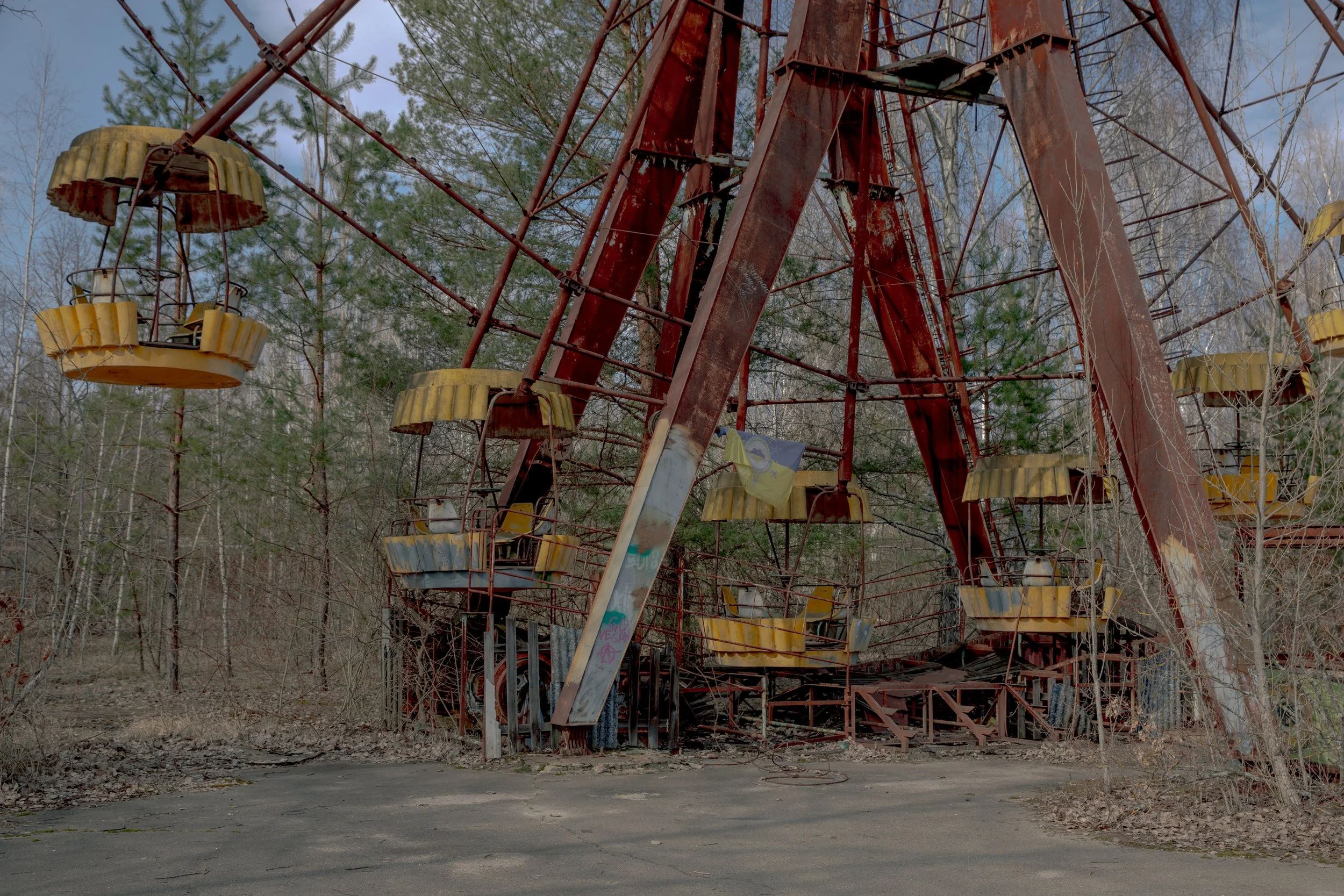
The town of Pripyat, three kilometres north of the power plant, housed nuclear workers and their families. Founded in 1970, it was supposed to be the blueprint for future Soviet cities. Built around modern city planning and amenities, Pripyat before thedisaster still lives in the memory of those who lived there. On the banks of a derelict waterfront that once linked the town to the rest of the Union by ferry, what remains of café Pripyat takes shape behind dense overgrowth.
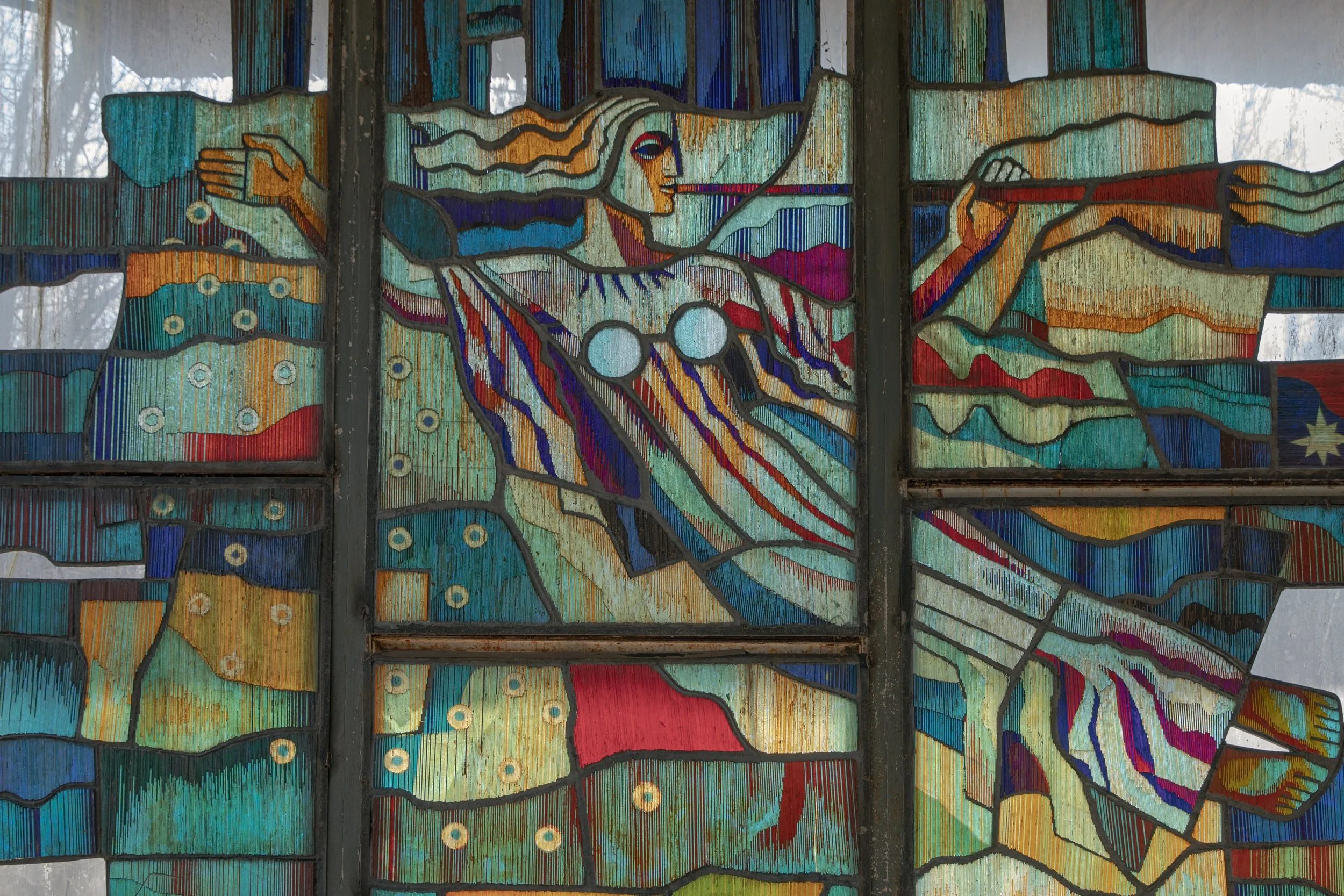
Inside the modernist building, Mykola Yevsiienko, 70, recalls his youth. “My family moved to Ukraine in 1973. I have lived in Pripyat ever since.” In the back room of the café, instead of the floor-to-ceiling windows overlooking the port, a stained-glass mosaic spills colourful fragments of light across his face. Ethereal female figures float in space, the town’s gentle guardians. “Kids helped the artist install the glass when they were in school”. Mykola is one of the 50,000 people who lived or grew up before the disaster.
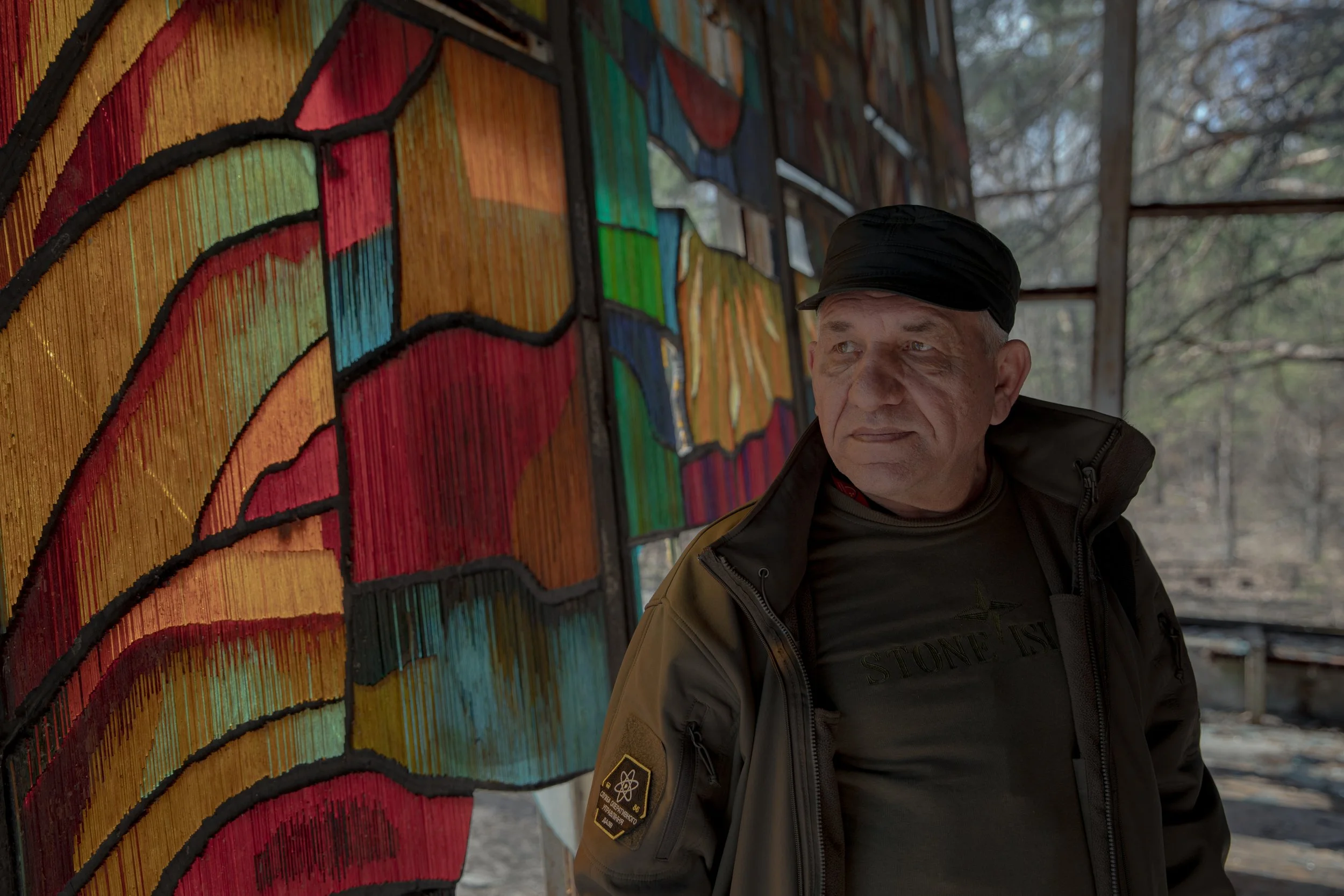
“All my life is linked to this place,” he says, his eyes lingering on one of the figures. He started working at the Chernobyl Nuclear Power Plant in 1977, after the army. When the disaster happened, he was at home, in Pripyat. Around five in the morning, his supervisor called him. “I asked him what had happened,” he says. “He said, ‘Come, you’ll see.’”
For the next two years, Mykola became one of the 500,000 liquidators in charge of the cleanup by the Soviet government. Operating and living in the exclusion zone, he was exposed to extreme levels of radiation. Health and safety protocols were minimal, and although the exact number is unknown, thousands of those who worked on site, later suffered from radiation-induced illnesses such as thyroid cancer. “In 1988, I had to take a break. It all became too difficult, physically and emotionally.”
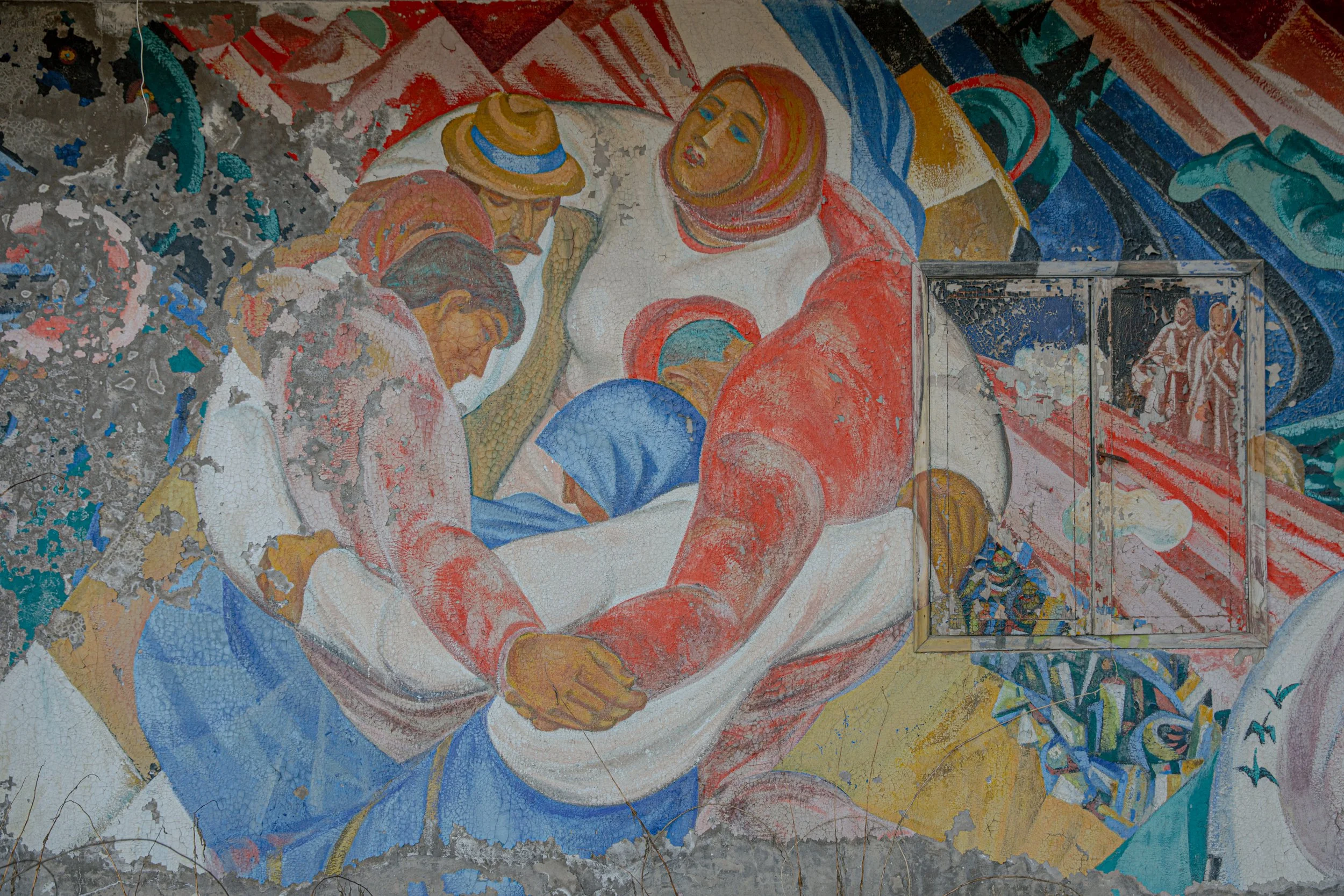
What remains of Pripyat carries the weight of the tragedy. Overlooked by a long-defunct neon sign, the palace of culture Energetik stands frozen in time. The vast structure once housed a theatre, cinemas, swimming pools, boxing rings and assembly spaces. The palace aimed to cultivate community and strength. Forty years later, what remains are washed-out murals depicting unity amongst the people of the union, peasants and workers huddled together. In a nearby storage room, stacks of propaganda posters gather dust under the watchful eyes of forgotten party officials.
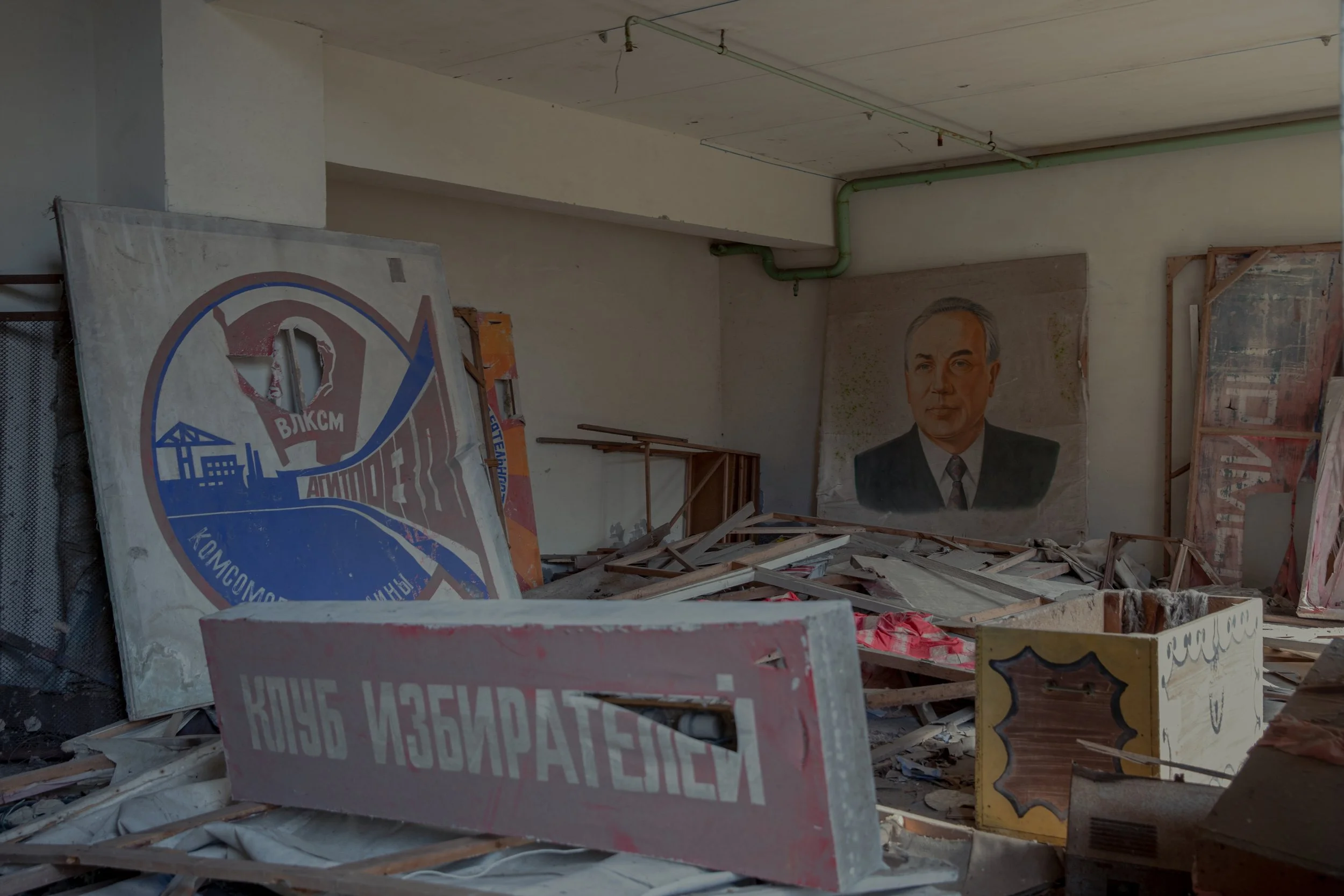
Mykola cautiously steps over a box full of new year decorations, presumably last used a few months before the disaster. “As April 26 approaches, I remember,” he sighs. “What I was doing, how I reacted. The rest of the time, we live with the problems of the present. But on that day, we remember.”
For most, life in the zone ended in 1986. Evacuated 36 hours after the accident, tens of thousands never returned. Today, a handful of civilians remain around Chernobyl, in spite of the radioactive hazards, invading armies and the collapse of infrastructure.
“This land is cursed,” says Mikhaïlo Pavlovytch, leaning against his cane. At ninety years old, he is among the estimated hundred remaining settlers in the zone. “Only despicable people could have built a nuclear power plant on this land. The disaster was already written into its very name.” A former schoolteacher, Mikhaïlo lived here long before the power plant. At six years old, he was wounded by German bombs when the region was occupied.
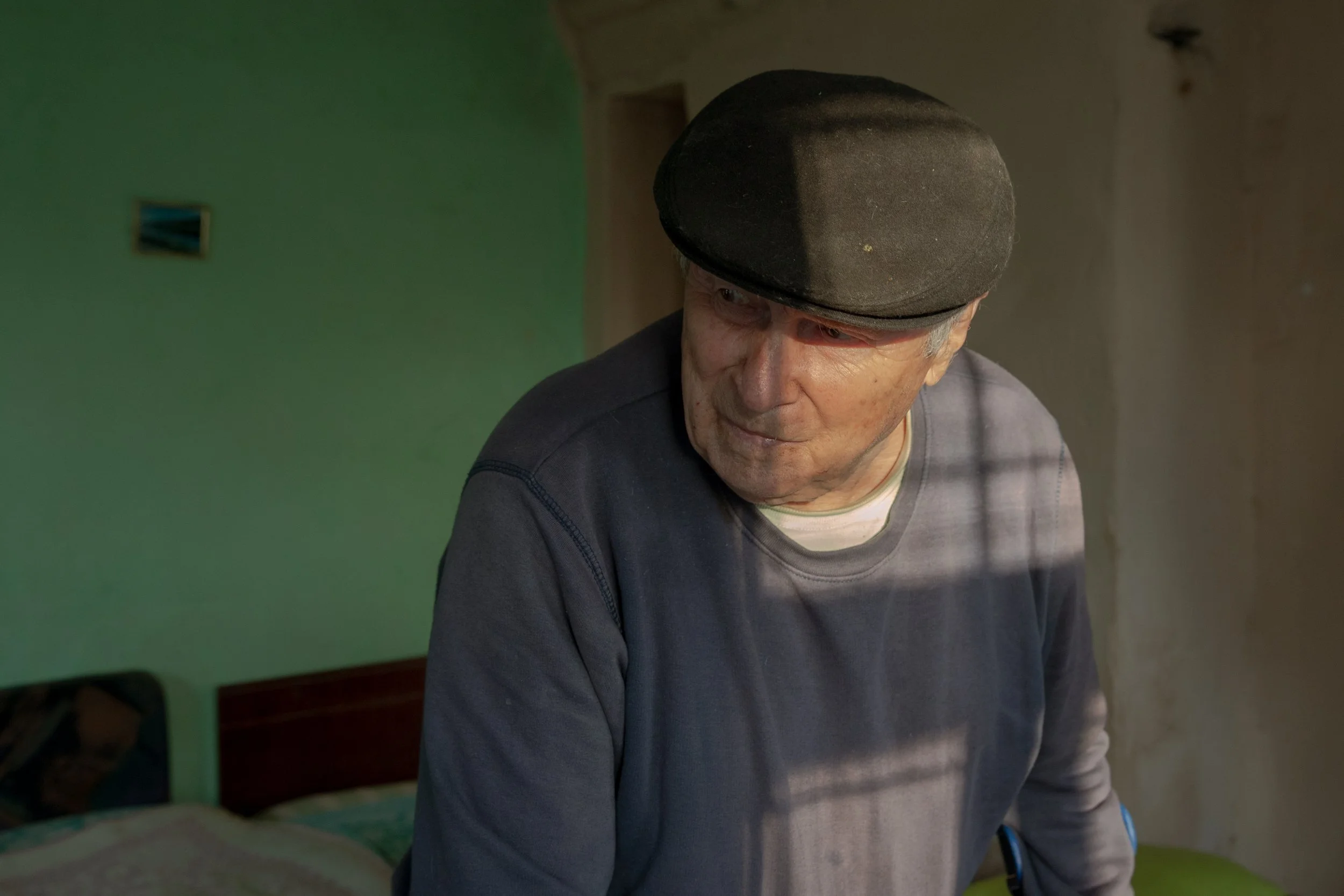
In his courtyard, he has assembled a small open-air museum from objects gathered over decades: Nazi medals, a rusted Mosin-Nagant rifle, an effigy of Lenin. “During the Russian occupation, I had a Ukrainian flag.” He points to a hastily painted red metal door at the end of the yard, blue and yellow tones showing through. “I was told the Russians were coming and that they might kill me because of it. So I painted over it to hide it.”
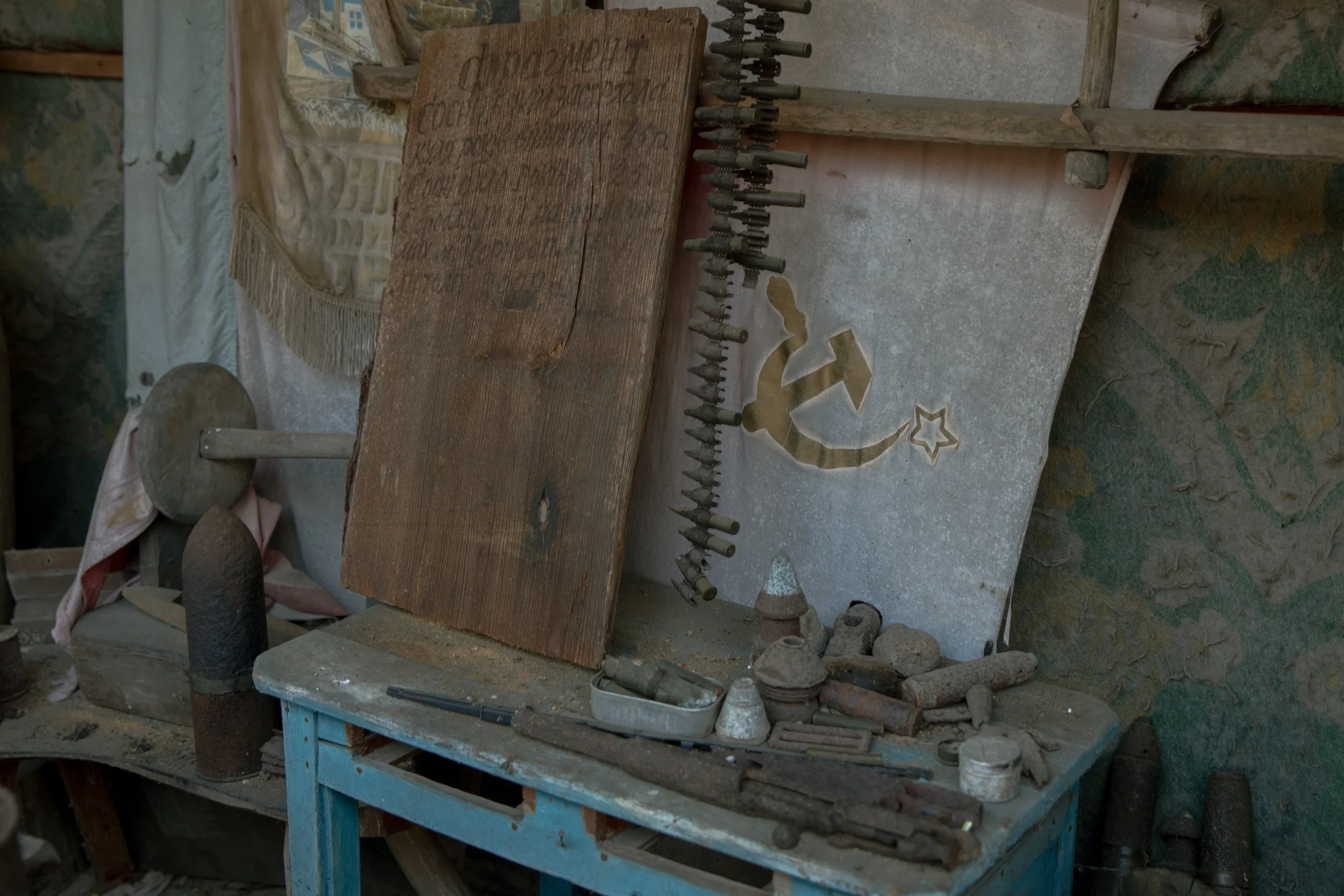
Mykhaïlo’s wife passed away a few years ago from cancer after spending her life with him in the zone. “And she was ten years younger than me,” he says, holding her black and white portrait. “People are suffering. Ukrainians are suffering.” Now, he lives alone in his wooden cabin, telling Chernobyl’s stories to the few who wander through the zone. As the fading daylight catches in his melancholic eyes, he strikes up one last song.
“What destroyed my entire future,
What destroyed my entire future?
We bring our own sacrifices to Europe,
Yet here, dear children still walk and play.”