Every Day We Clear Them: Inside Haiti's Last Stand
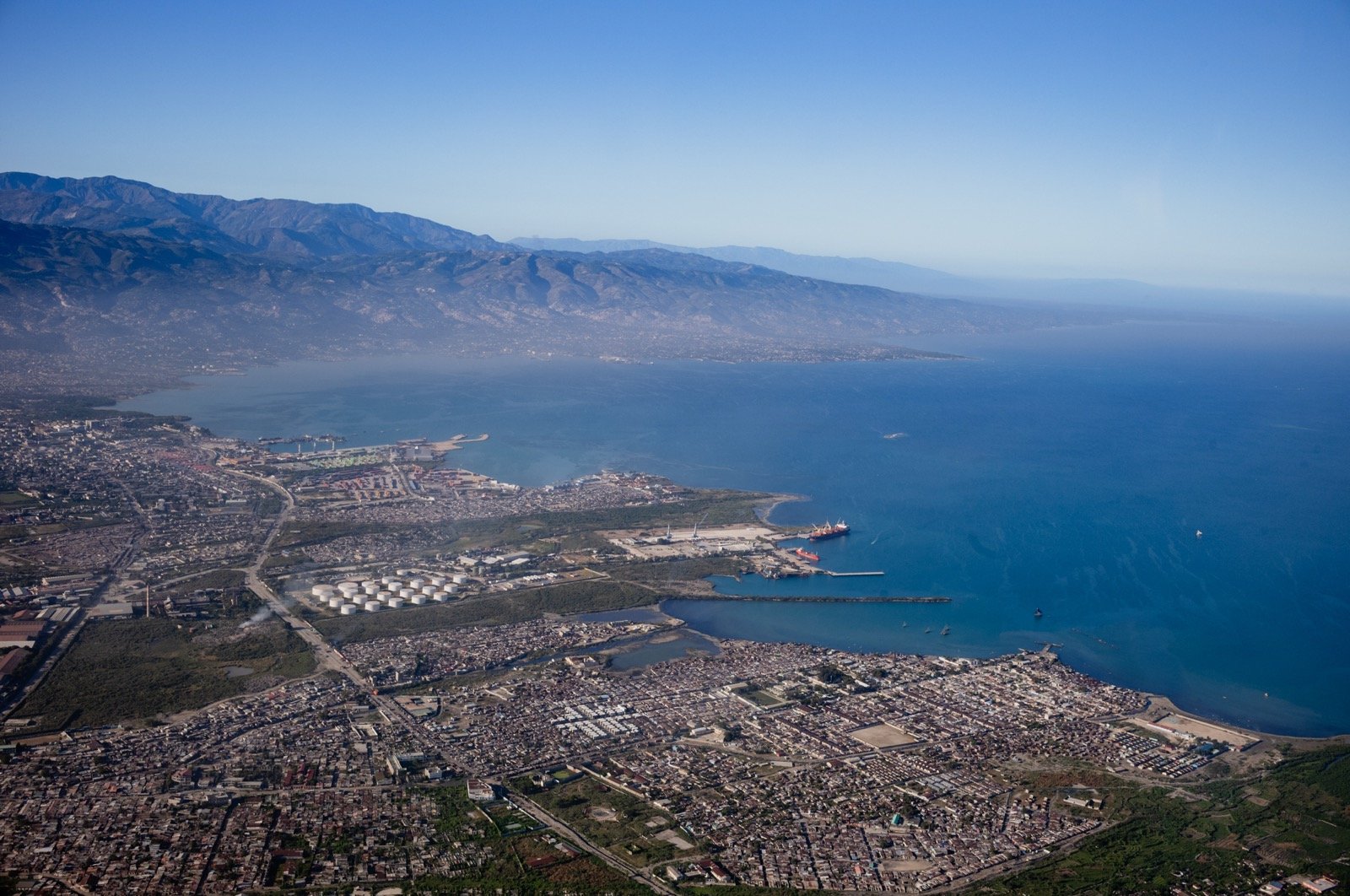
The tarmac of Port-Au-Prince Airport glares barren through the smoke of burning waste, the Haitian sun, and over the noise of shaking armor plates and the helicopter's engine. Avoiding the gunfire of gang territory, the Pilot routes the ancient aircraft out over the port. A capsized cargo ship rusts into Caribbean cobalt waters. The Haitian capital’s historic center is a belt of green where jungle is taking back streets emptied by fighting. Lowering the helicopter to 2000 meters, the range of gunfire the Pilot encountered last week, only occurs once he is directly above the runway. The runway is empty, abandoned by commercial traffic. At this elevation, the fields of smoldering trash are visible between sprawling ghettos. Later a police officer will say it’s not all burning trash, but car tires burned to rally gangs. Clearly articulated at 1000 meters above the runway are the armored vehicles encircling the airport.
Haiti is a cursed half island. Formatively a French slave colony, it’s know nothing but turmoil, foreign occupation, local dictatorships, and horrific natural disasters since It’s liberation. Following the assassination of President Martine Moïse in 2021 interim governments have struggled to combat gangs exerting control over the capital, or hold an election. In 2023 gangs formed a cohesive front uniting against the government, calling themselves Viv Ansem. Kidnapping, narcotics and smuggling now fund their war for the capital city of Port-Au-Prince, where 5,600 have been murdered in the past year, and an estimated one million have been displaced. US support for the country has evaporated, thousands NGO’s that served as the backbone of essential services have left amid increased kidnappings. What remains are the Haitian police, and a handful of international peacekeepers holding onto an estimated 10% of the city against gang control.
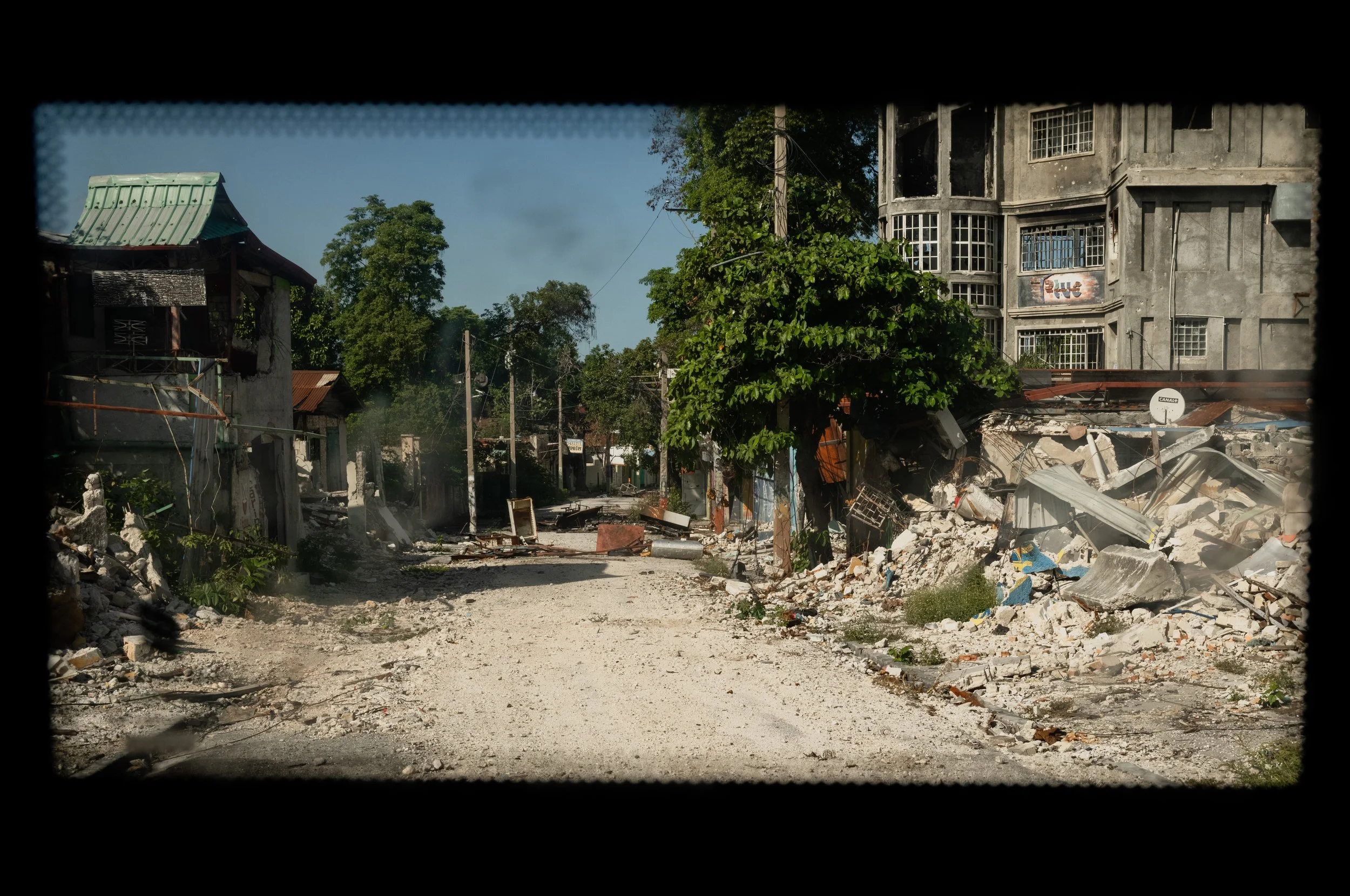
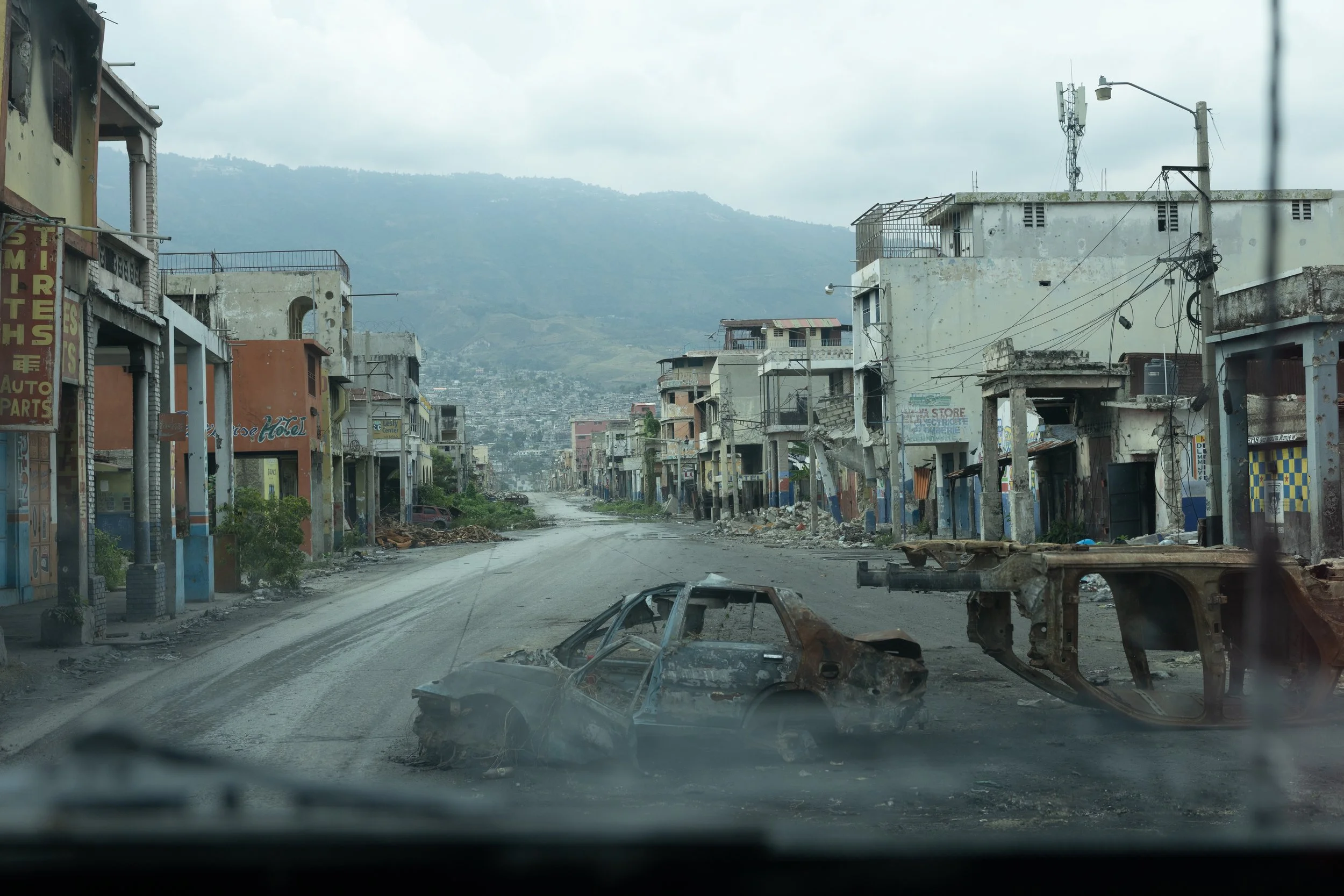
Port-Au-Prince’s central district was once called the National Palace, now it’s called No-Man’s-Land. The area includes the American Embassy (fired on), The National Palace (heavily damaged), and the University Hospital (abandoned, then occupied by gangs). In New York it would be 5th avenue, in LA: Beverly Hills, in Haiti it’s desolate, bullet-riddled, and barricaded. On it’s fringes thousand of former residents sleep in shanties or the street. Only the vines of the jungle retaking the cement thrive.
Haiti’s newly fielded, aggressive police unit: the GSF (Gang Suppression Force) ventures much farther than the Kenyan peacekeepers, whose hesitation becomes justified just a few feet beyond the barricades blocking the streets. The barricade are the line in the sand of-no-man’s-land where Port-Au-Prince becomes a de-facto war zone.
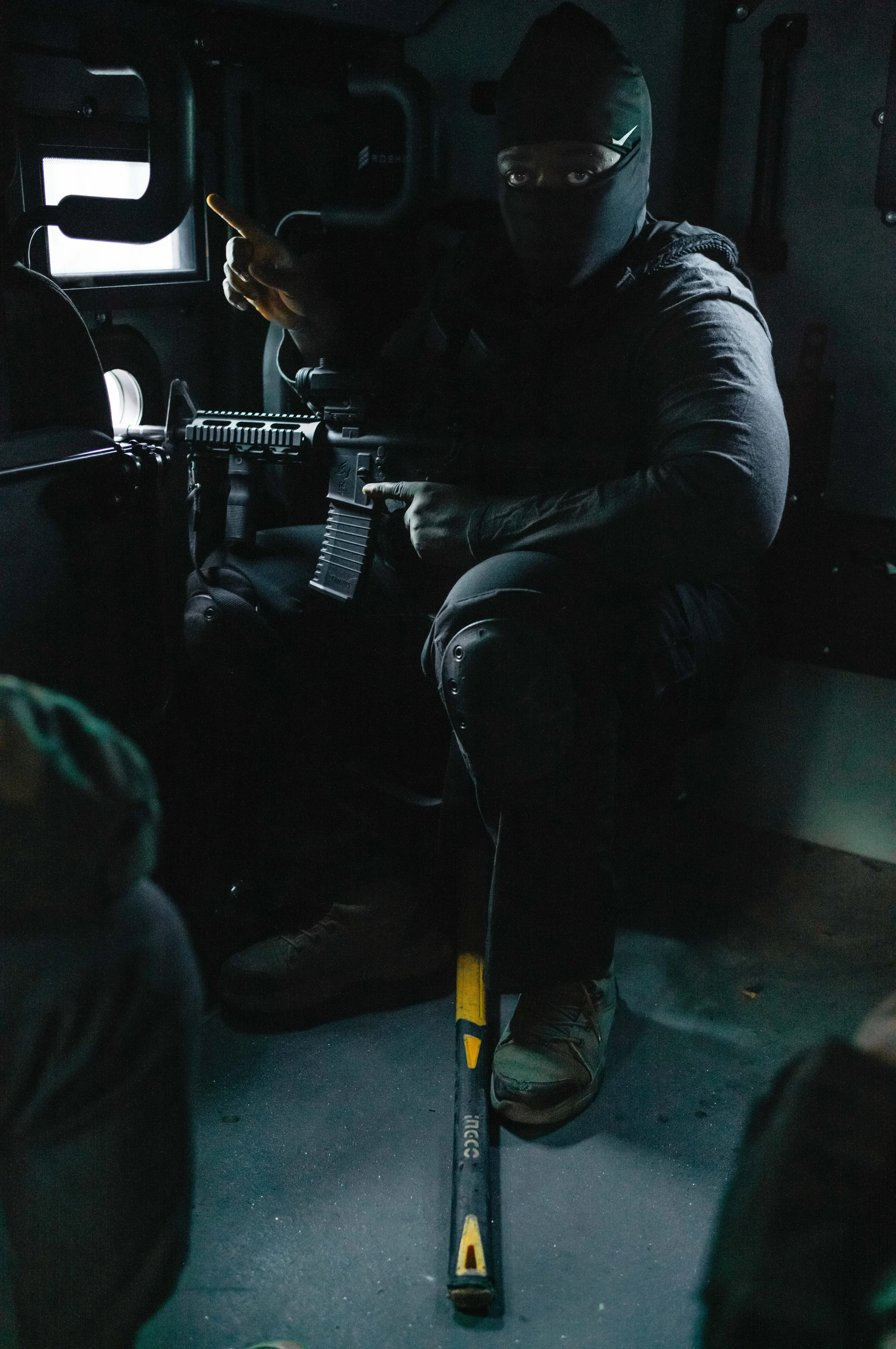
The first armored GSF police vehicle slowly impacts a barricade, it rolls over then crushes pipes and construction materials blocking the way. There is a metallic shriek that clings to the undercarriage. The three officers in the rear compartment point their weapons out of gunports. The ports don't allow precise aiming, and in a few seconds, when then the gang begins it’s ambush from 30 feet away, its clear aiming isn't necessary. There is the heavy wet thud of large caliber bullets impacting the vehicle's armor, one, two, three shots, than a stream like hail on a tin roof: a lighter caliber. The vehicle's machine gunner maneuvers his armored turret and begins firing in the direction of the ambush.
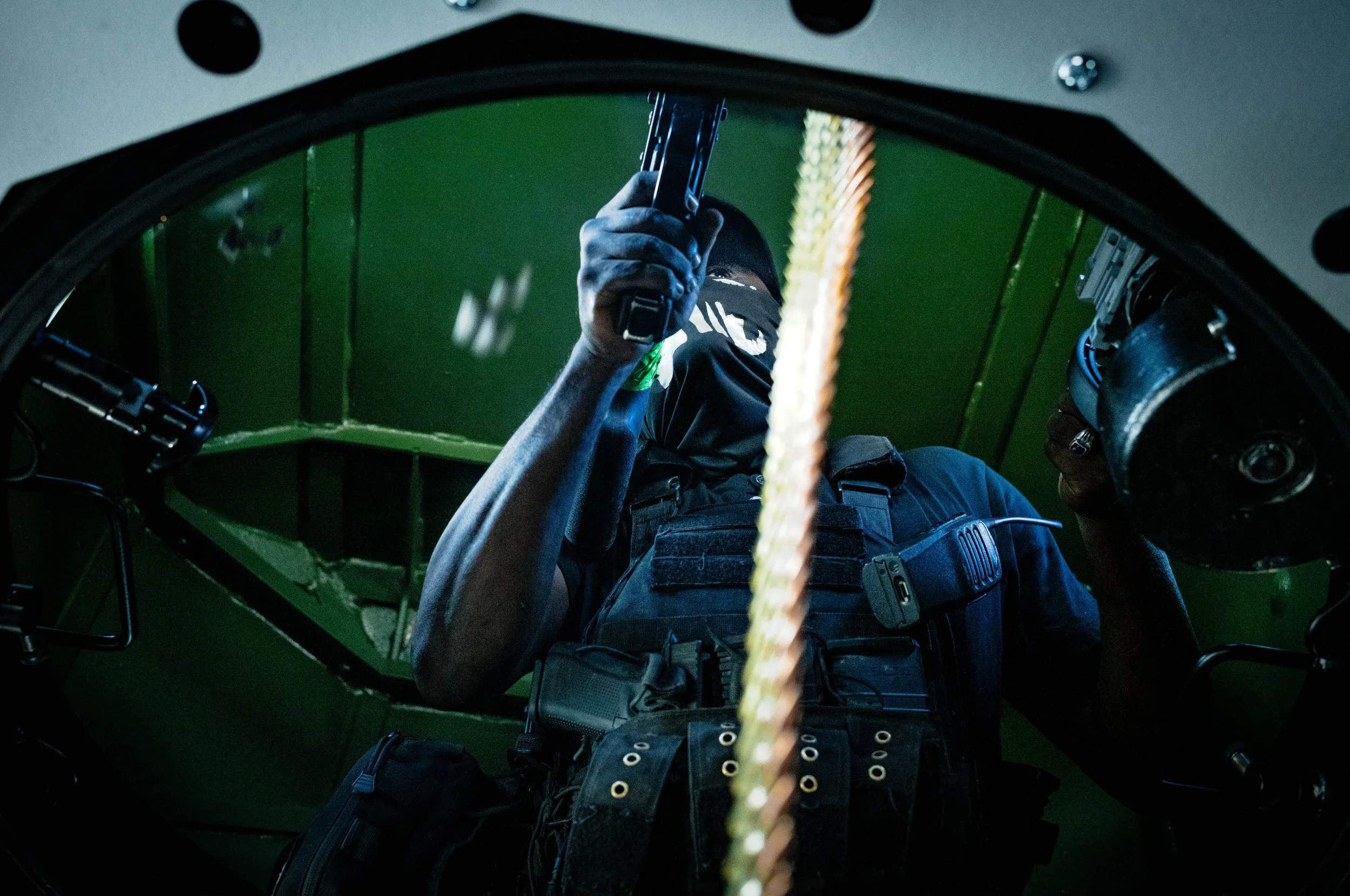
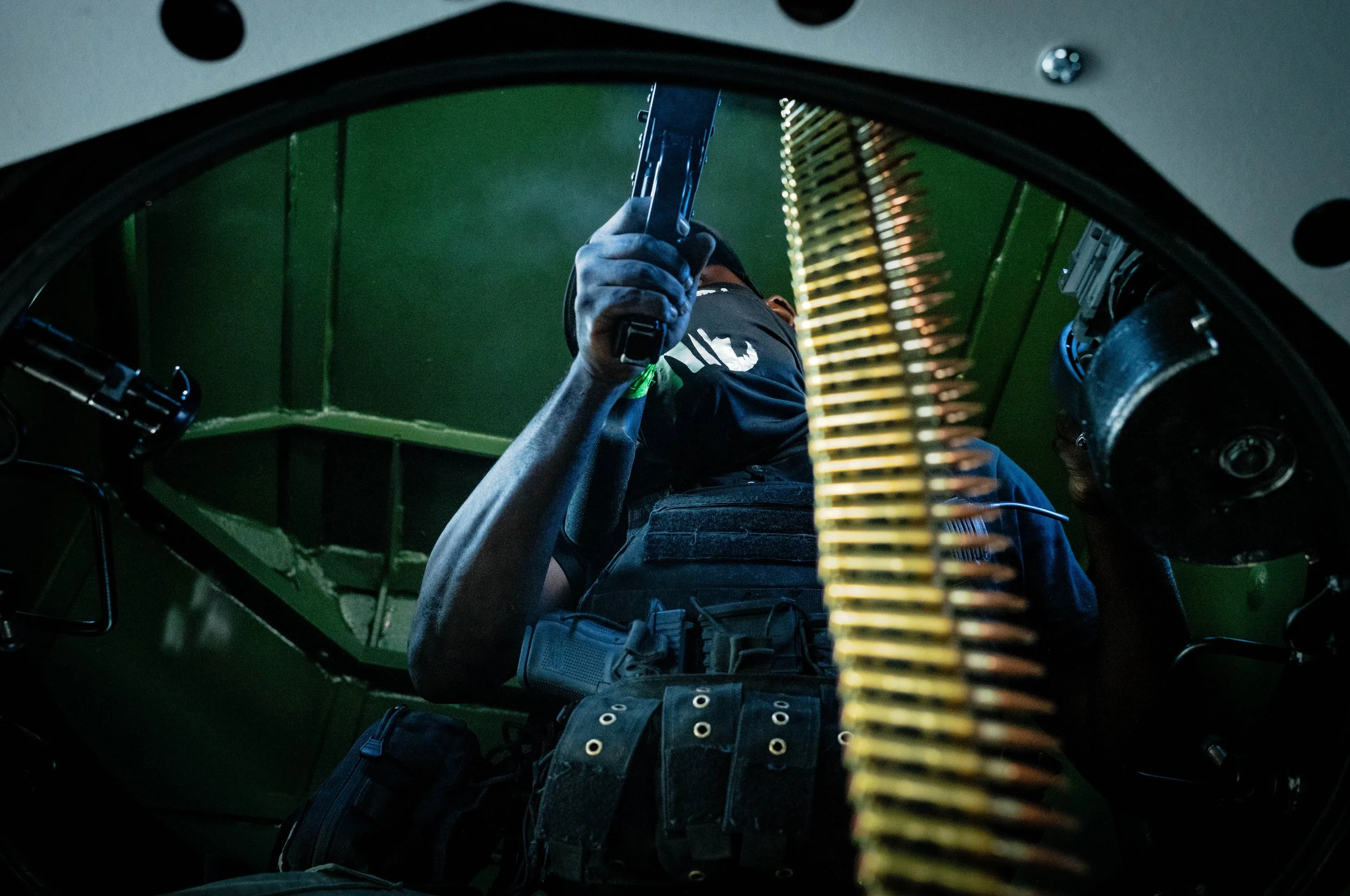
The second police vehicle, to the rear of the first, maneuvers and fires, but the fleeting gunmen, firing through small holes in the pockmarked building nearby, have fled, or died, or are dying. Another block, and another barricade is broken through, leading to what was once a wide 4 lane road, now empty except for heavy, precise, gang gunfire. The windows of the armored vehicle pop and spiderweb as the police officers try to spot their adversaries. The machine gunner fires, pivots, fires again, again, again, then motions for more ammunition. The vehicle reverses now, this is not a road to be crossed even with two armored vehicles. The gunner is exhausted of more than ammunition. He changes with another officer, retrieves his rifle and slumps into a seat, his head resting against the spiderwebbed bullet-proof glass.
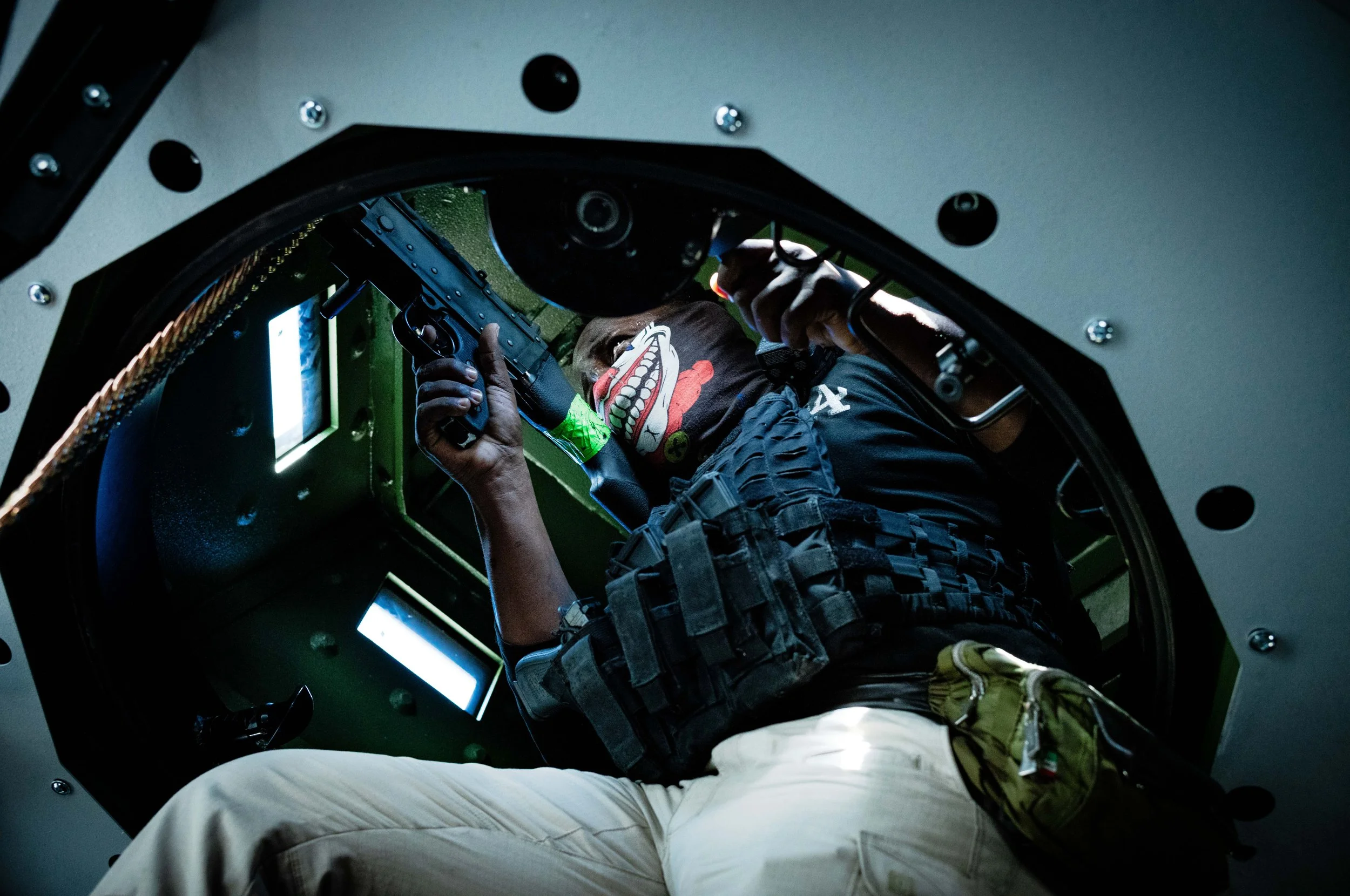
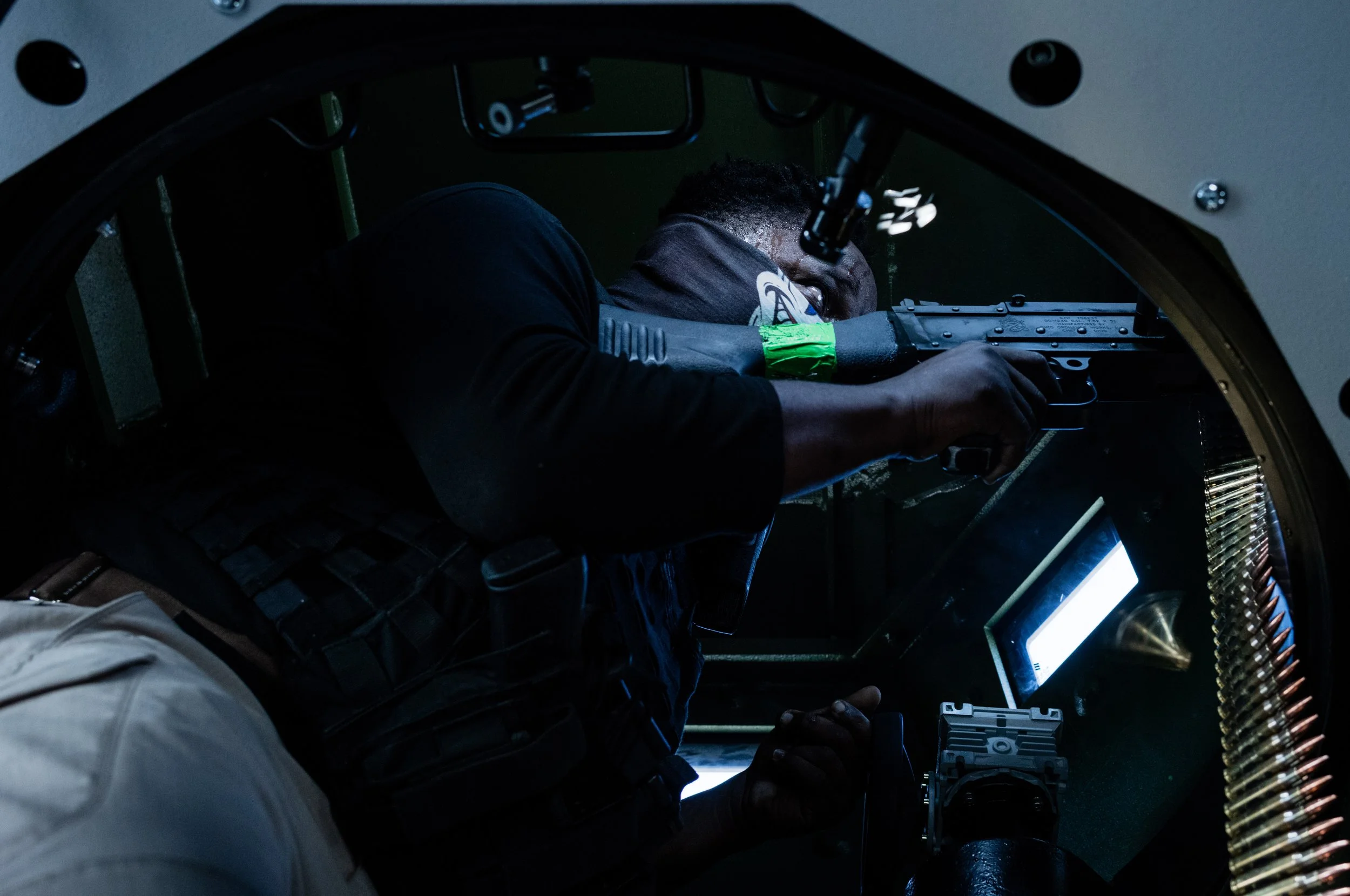
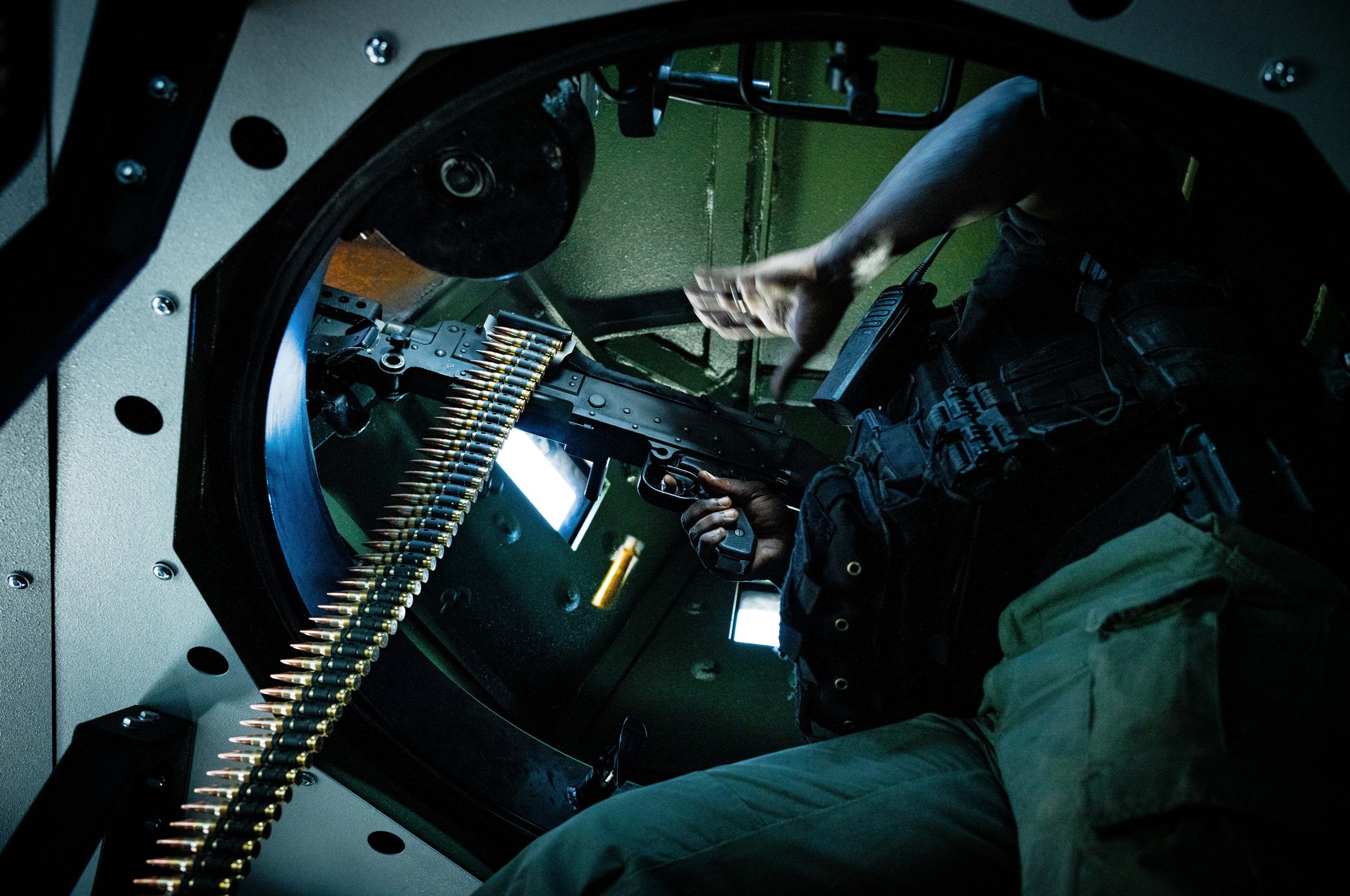
Retreating now, the patrol comes under fire again, the gunner maneuvers trying to find its source through his narrow dirtied window. He fires, clean single shots as the cabin of the armored vehicle fills with gun smoke, the other officers are firing now, bracing against the gunports. The 2nd police vehicle is firing just to the left and then to the right of the first vehicle, adding to the confusion.
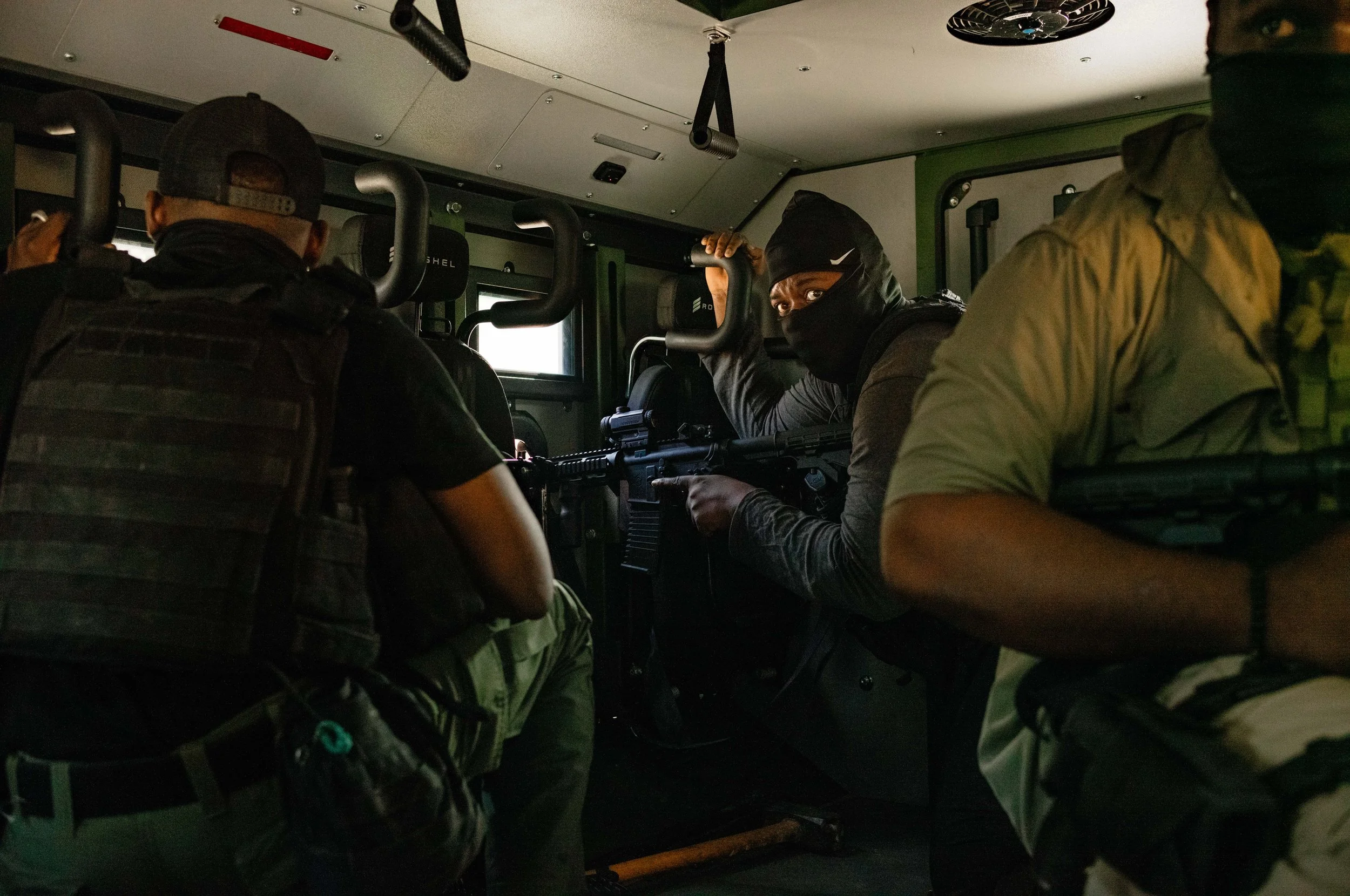
There are 2, then 3 pops like lightbulbs bursting. A new smell joins gunpowder: rubber burning. The gunner fires again and again, sweat and brass raining down from the turret. “Fire. FIRE!” the vehicle commander says, and in the oversized side mirrors flames are consuming the rear of the vehicle. Another pop, now flames consume the hood. The Armored police vehicle speeds to 10, then 20, then 30 miles per hour, then stops abruptly at a police outpost. Everyone but the gunner drags fire extinguishers out, hosing down the flames.
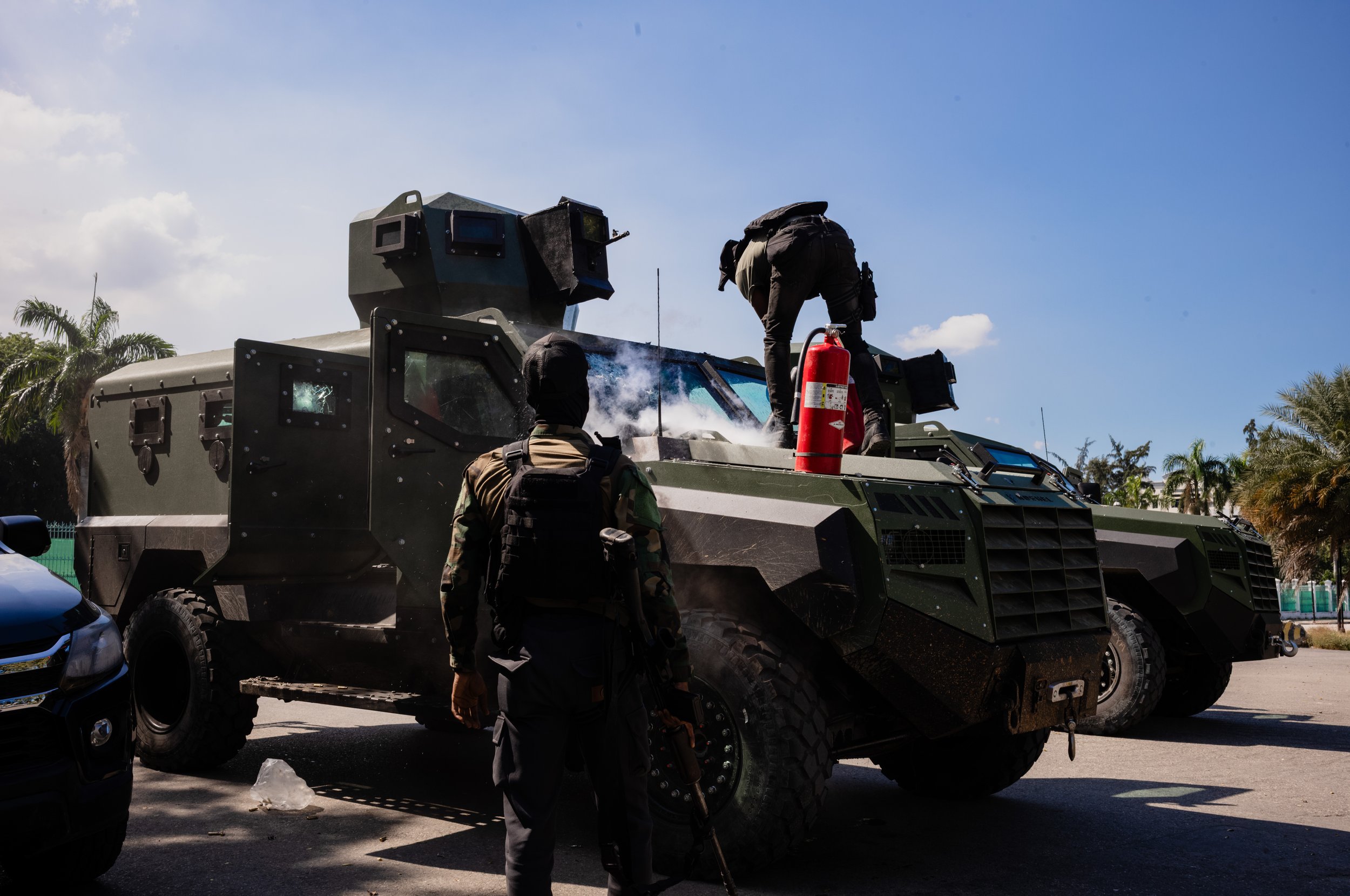
The police patrol is over, the officers are unfussed. They eat lunch and chat idly with the next patrol “Every day we clear them (the barricades) we fight and push them, but each night they build them” Frans, a veteran member of the police patrol says. Officers rarely see the gang members firing at them, in Fran’s experience most are young men, or teenagers, firing from holes cut into the walls, or throwing Molotov cocktails from the roofs.
The degraded govenrment of Haiti offers little to citizens of it capital, Port-Au-prince. There is no electricity, running water, or waste services. Voting has been suspended for more than 3 years, and every level of government is rife with corruption. The gangs, individually or as the collective Viv Ansam, haven’t provided utilities or a democratic path forward. What they do offer is employment to child soldiers, eviction, rape, and gruesome torture to those who resist them. The government's last remaining thread of legitimacy is the narrow margin it still provides physical security for patches of Haiti.
Haitian police are fighting a war for their country, The Kenyan police, one of several UN groups assisting Haiti, are policing a foreign land. That policing doesn’t extend to the frontlines of Port-Au-Prince. A typical Kenyan patrol ventures no farther than eyesight of gang barricades. They patrol pacified streets, hold intersections. Today they ferry civilians to the capitals last government-controlled pier through “No-man’s-Land”.
The Kenyan patrol leaves in an armored vehicle, no gunner mans the rooftop machine gun, idling officers alternate between looking out at the street markets and scrolling on their phones.
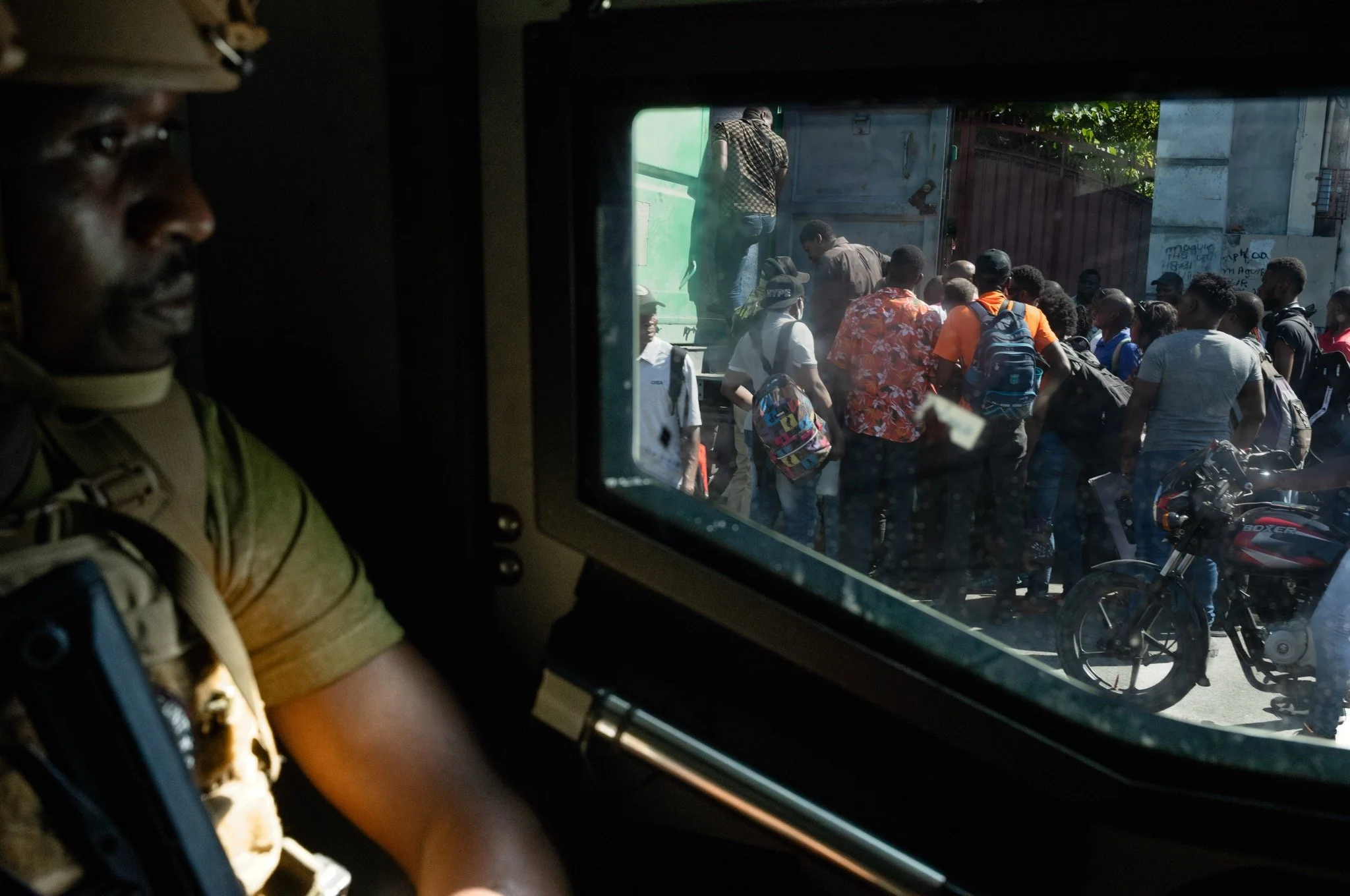
The crowds recede and the streets instead fill with waves of trash brought by heavy rain. Lone figures, bundles poised on their heads weave through alleys, an armored school bus passes by, full with tired faces framed by sweating limbs and bundled goods. Razor wire and firing positions bristle in the distance, below the walls and security gates huddled splotches of color: civilians waiting outside.
They are waiting, often for days, for the chance to take a boat out to the countryside, the only means locals now have of leaving Port-Au-Prince without passing through gang territory, and it’s roadblocks, robberies and kidnapping.
Haitian Police securing the Palace Royal area was both a rare success and a stay of execution for a country on the brink of anarchy. André Paraison, the newly appointed National Police Director General, was injured in it’s defense. He is brimming with conviction and now walks with a limp. Despite criticism, he credits the government's drone attacks on gang leadership for weakening the gangs at a critical moment. Drones may have helped them re-take territory, but they can’t hold that same ground, and there are neither enough police, or drones, according to Paraison.
The drones he speaks of are first-person-view drones that explode on impact, and this is their first acknowledged governmental use outside of the Russian Invasion of Ukraine. T. The complaints echo in the vacuum left by foreign aid that has excited the country. Haiti sits geographically between recently raided Venezuela, and according to President Trump, to-be-toppled Cuba. Unlike either country, Haiti is on a trajectory of destabilization for lack of foreign intervention.
Adding to Haiti’s million estimated internally displaced citizens up to 300,000 Haitian US immigrants could be returning under recent US immigration changes. The American Embassy in Port-Au-Prince now borders a war zone, and has come under fire by gangs repeatedly. In December a triple kidnapping of Haitians occurred directly outside it’s premises.
Leaving Port-Au-Prince the sky, and tarmac are desolate. In the past week one of the remaining police helicopters has been disabled by gunfire. At three thousand feet above the ground, with west winds blowing out the trash fire smoke, the city is a gleaming promise: aquamarine waters, emerald forests, colonial ramparts, all hanging on a thread of local police.