Under the Nets: Life in Sloviansk as the Front Closes In
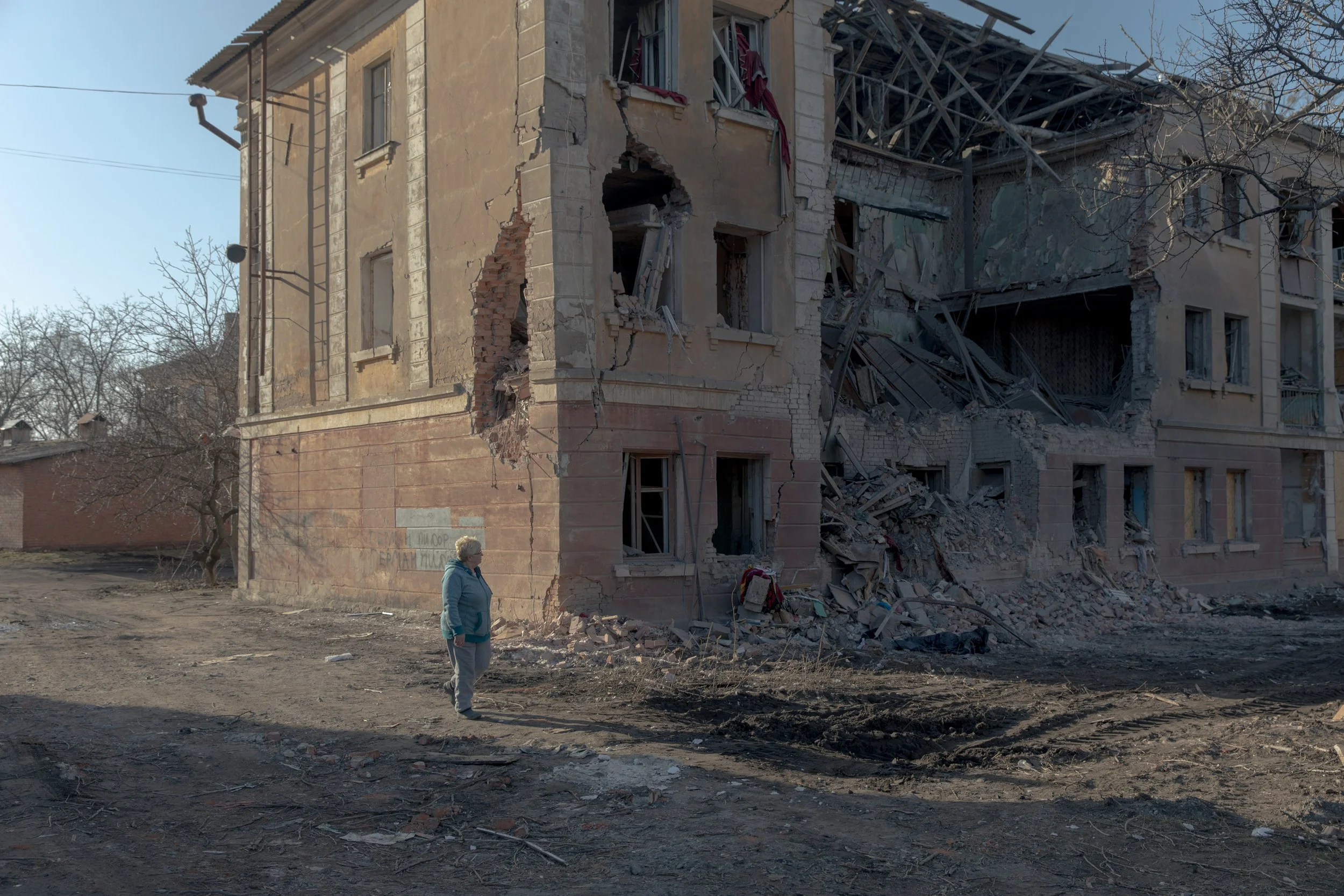
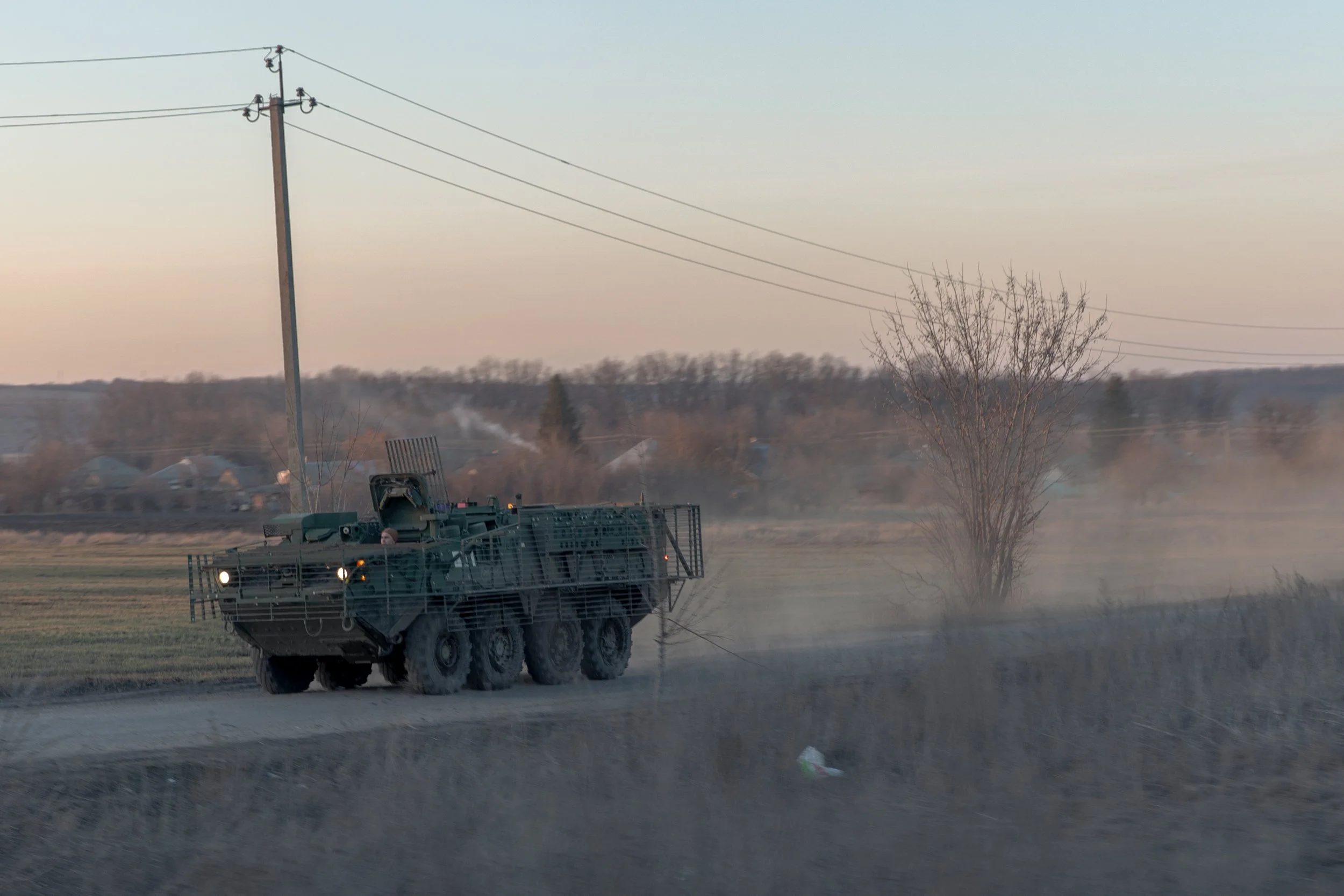
Sloviansk, Eastern Ukraine. Despite the return of spring sunlight, the city feels empty. Military vehicles line up outside the last restaurants still open. Russian artillery rumbles a few kilometres away, the grim omen of a front drawing closer. Gutted buildings line streets now covered in anti-drone nets.
Just a day earlier, three glide bombs struck Torska Street in a quiet residential district, killing four and wounding twenty civilians. One was a direct hit, while the other two landed near Soviet-style Khrushchevkas, spraying shrapnel into the surrounding buildings.
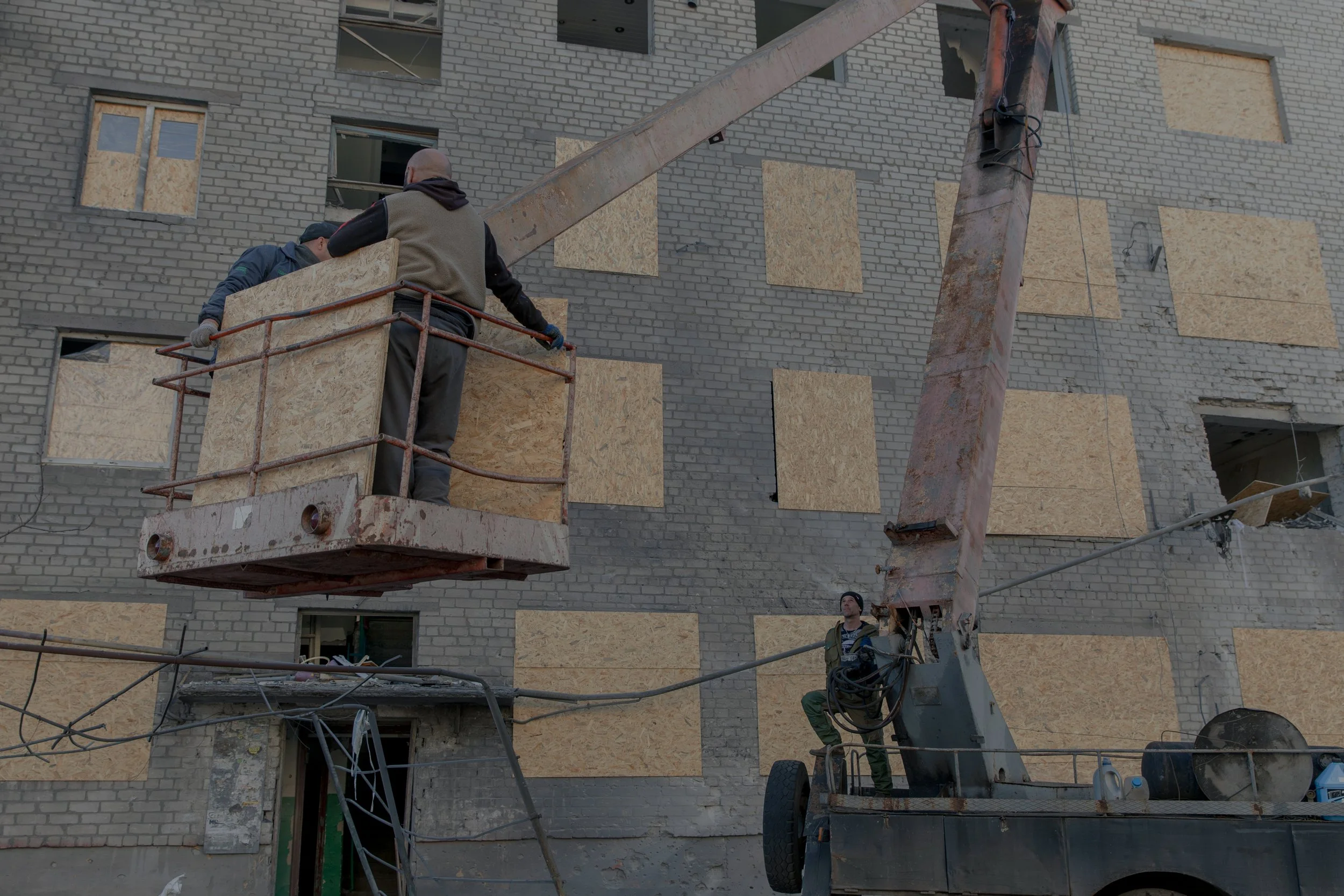
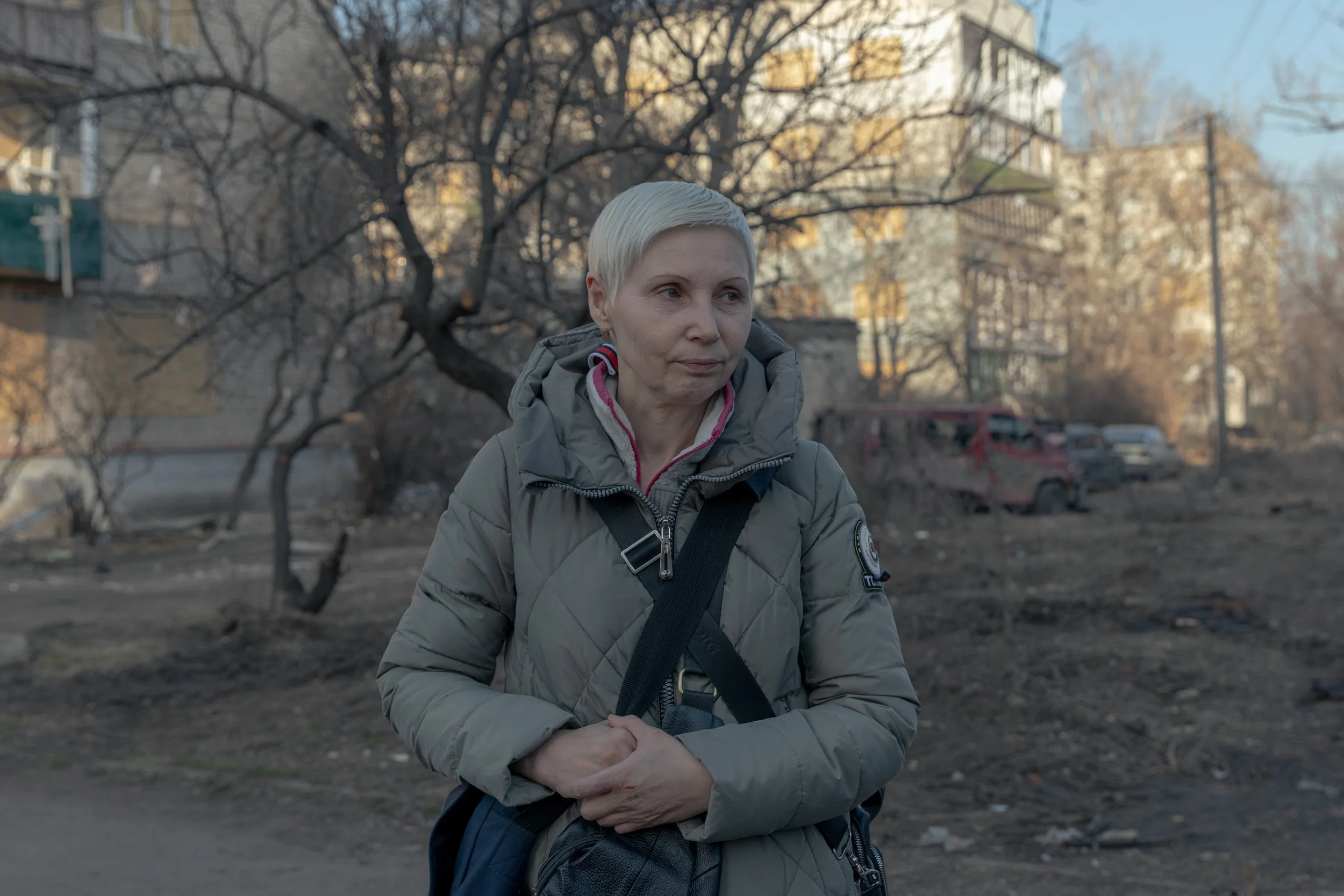
Municipal crews are already repairing the facades damaged by the strike, boarding shattered windows with sheets of plywood and salvaging what can be. Looking at the gaping hole left in the neighbouring building, Svetlana, 51, grips her cut skin.
She was at home with her husband when the explosion blew out the windows of their top-floor apartment, sending shards of glass flying into the room. This is not the first time she has lost her home to war. Until 2015, Svetlana lived in Horlivka, outside the city of Donetsk. She moved to Sloviansk to escape the fighting between the Ukrainian army and the Kremlin-backed separatists. Now, beside a few hastily packed bags piled up in the street, she prepares to leave once again.
According to Stanislav Baldin, a member of the State Emergency Service of Ukraine (DSNS), the attacks on the Kramatorsk-Sloviansk agglomeration have intensified since the fall of Pokrovsk late last year. The capture of the two cities, at the heart of the Donbas fortress belt, remains Russia’s main objective in the region and has repeatedly been framed by the Kremlin as a prerequisite for ending the war.
Russian artillery can now strike the suburbs of Kramatorsk, and since January, FPV drones have begun appearing over the city. More than one hundred thousand people remain in the two cities, less than a third of their pre-war populations. Across the region, DSNS crews have had to adapt to the growing threat of drones.
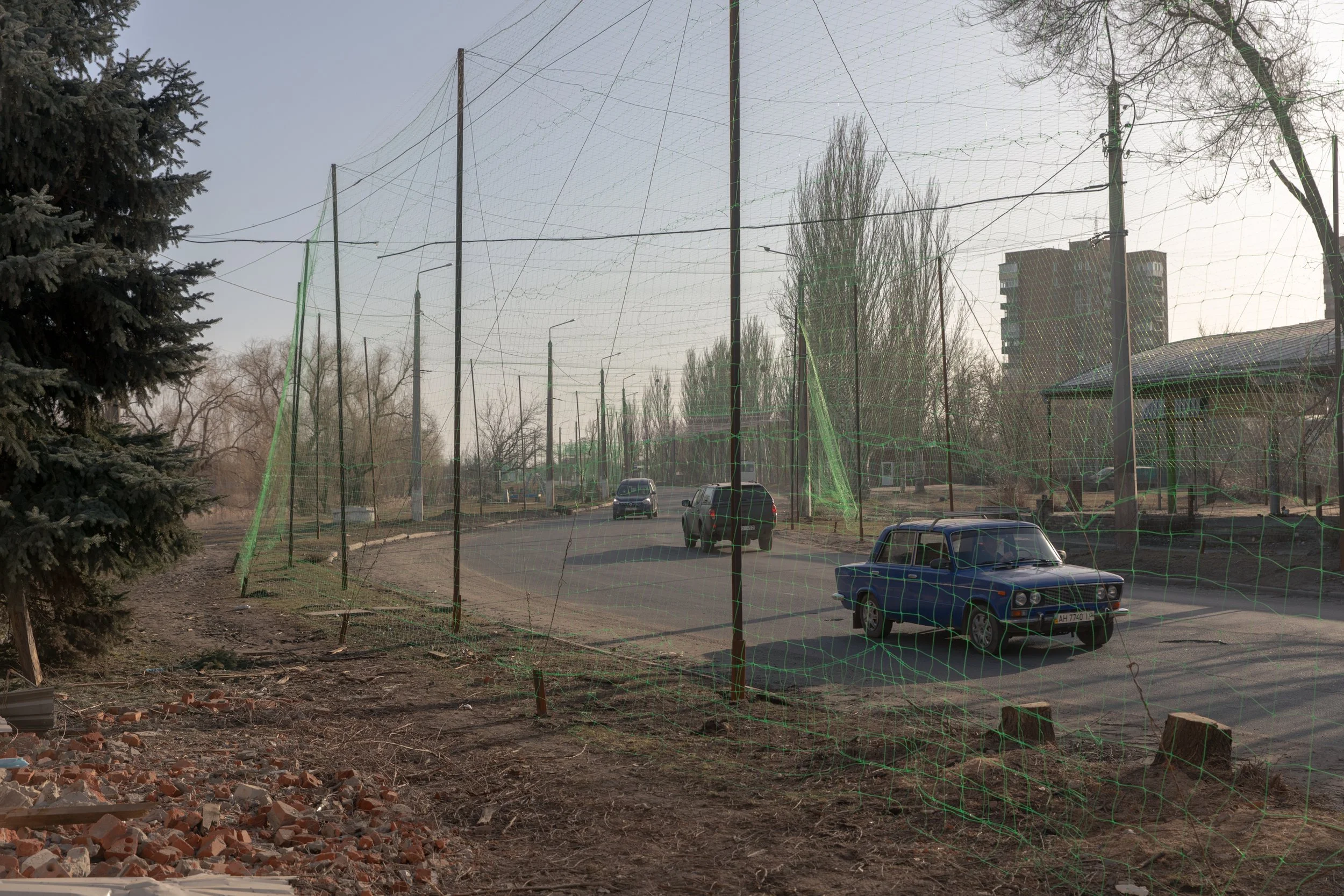
After his family evacuated Sloviansk at the beginning of the full-scale invasion, Roman, 33, stayed behind as a first responder in one of the hardest hit areas of the rear. “It’s not difficult for me to work here, you get used to it,” he jokes, before noting the increasing numbers of FPV drones. Jammers and drone detectors have now become an essential part of their equipment. Since January, three of their vehicles have been struck by enemy FPVs. “They also use drones to monitor the strikes. The other day, they toyed with us above an impact site before flying off.” Grey static fills the small screen of the detector in his car.

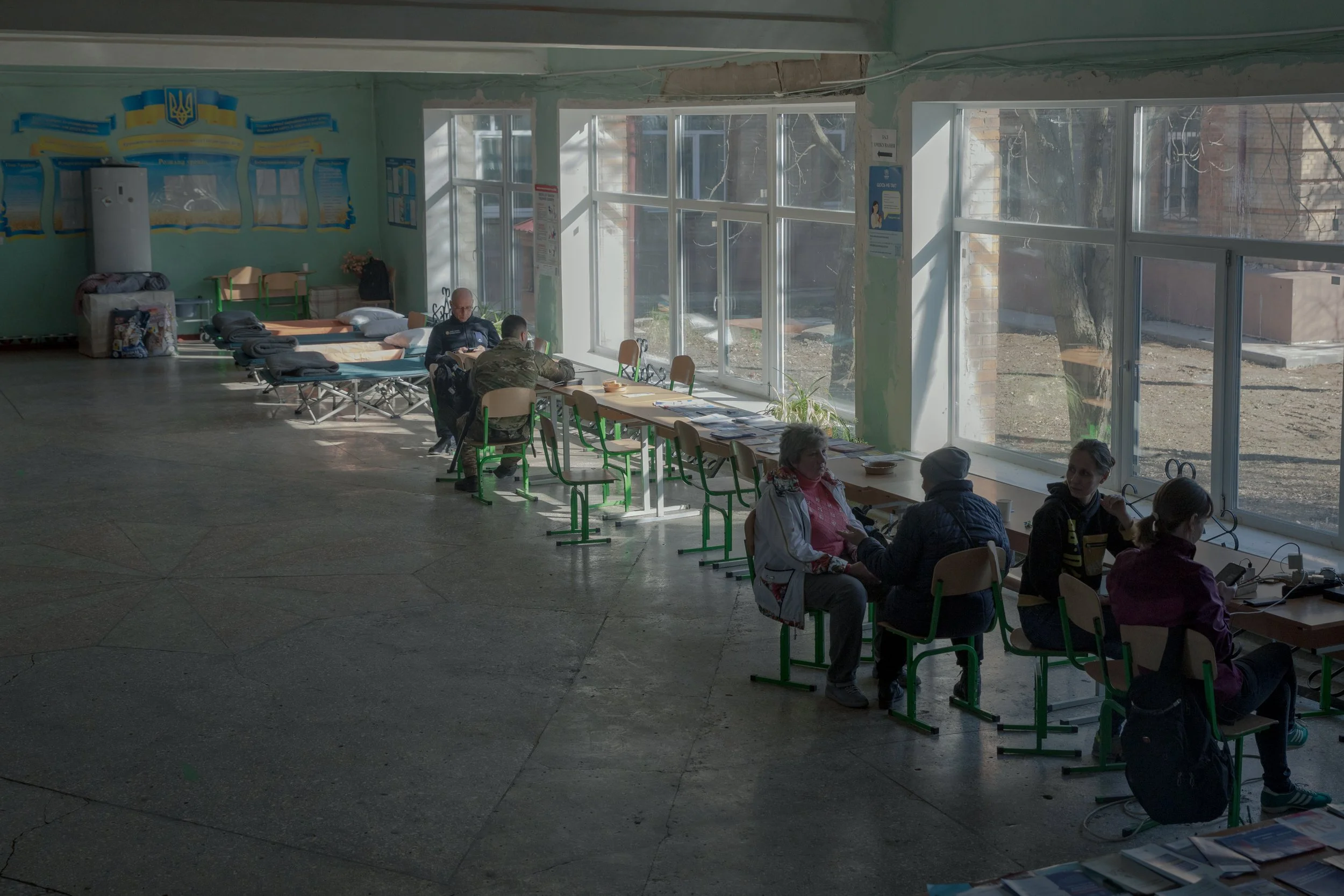
In a suburb of Kramatorsk, on the road leading to Kostyantynivka, a former school sits at the edge of the front. Now an evacuation centre, the building welcomes displaced civilians from across the region but is also a lifeline for some local residents. Ilia, 18, lives in the neighbourhood. He has been coming to the centre for about a week to charge his phone, ever since a strike on the local substation left his home without power. He has seen the situation worsen but remains spirited: “It should be scary with FPVs, but you get used to it.”
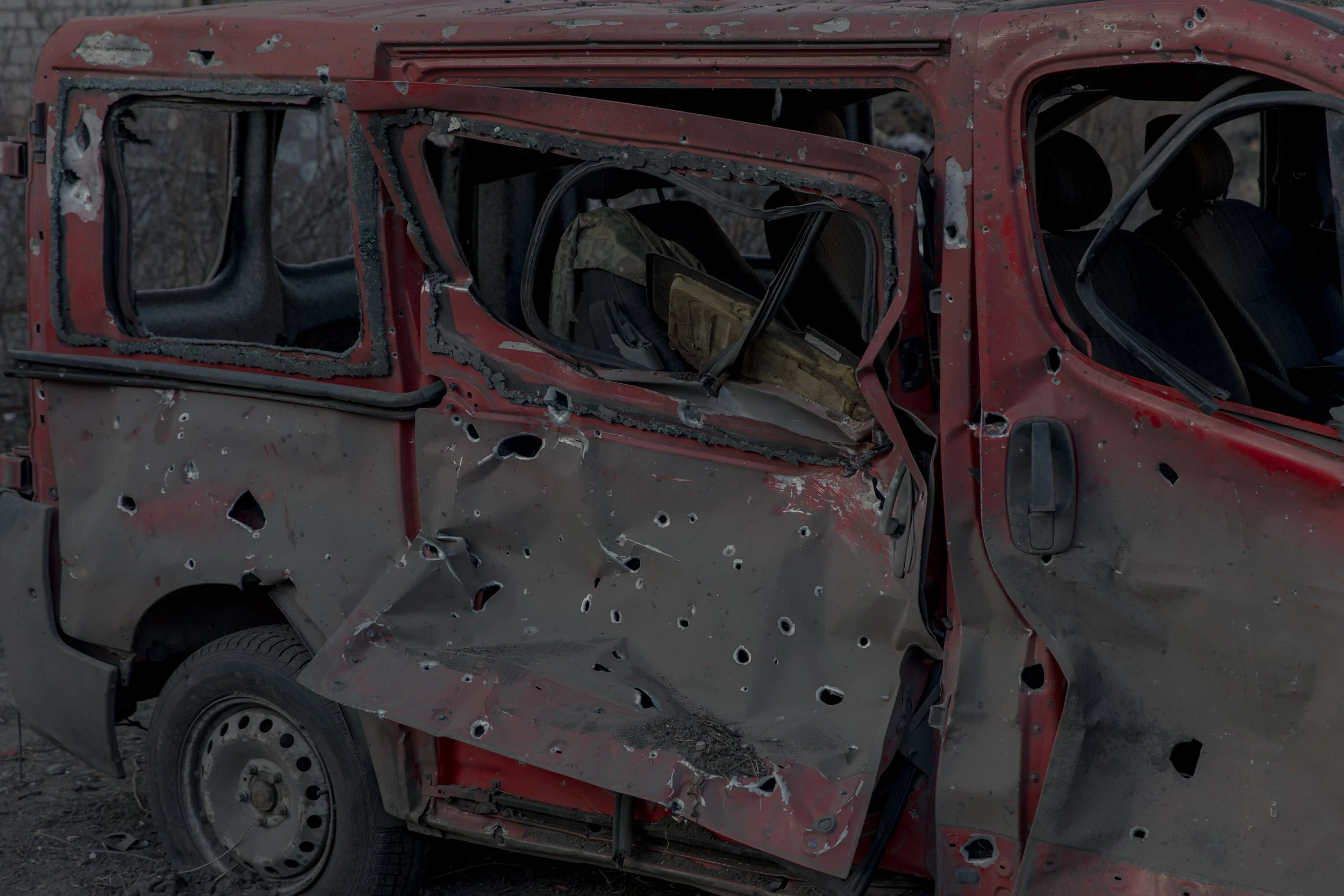
Victoria Reva is the former director of the school. She coordinates evacuations and transfers to centres in other parts of Ukraine. “Evacuations have risen sharply since January. We used to welcome around thirty people per day. Now it’s between fifty and eighty”. The centre, which can accommodate up to one hundred and fifty people, only serves as a transit point, with most of the refugees leaving west the day they arrive. The majority head to the relative safety of the neighbouring Oblasts of Dnipro and Kharkiv.
Waiting in a nearby classroom filled with rows of camp beds, three generations of women rest after a high-risk evacuation from the town of Lyman. “We requested evacuation a week ago, and only yesterday we were picked up by Ukrainian soldiers in an armoured vehicle, in the middle of the night,” recalls Tatiana, grandmother and eldest of the group. The family has witnessed the brutality of the frontline. “Shelling is constant, day and night. The Russians are using phosphorus bombs, rockets, artillery and drones.” She is waiting for her husband, who has yet to be evacuated. “Then we will go to the west, away from the frontline.”
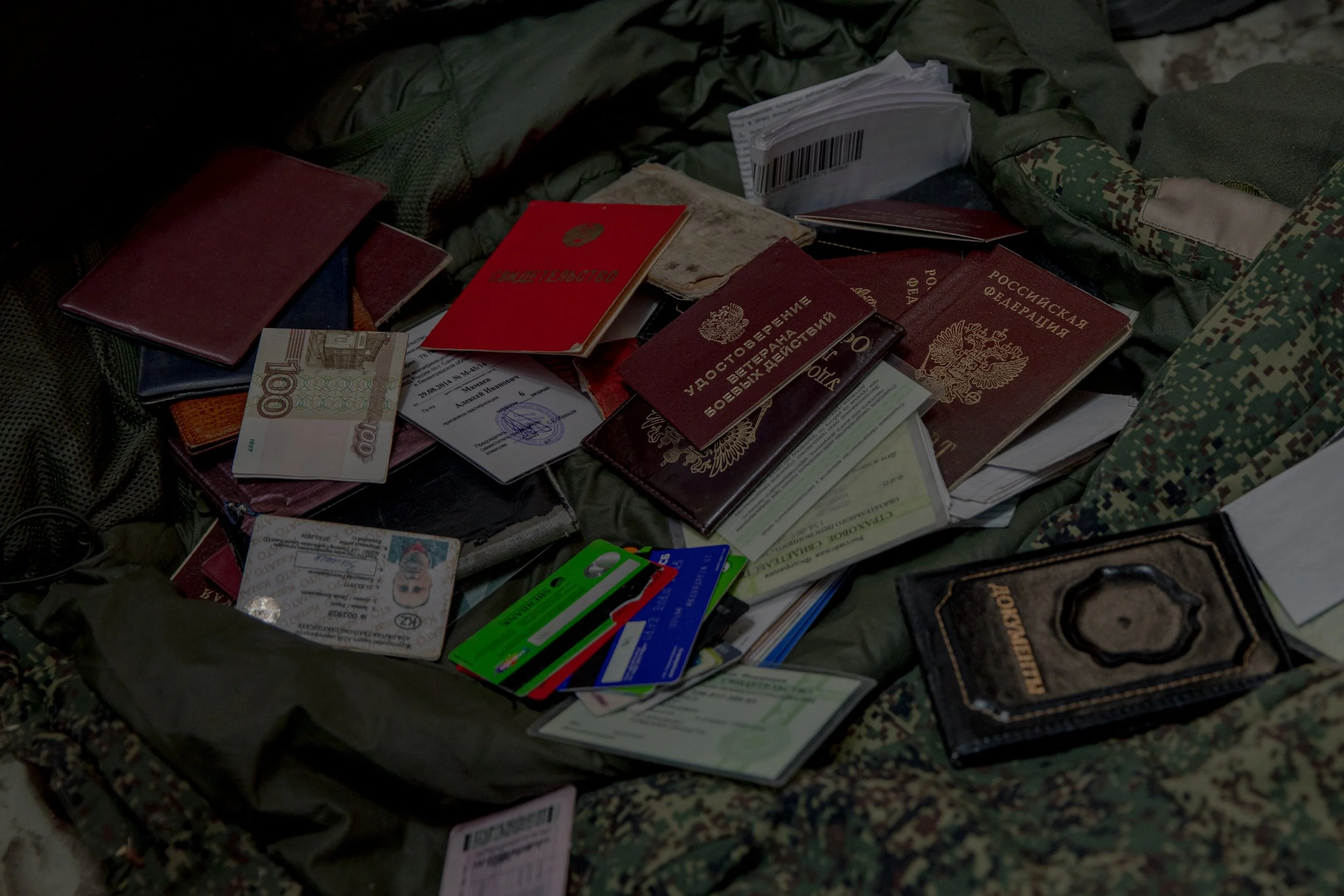
Back on the outskirts of Sloviansk, in the courtyard of a traditional dwelling, bags of ammunition are piled beside body armour and rations. A brawny man with a thick beard, Dzhigit is getting ready to head to his position. Originally from Odessa, he fights in the Nemesis group. Now a drone pilot, he has been on most fronts since 2022 and has the souvenirs to show for it. From under his bed, he pulls out a cardboard box wrapped in a crumpled Russian uniform. He spills its contents across the digital camouflage: dozens of documents that once belonged to Russian soldiers. Passports, driver’s licenses, credit cards, cell phones. “I have never called their families. Not mothers, grandmothers, children. It’s not moral,” he says with a sombre expression.
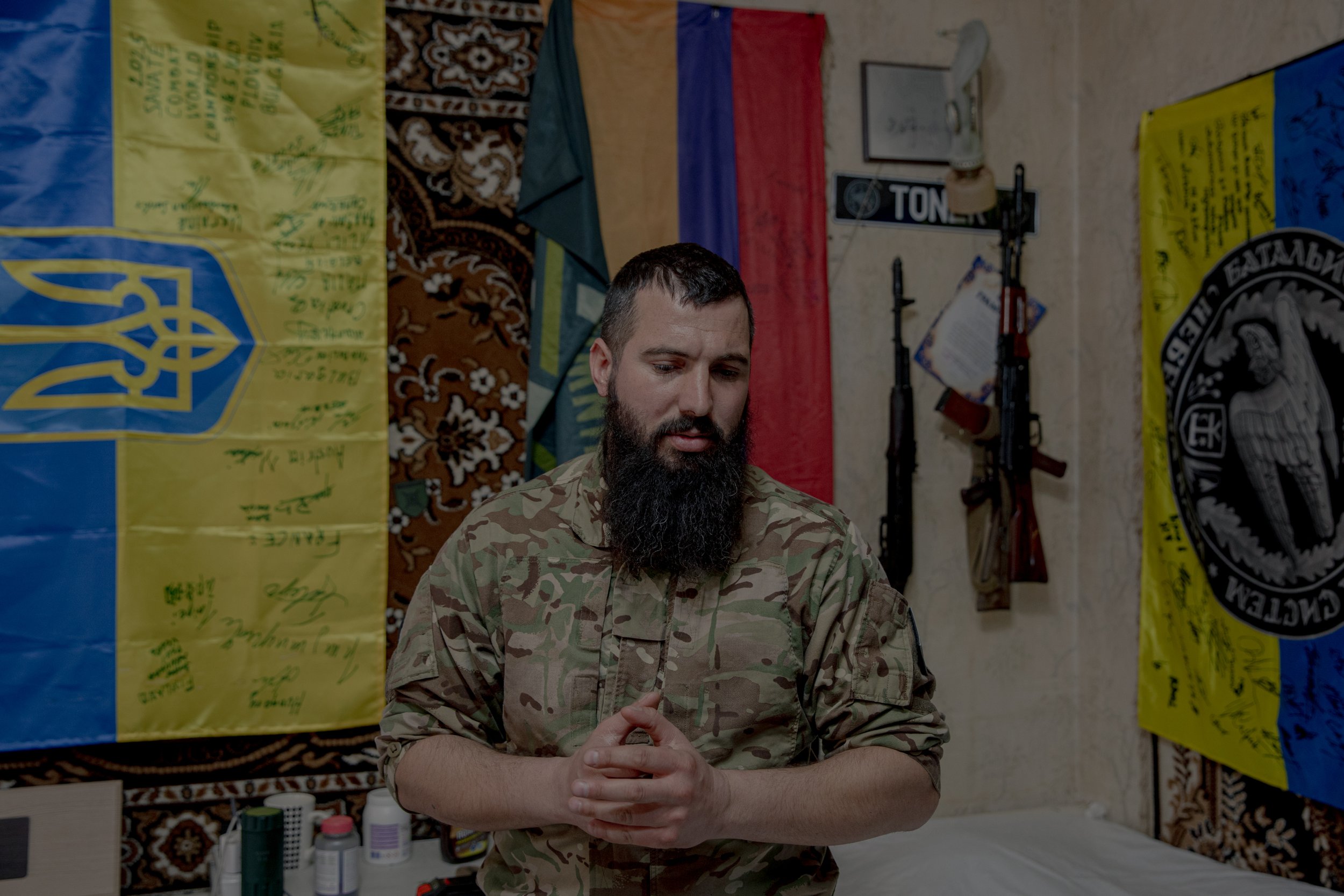
Like many who have been fighting since the beginning of the full-scale war, he has switched from infantryman to drone pilot. In 2023, he was using Mavic drones in Bakhmut to guide Ukrainian artillery strikes. “Drones changed everything. It’s a constant battle for innovation. For every Ukrainian improvement, the Russians adapt their technology.” Dzhigit has seen the slow Russian advances in Donbas, with an average pace of 15 to 70 metres a day. “The frontline moves, but at the cost of huge losses for them.” Even so, he knows what may await the parts of the region still under Ukrainian control. “The drones are still flying in limited numbers in the towns, but it is possible that Sloviansk and Kramatorsk could become dead cities.”
The fate of Donbas has yet to be sealed. Over the winter, Ukrainian counter-offensives in the southern sectors of the front have resulted in the liberation of more than 400 square kilometres. More than a welcome morale boost, this advance has forced Russian forces to redeploy units from other parts of the frontline, relieving strained sectors. According to Ukrainian Defence Minister Mykhailo Fedorov, 35,000 Russian soldiers were reported killed in the first month of 2026. Should this performance be sustained, it could further stretch Russian resources and manpower, impeding the army’s operational capacity.