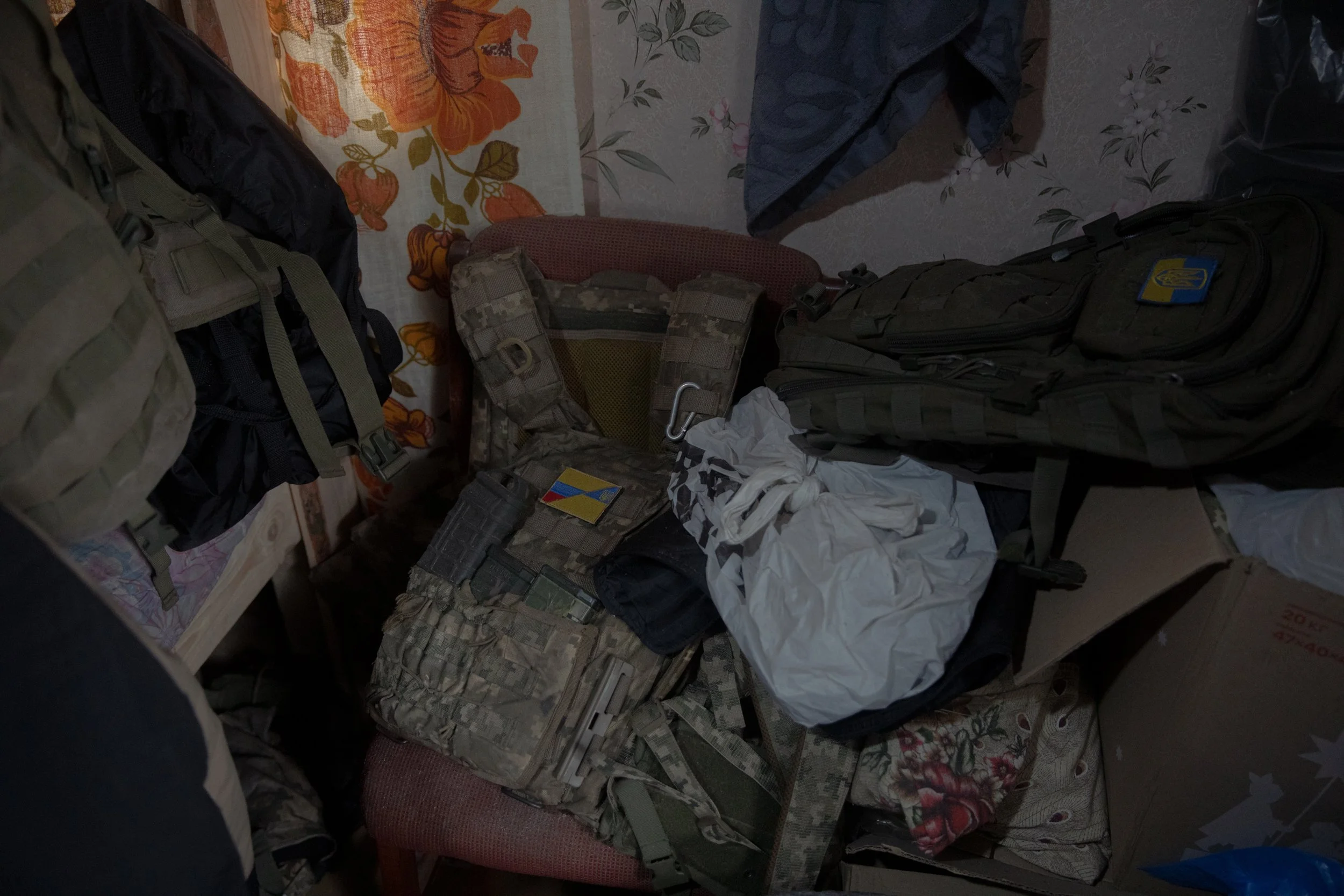
Kamianske - Dnipro Oblast

A hundred kilometres away from the southern front. A drone buzzes above a thawing field. The small dot in the washed sky of mid-February drifts hesitantly. ‘Está aquí!’ an excited voice shouts in Spanish. On the controller, the screen displays a cross of blue tape fixed to a derelict wall. The exercise is going well.
In the courtyard of an old farm, a dozen men look up at the sky. With the exception of the instructors, they are all South Americans. Men from Chile, Colombia, Peru. They have travelled thousands of kilometres to be here. Many are career soldiers who originally took up arms against guerrillas on the other side of the Atlantic.
According to Ukrainian military officials, as of 2025, more than 8000 foreign volunteers have joined the Ukrainian Armed Forces, with South Americans reportedly making up around forty percent.
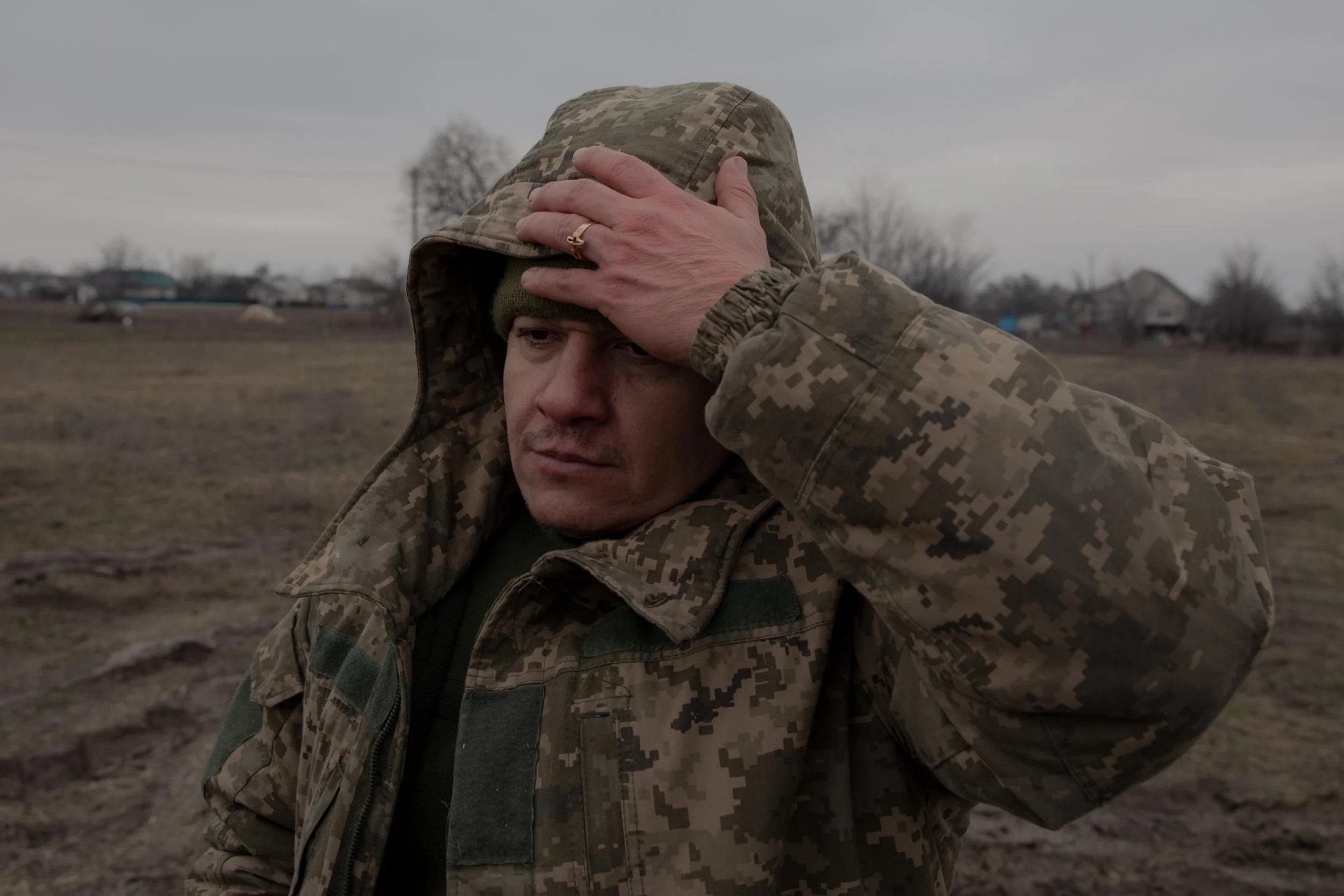
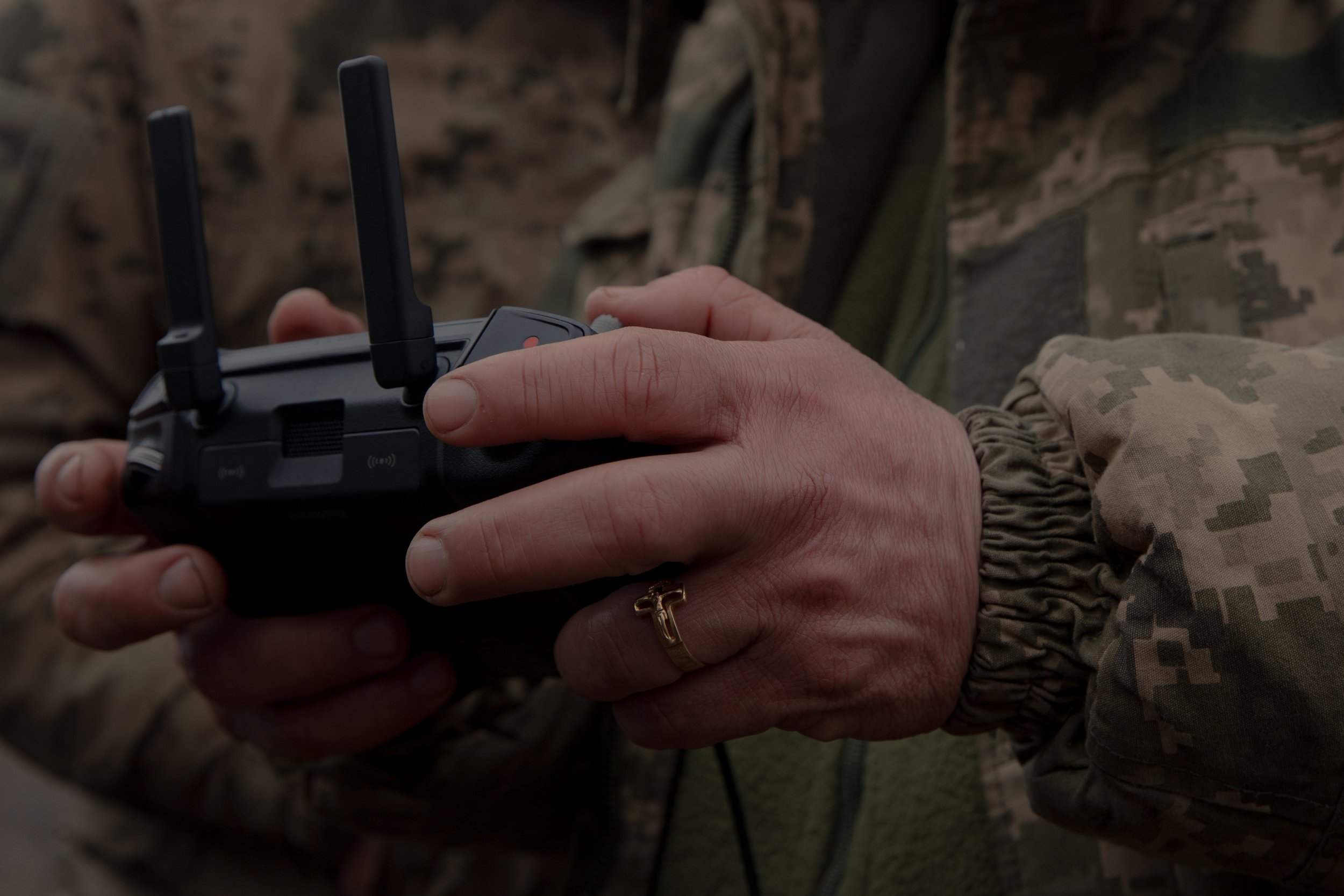
Shivering in his pixelated uniform, Guillermo, forty, waits for his turn at the controls. It is his first time flying a drone. He nervously fingers the gold crucifix ring on his left hand. Born in Medellín, he spent years fighting the FARC, a communist guerrilla movement, in the ranks of the Colombian army.
His combat experience in the valleys of his home country led him to Ukraine, where he has been for nearly three years. He is open about his original motivation; ‘In Colombia, I was paid $500 a month. Here, it’s between three and four thousand’. In the Ukrainian army, assault troops receive an additional combat pay, considered very attractive by most foreign fighters.
More than that, he has now grown a deep personal connection with Ukraine and believes in the just war he fights. ‘I would like to stay here to see the end of the war’, he says gazing across the countryside.
Guillermo has been wounded three times in Ukraine. On his phone, he keeps a photograph of him bloodied on a hospital bed. ‘This was after Bakhmut’, showing the image of himself on oxygen, wrapped in bandages. ‘They did a good job; you can’t see the scars on my face anymore, he says with a smile. ‘I have a wife and a child back home. They don’t know I was wounded; they would worry too much. Still, I call them every day to tell them I’m doing well and help with my son’s homework.’
Guillermo, like most other South American fighters, fought in the infantry, under the 3rd battalion of the International Legion. Since the disbandment of the unit at the end of December 2025, he has been transferred from the Kharkiv frontline to his new unit, Aidar. Alongside his new squad mates, he is now learning to pilot drones. Juan, a fellow Colombian, stands next to him when his turn at the controls comes. Tall with crinkling eyes peeking through his balaclava, he shares what he believes to be the key reason behind the presence of so many South Americans in Ukraine. ‘I think we like the war. In our countries, we were fighting a lot with the rebel groups, so we really like to fight. “Actually, he laughs, ‘some the most dangerous missions are performed by Colombians at the front.”
Before this new unit, Juan’s specialty was assault operations. He came in 2022, then lived in Poland for a couple of years. Back in Ukraine for five months, he has seen the way the war has evolved. ‘Infantry is still very necessary. You need it to take positions, to hold territory. But now you also need to work with drones. This is the war now’, he says glancing up at the Mavic hovering above.
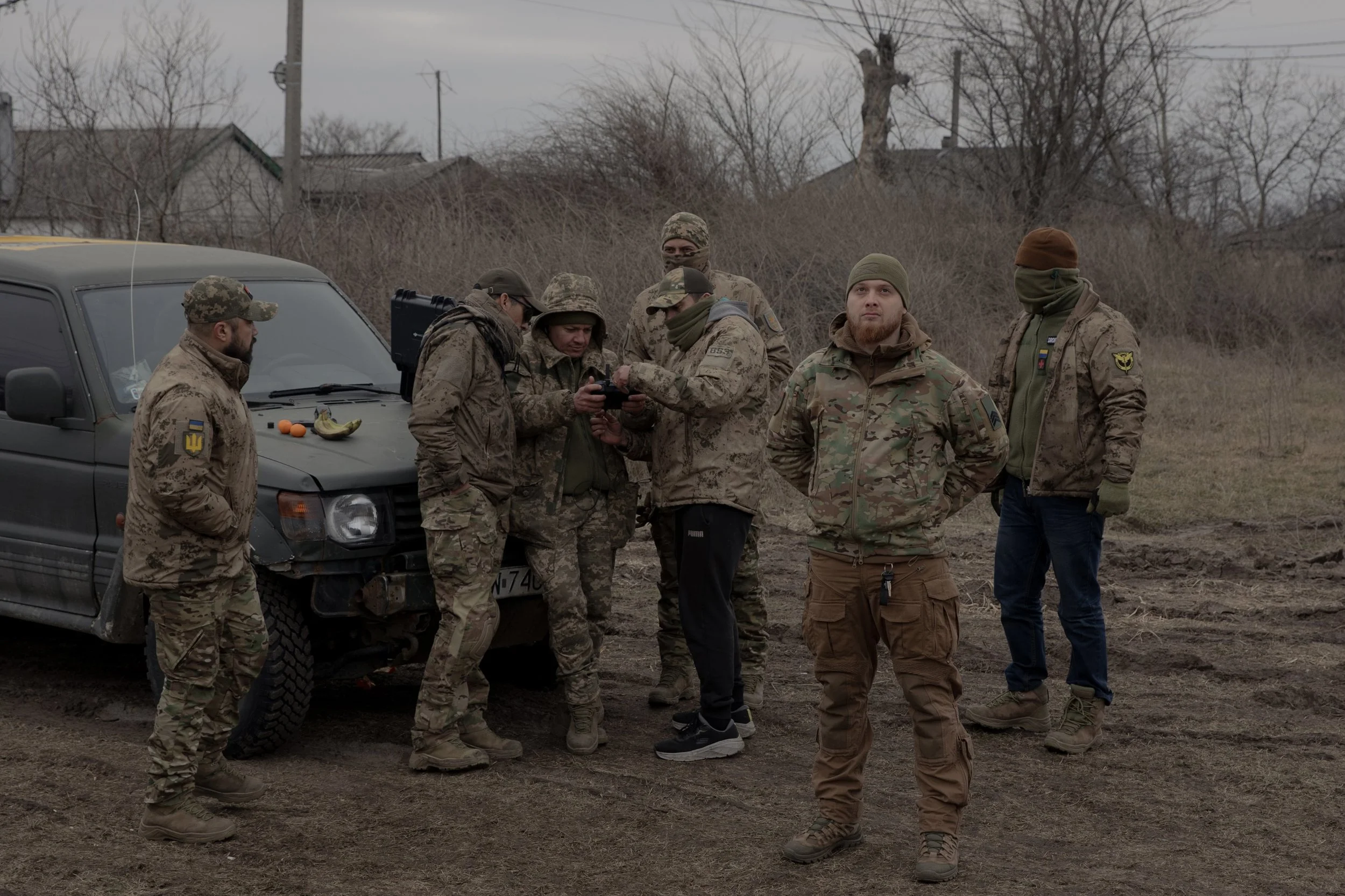
Instructing the group is Pavlo, a twenty-eight-year-old Ukrainian. Under his watchful eye, the men take turns trying to find tape markers he hid around the farm.
‘Everyone has a different reason to come, and we are thankful, they do a lot of evacuations and assaults for our guys’.
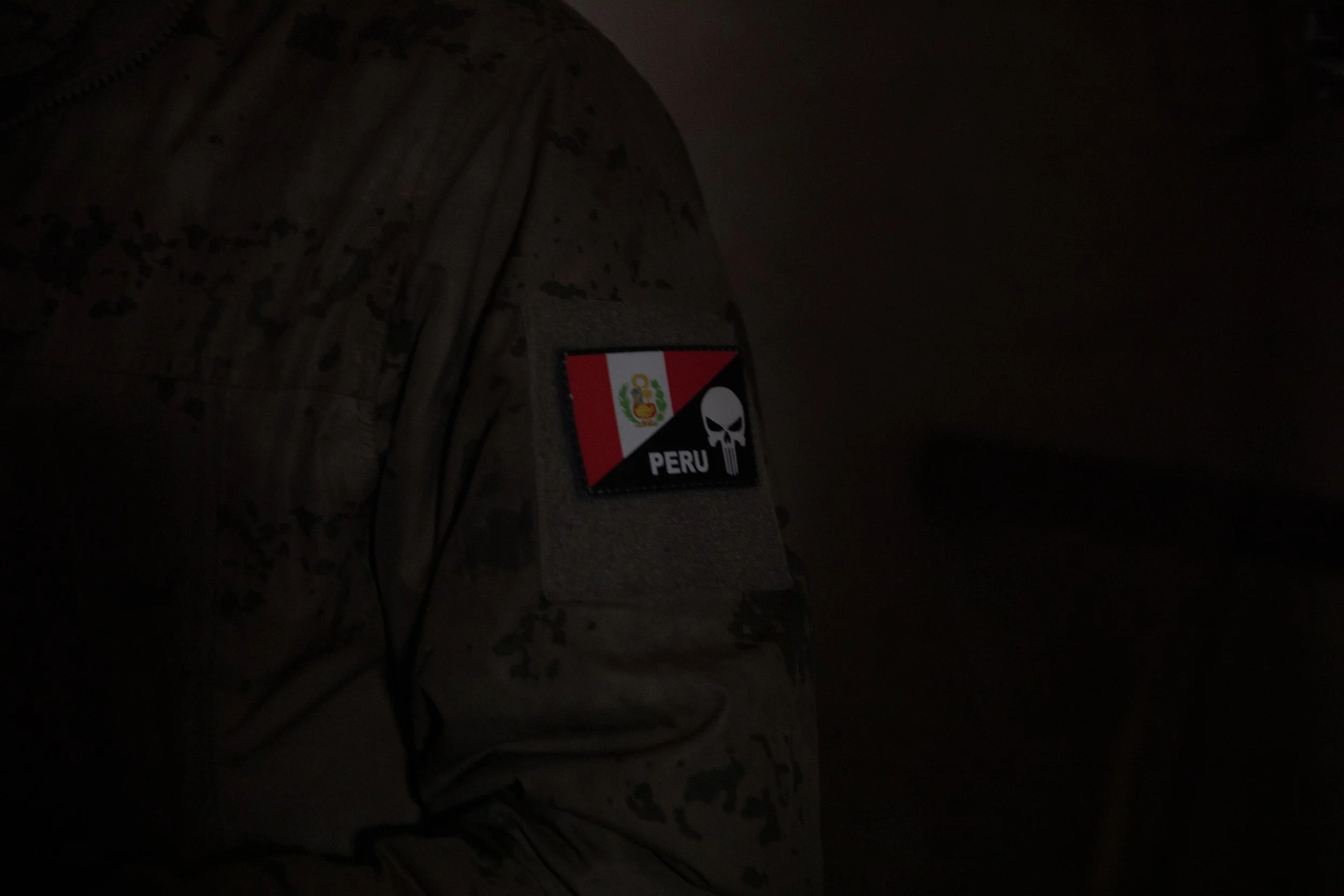
Standing aside from the group, streaks of grey hair poking from under a camouflaged cap and eyes hidden behind tinted ballistic glasses, Bravo shares the motivations of his comrades. Like Juan, he has fought here since 2022. A former marine, the Peruvian could not stand the situation while sitting idly halfway across the world. ‘Honestly, the money is motivation too. It allows me to have something to send to my family’.
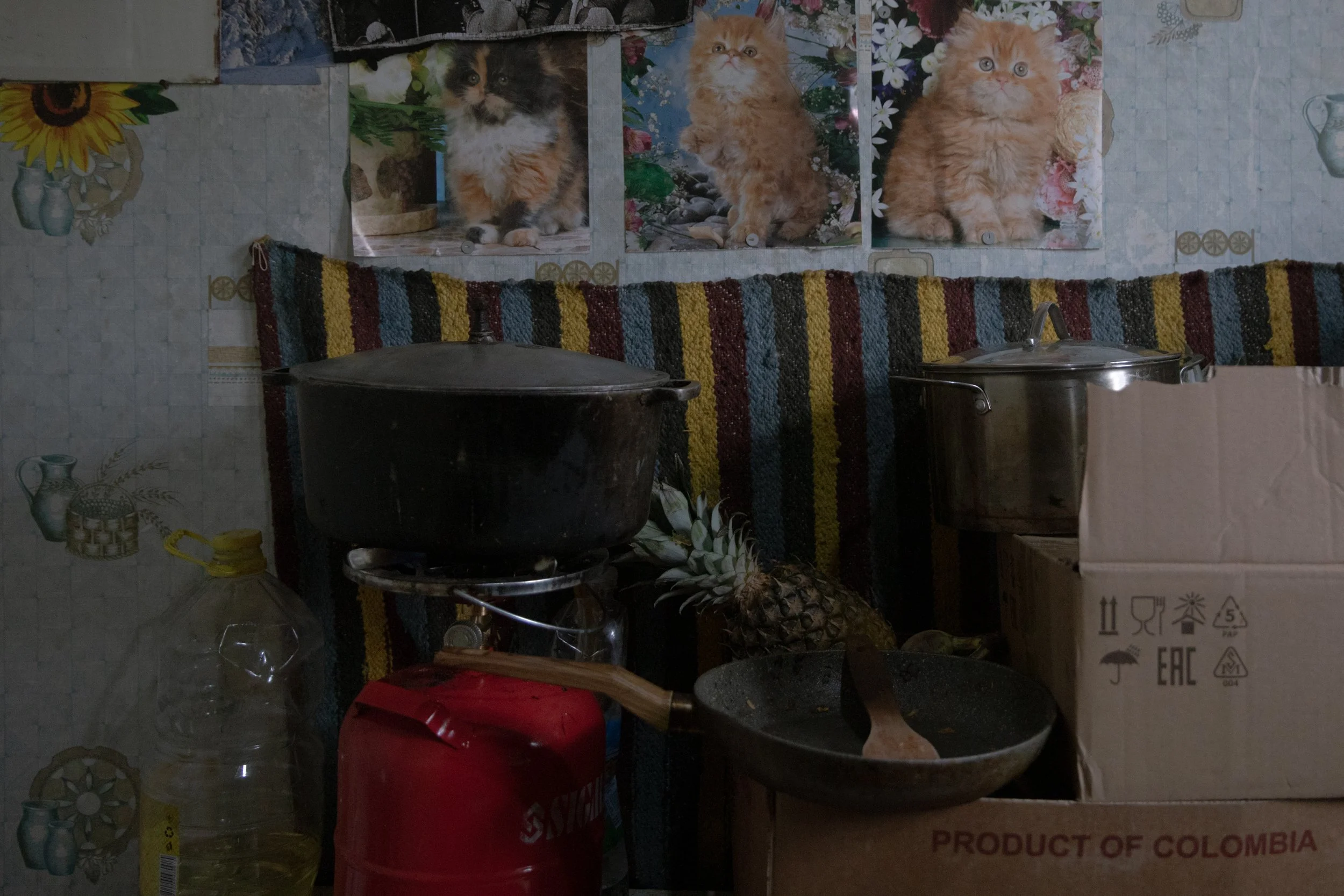
Taking a break from the exercise, a few of the men head inside the farm to warm up. A small one-story building dating back to the soviet era, they have made it their home. In the kitchen, boxes labelled ‘Product of Colombia’ pile up in a corner, topped by a pineapple. A small ritual to cope with homesickness.
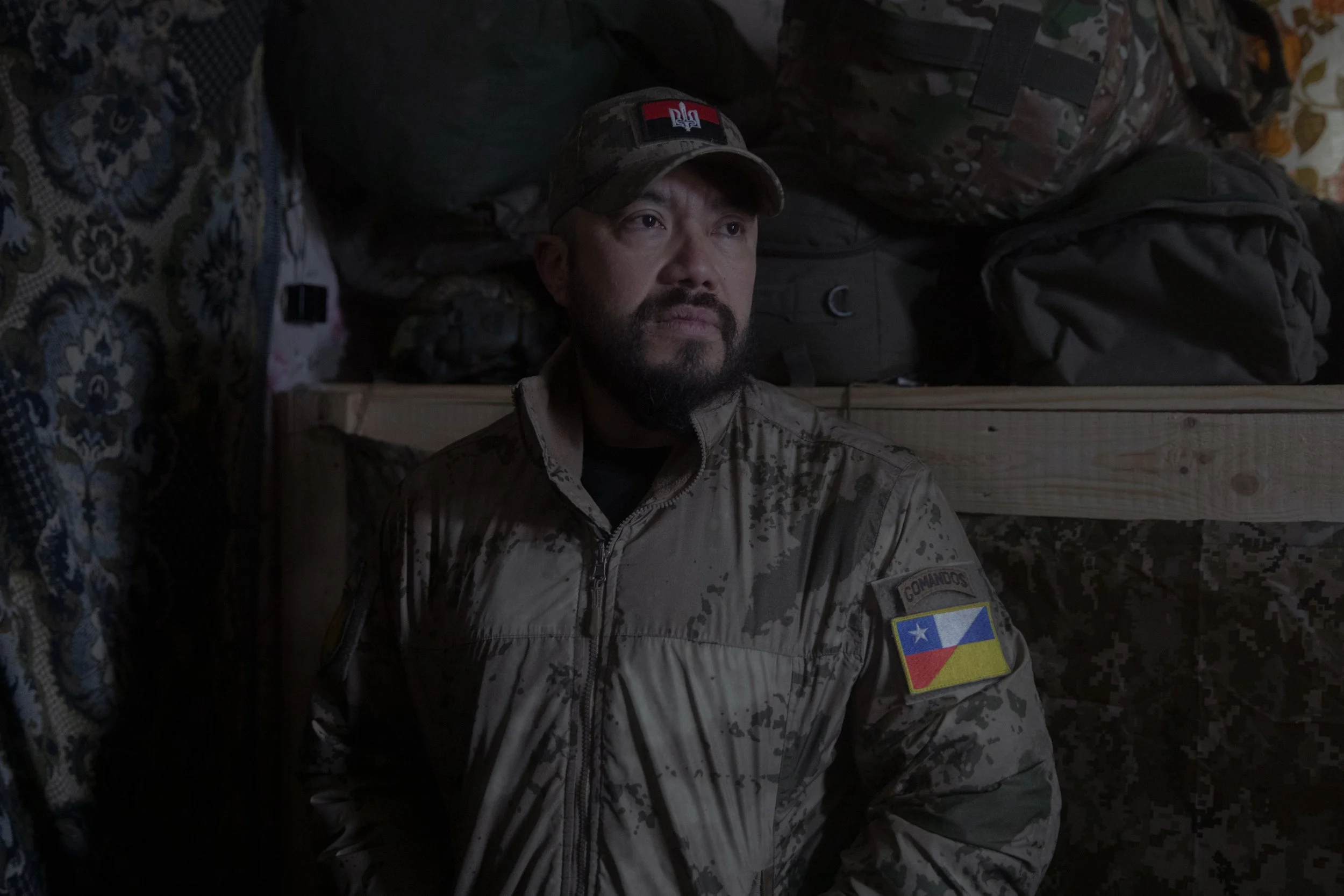
Jose, a Chilean, is the designated best cook of the group. The forty-four-year-old came here to help Ukraine against the Russian invasion. Another career soldier, he was a sergeant in a commando group back home and found it difficult to return to civilian life after twenty-five years of service. ‘I wanted to come to see the real war, check if the experience of combat in Chile and South America applied here’. ‘What I can say is that in the Real War here, the human effort has taught me to bear the most difficult conditions, mainly the cold, the hunger, the sleep, and even the death.’
The swaying sound of Cumbia drifts from a cell phone speaker. On break, the men do what they can to keep the cold at bay, gathered around a wood burning stove. Different Spanish accents overlap, but the common trope seems to be an optimistic mood. These men have all seen combat before, and witnessed how it changed in the past four years. They have fought and bled on a foreign land. An integral part of the war effort in Ukraine, these foreign fighters, dismissed as mercenaries by the Kremlin, have, for a range of reasons, become a key component of the Ukrainian Armed Forces.
Outside, Pavlo calls back the men. Break is over, time to get back to training. Guillermo holds the controller of the Mavic. This time more confidently. As the drone takes off, he looks at the men he will fight beside. Earlier, he called them ‘Brothers’, united in a war that has become theirs. From above, they look smaller than they did moments ago. And soon, it will not be tape they will be searching for.