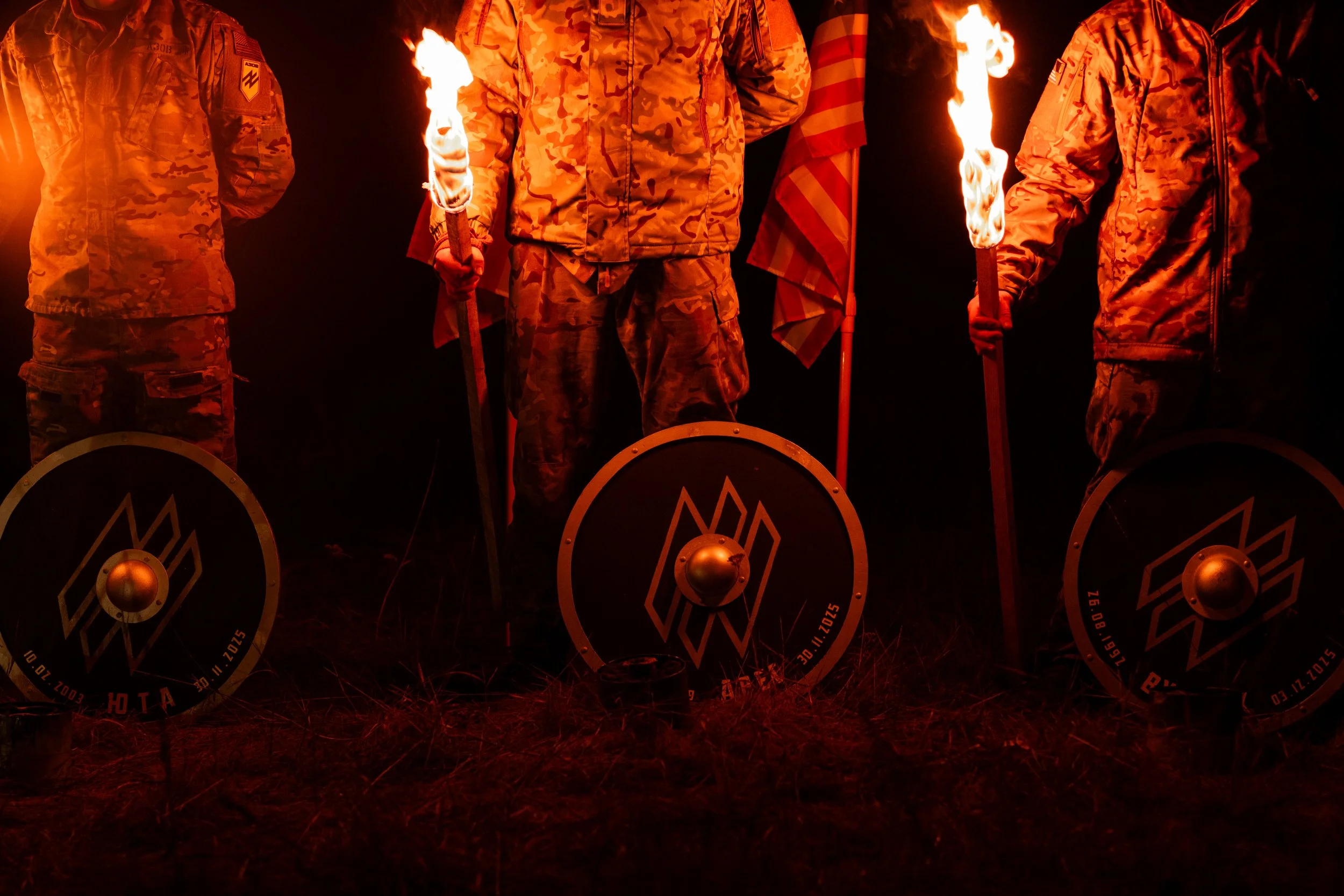
Before the chanting, torches, or drums, there is only a black river, and the freezing fog of Eastern Ukraine. In the failing light dozens of men hide under the boughs of leafless trees on it’s banks. A knee-deep track of mud leads to a barren field. If there is a Russian drone above, a concern of the Azov soldiers of International Battalion gathering for the annual Mysteriya, it would see shields bearing the names of 7 Azov fighters killed this past year laid on the ground, names in Cyrillic facing up to heaven.
The Mysteriya about to unfold is not a military maneuver or a training event, but like these, it involves groups of troops in the open, and in the range of Russian arms. Training centers, promotion cermonies, and troops in transit have all been successfully targeted in the past, with devastating results. Any large groupings of troops now are a risk doctrinally avoided by military units in Ukraine.
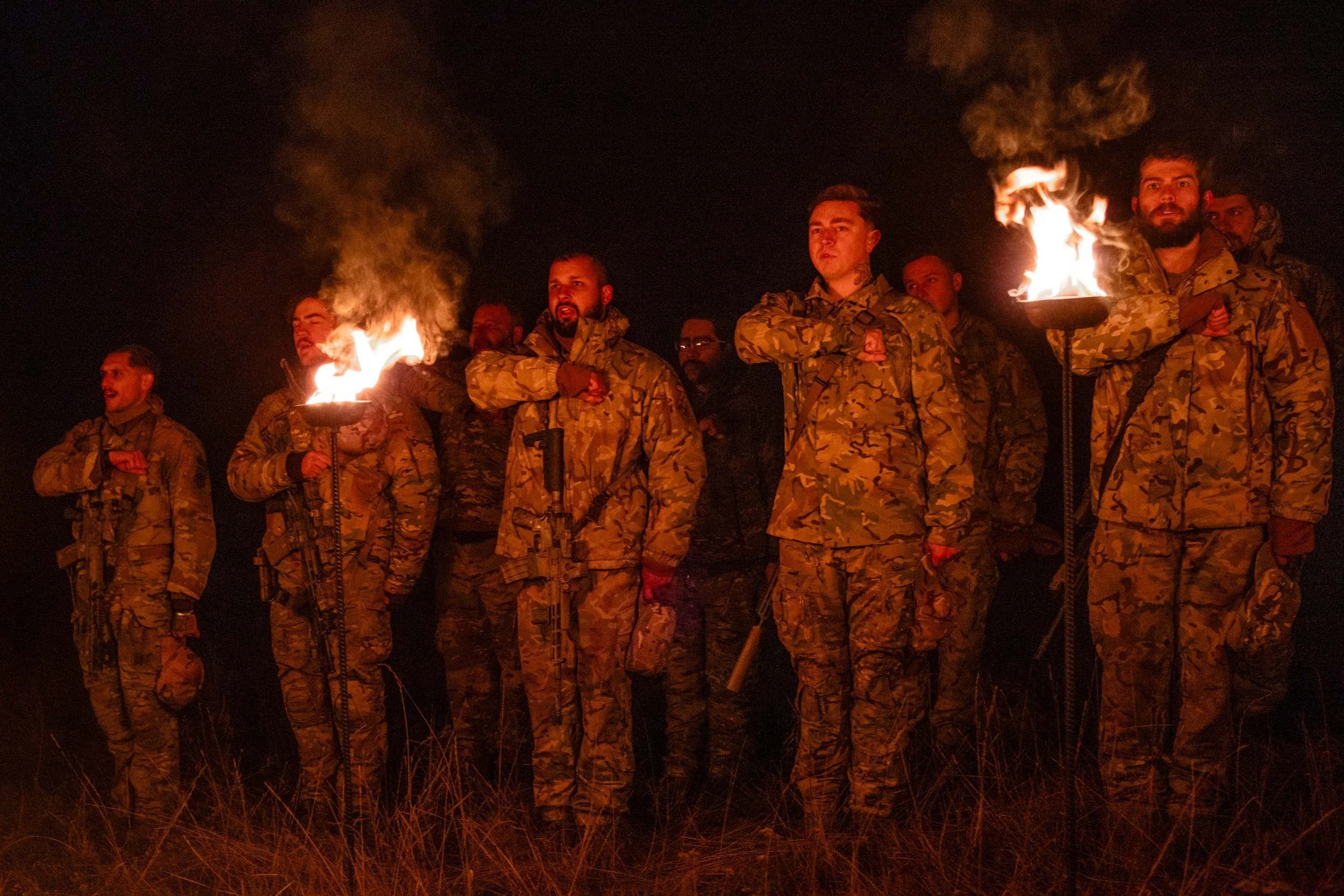
Fire leaps from torch to torch, illuminating shields, their bearers, and the flags of 4 nations. Dozens of solemn faces are cast in firelight, forming a square ringed by flame. The Prayer of the Ukrainian Nationalist plays in English against a dirge, to the benefit of Azov’s Whisky Battalion of foreign volunteers.
“Berreta” a young, confident Ukrainian Officer with Whisky Battalion addresses the formation:
“Today is the day of the Winter Solstice. Today we celebrate the rebirth of the sun. On this day we prepare this river for our fallen brothers… All are equal before the sun” he continues, “ likewise all men are equal before death. Our brothers chose the path of war, the true path of a man. They looked death in the face, and on this day we remember and pray for them to ascend the circle of life in battle. Our prayers are free of tears, our prayers are filled with resolve and hatred, our prayers are filled with a sense of revenge” he concludes.
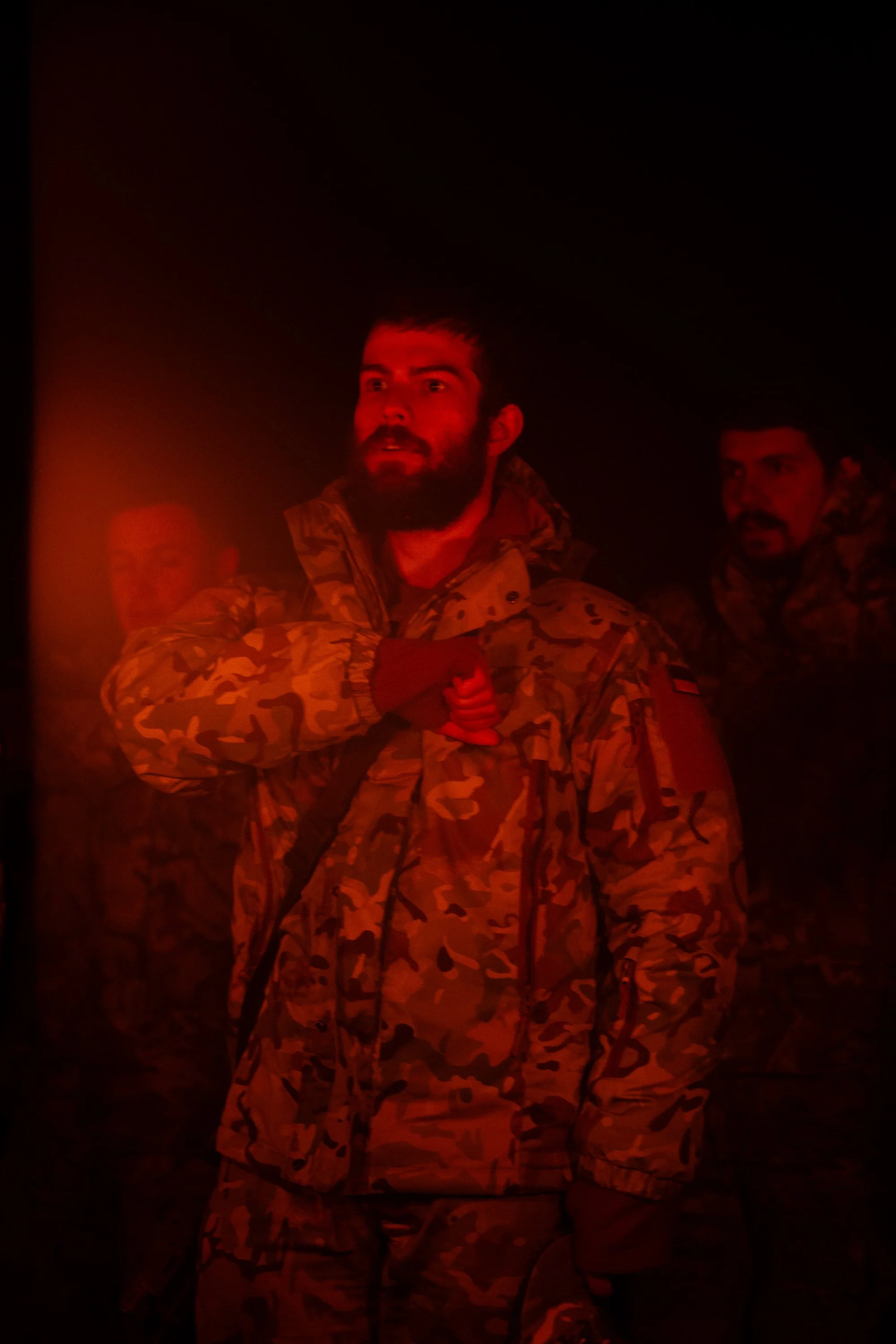
Foreign names are read aloud, then hometowns in the US, England, Poland, New Zealand, followed by once little-known names of cities across Ukraine, now immortal as bitter battles; Bakhmut, Pakrovsk, Nova-Basan, and as far back as Kyiv.
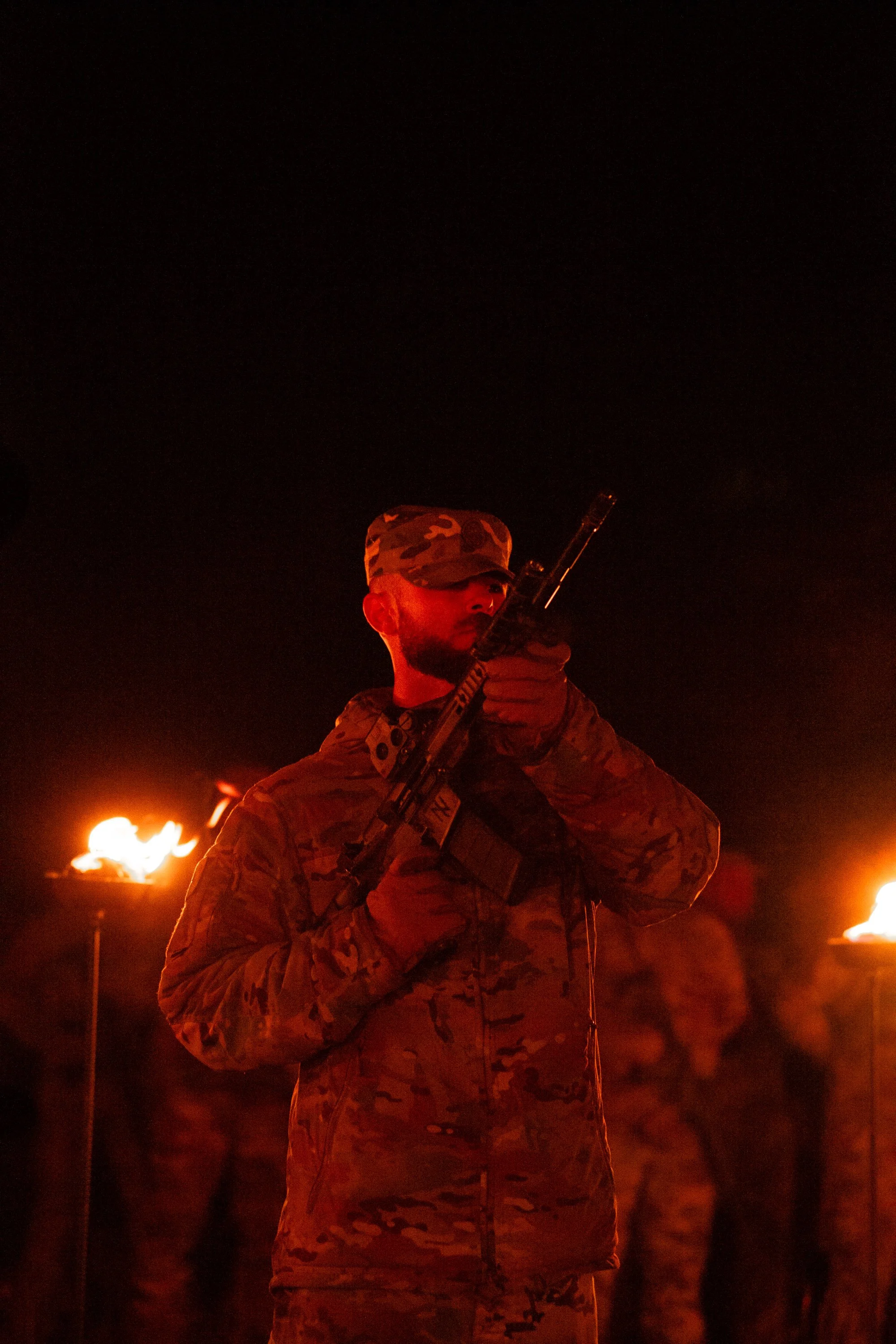
After each name there is a piercing cry: “REMEMBER!”. The formation screams in unison, in answer: “REVENGE!”. A synchronized clap of gunfire. The music dies, and 3 grenadiers fire into the sky, the parachute-illumination rounds setting the fog ablaze before they sink into the black river.
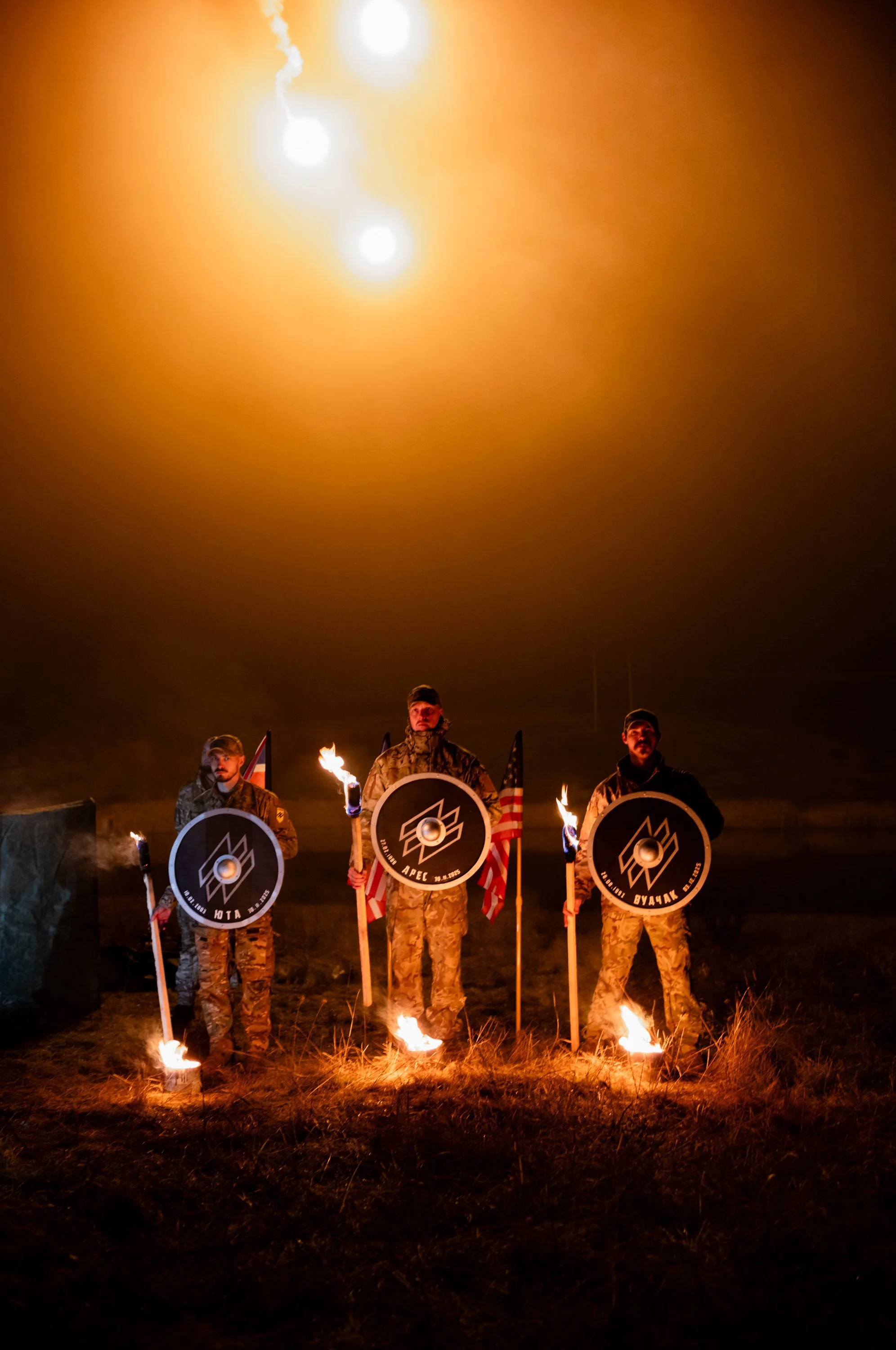
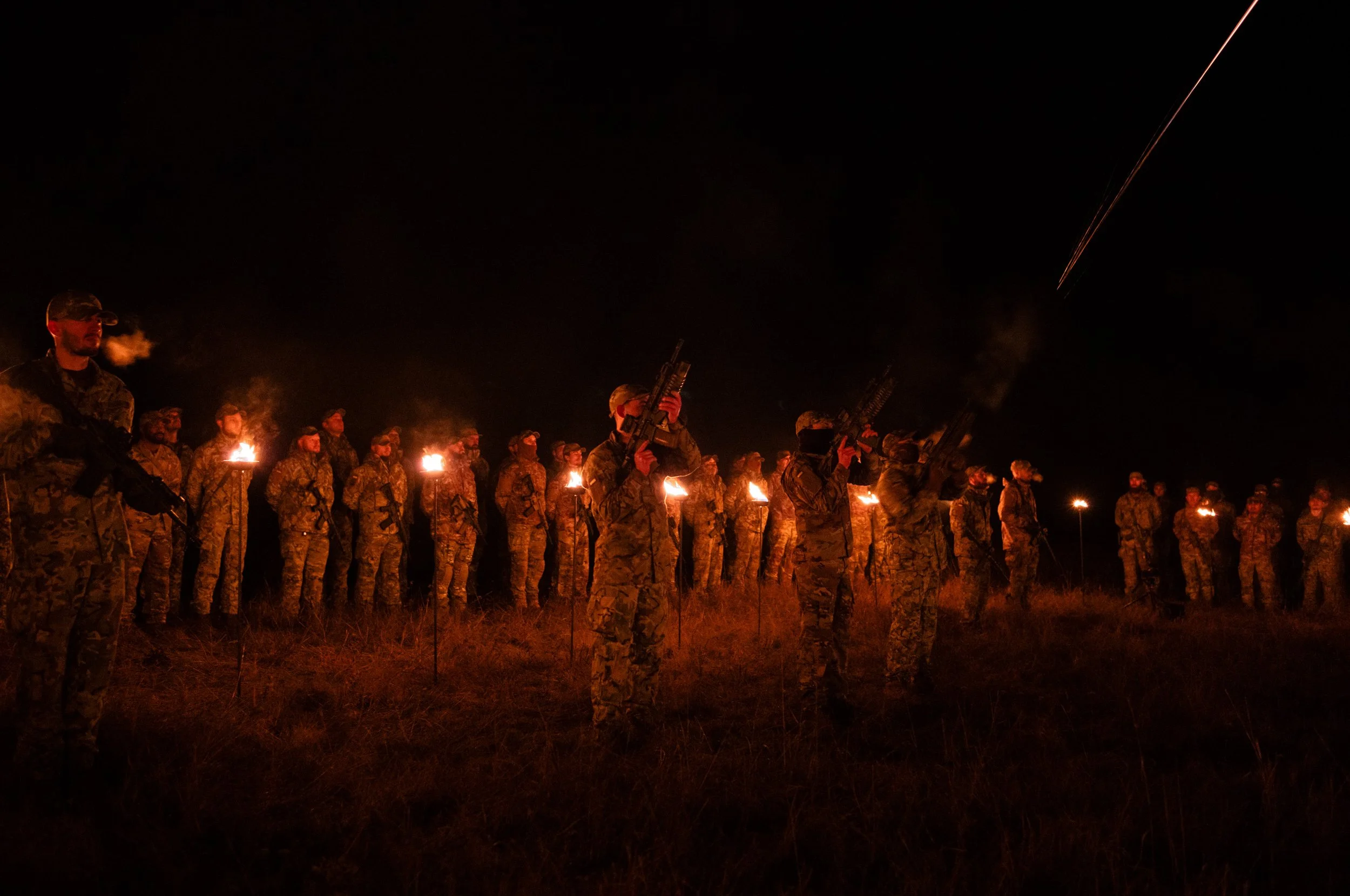
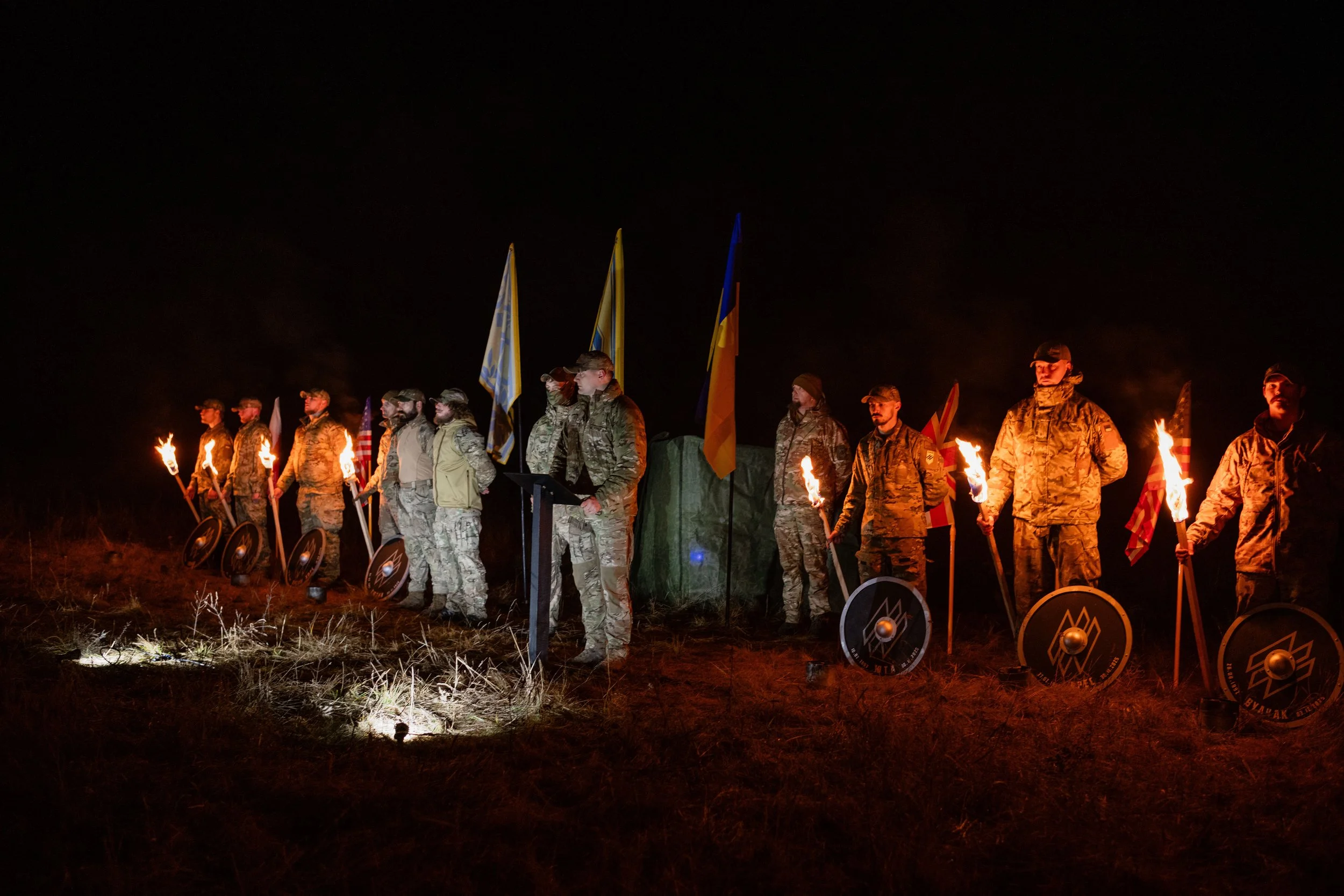
“Beretta”, will say that intuition led him to pick the winter solstice for the battalion’s Mysteriya. “Docent”, a veteran Harunjee with Azov will say that in both Pegan times, and early Ukrainian Christianity the solstice was believed to be the time when souls could most easily transition from earth to heaven, or as he says: Azov Heaven.
The Mysteriya ceremony has lasted just barely 15 minutes; the brevity is intentional: any longer and the large group of soldiers would likely be discovered by Russian drones. The Azov soldiers scramble into vehicles, which fishtail, slide, and churn black mud as they leave the ceremonial field.
Azovs’s International Battalion of foreign volunteers had been fighting during Azov’s Corps larger Mysteriya held during the winter equinox in September. Returning from their latest operation, one which net them prisoners, territory, and their own casualties, “Berreta” said “Today is a special day for all nations, and all times, it’s winter solstice, so when I was driving back from the mission, this idea appeared in my mind”.
When asked about the risk involved in gathering troops for the Mysteriya, Berreta believes it is crucial to have and maintain such traditions, as essential for the fallen as the living. Does he believe the elements of Ukrainian tradition have the same effect on the foreign soldiers who make up the group? “The emotions of the soul are the same whether you are a Ukrainian or a foreigner” he says with finality.
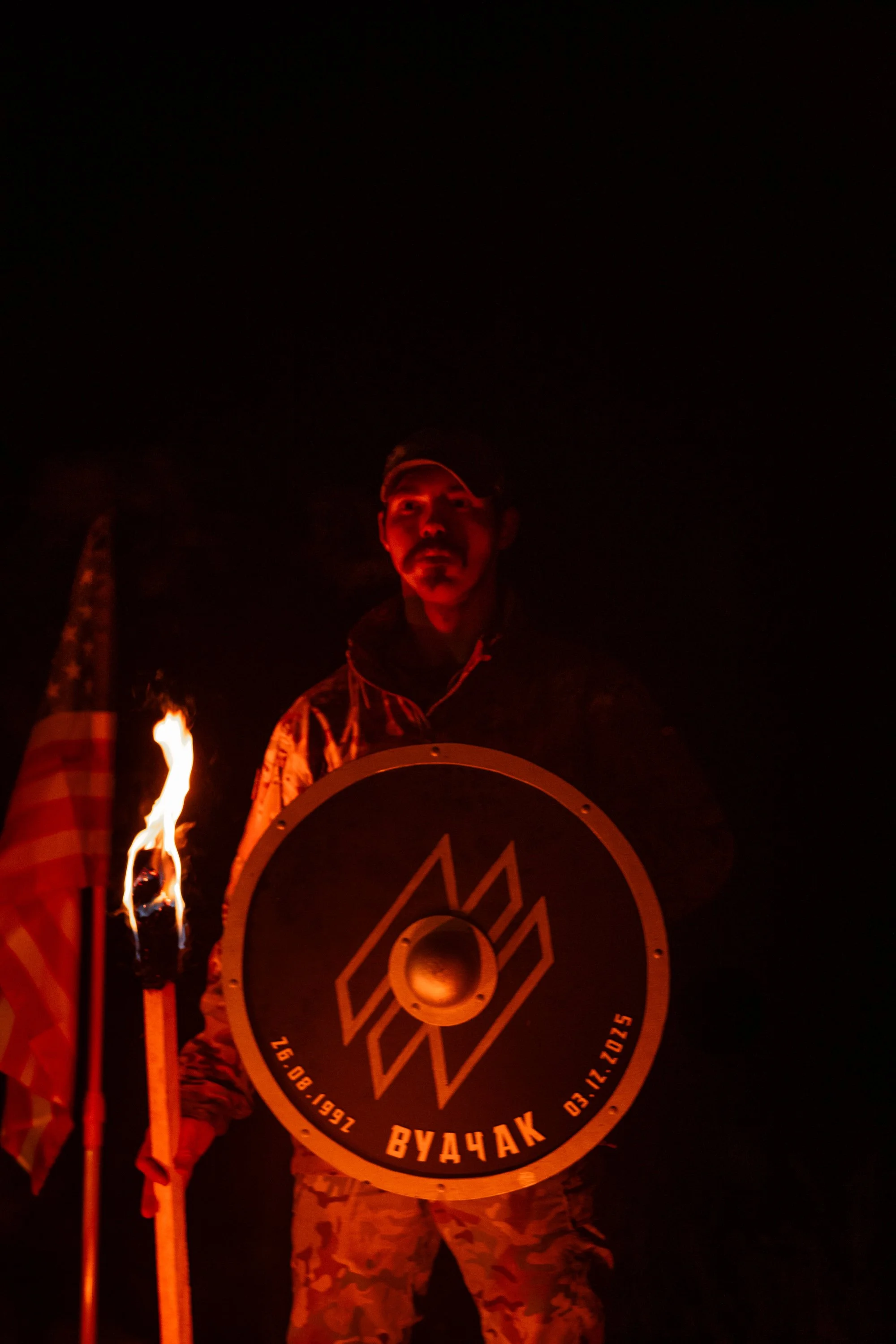
Azov, a unit famously ultra-nationalistic, hosting a unit of foreign fighters, seems antithetical. But outnumbered by their Russian adversary, military necessity aligns with a history of foreigners serving alongside Ukrainians in Cossack times. It was this period, where German was the military lingua franca that brought many germanic words into the Ukrainian language, says veteran Azov Harunjee “Docent”. Likewise he says of Pagans in Azov “Pagans aren’t a majority of people in Azov, but we always know that we have them”
Harunjee are a military speciality specific to Azov. Unlike Chaplains or Political Officers Khorunza are combatants, and must serve in combat before assuming the role. Like Chaplains, they concern themselves with the moral welfare of Azov soldiers, plan, and preside over ceremonies and rituals. Like Political officers, they instruct on military history, tactics and traditions. Their faith is not defined; many are Christian, some agnostic, some Pegan.
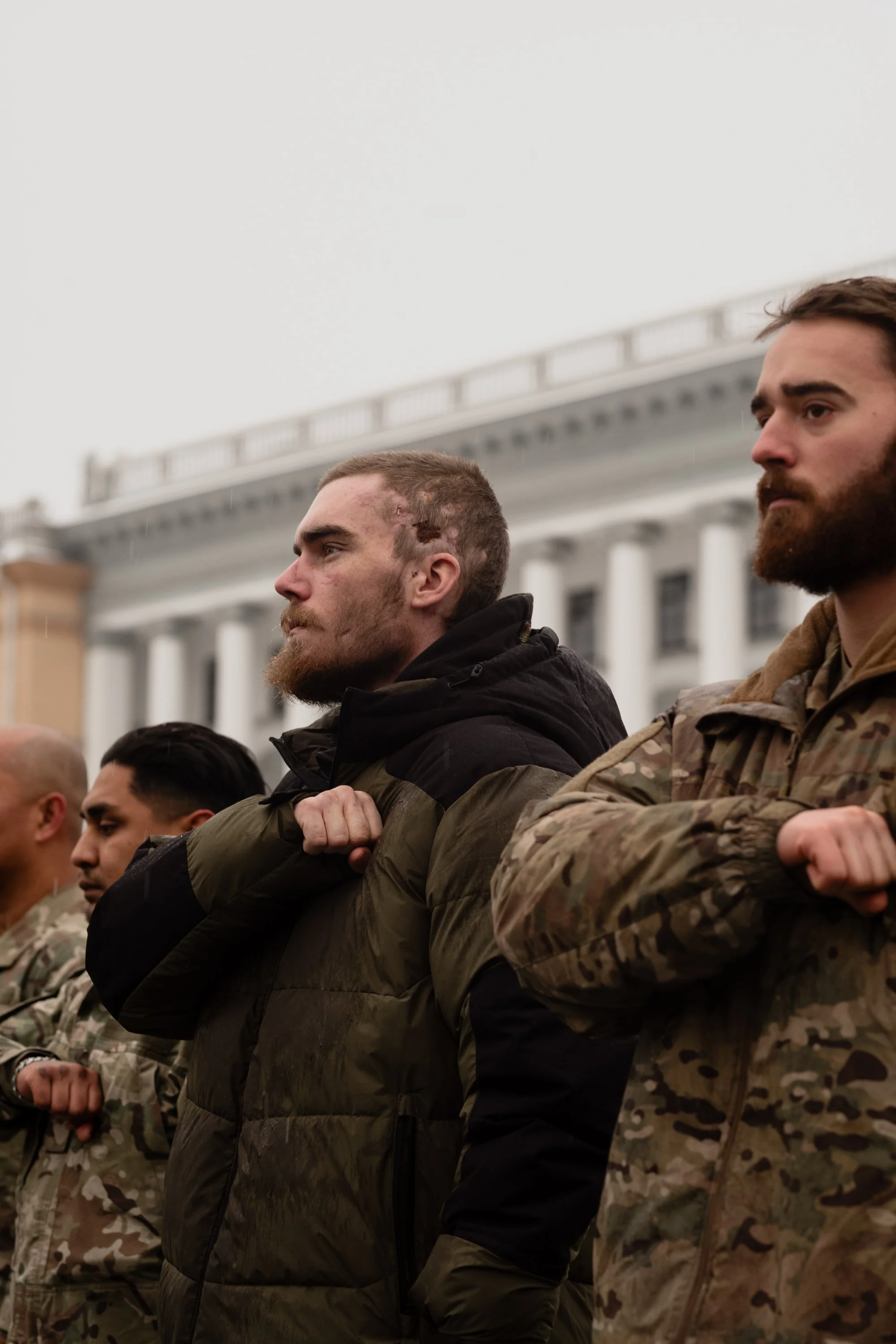
Khorunza predominantly come from University educational backgrounds, and their first task is instructional periods during Azov’s basic training. They are charged with instructing soldiers on martial traditions of the world, and in turn, where Azovs traditions find their place amongst them. Azov’s signature handshake (clasped forearms), and salute (fist leveled over the heart) are conscious choices meant to instill a sense of nation, as well as martial pride in Azov soldiers.
Azov symbolism has followed the trajectory of the war from fringe political symbols to popular symbols of resistance seen daily. They draw skepticism from international media, and a mixture of fear and hate from Russians. “Docent” who survived Russian captivity following the Azovstal siege, recalled how soldiers with the units “Idea of a Nation” tattoo were singled out for torture and interrogation. He explains the symbols evolution, from pre-soviet lettering, through the Patriots of Ukraine, an early political group that joined Azov at it’s founding, but still bursts out laughing, recalling “it really pisses of Russians. We like that they become mad at this letter, that’s also why we use it!”
On the symbolism of the Mysteriya “Docent” comments, “Why do we do this at night? The darkness symbolizes forgiveness. The fire symbolizes memory. Our fire breaks the dark”. The symbolic shields had their place in ancient Ukraine, while the saying “On the shield” of Helenic orgins, has made it’s way into military and civilian language.
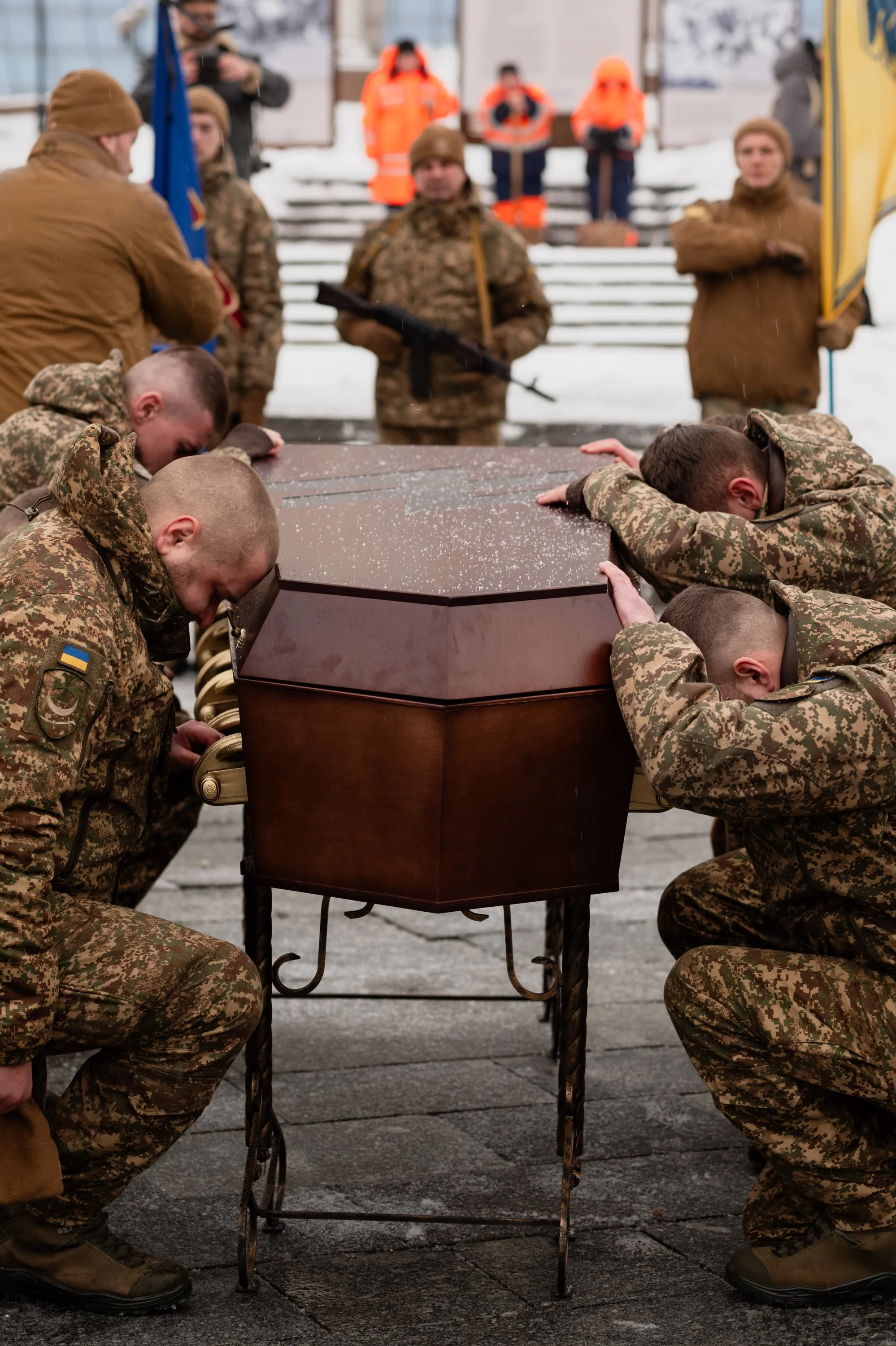
“Azov Heaven” is a phrase heard during Mysteriya, and snowy funerals in Kyiv, but especially after them. “The fighter joined Heavens Azov… and we all believe sooner or later, one day, we will all join Heavens Azov” Docent says. “That’s why Mysteria connects the Azov people who are physically here with the Azov in Azov Heaven”
If Berreta has his intuition, then “Sal”, another International Battalion soldier, as well as US Marine and Army Veteran, has his calling.
Following a disillusioning period in private security contracting, he says he experienced an epiphany.
“I found Jesus, I found God, It was the best thing that ever happened to me…it was the most peace I’ve ever had, from there I asked directions….for some reason the Lord pointed here, to Ukraine. I had no idea why….but this is like those stories in the Bible, you have to make that leap of faith”
He speaks in an unhurried tone, and similarly has a limping gate from a recent land-mine injury. The gravity and lethality of the war in Ukraine do not seem to have shaken the faith that brought him here.
TJ, an American platoon leader with the International Battalion, has been fighting for Ukraine since the start of the Russian full scale invasion of 2022. His enduring experiences here as a fighter, and as an American Marine Veteran make him ideal to ask how foreigners experience the Azov traditions: “For allot of guys it’s pretty new, you hear it, you study it, you watch Vikings on TV, that might be the closest you come to it”. It’s a learning curve he seems to imply, and continues “It’s real here, you’re not just saying words, you're actually acting it out….It takes time, but once you grasp it you feel it on a daily basis, you start to feel it before you go on a mission, and you feel it while in the battle itself”.
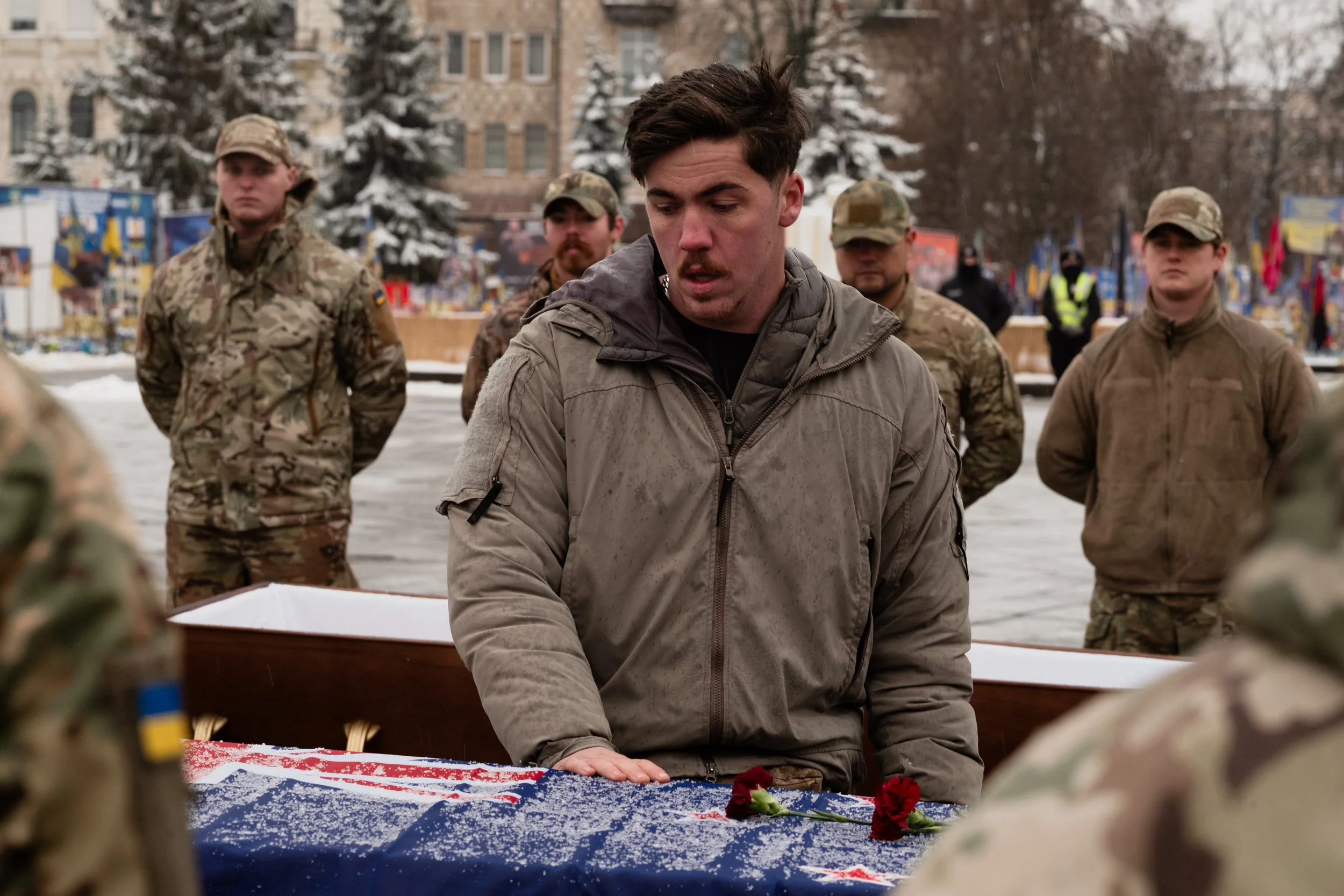
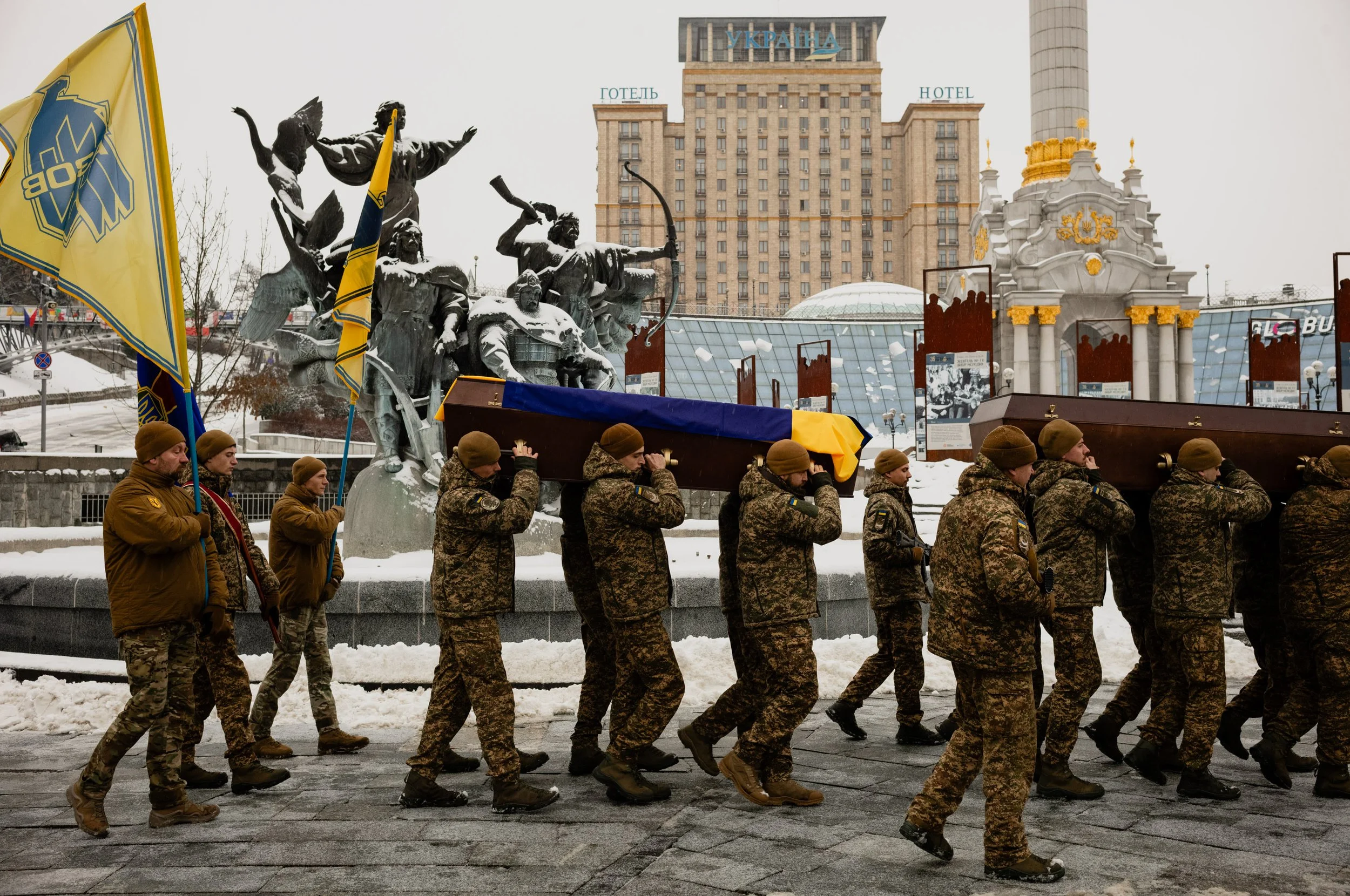
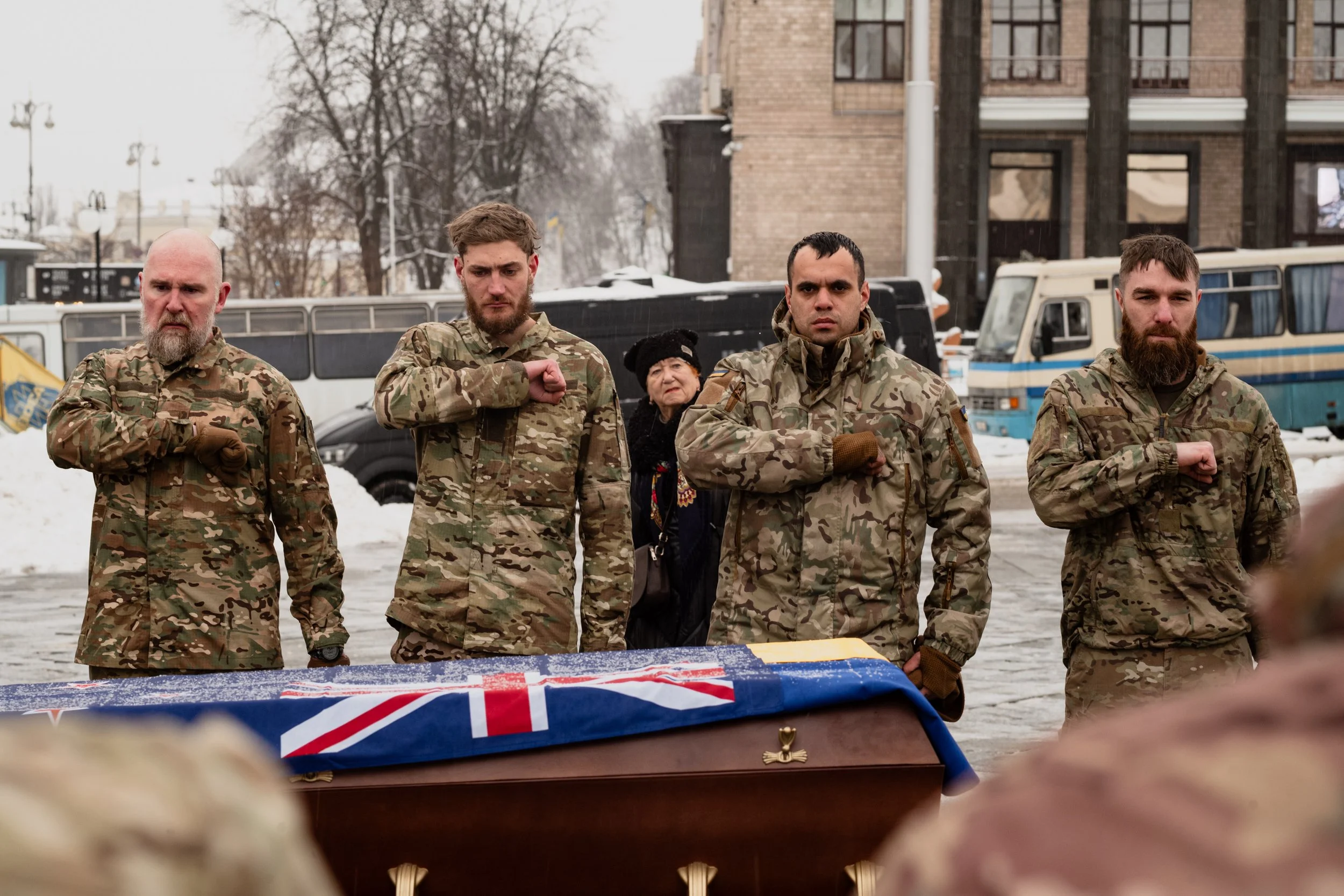
At a snowy funeral in Kyiv 2 weeks later, Azov’s International Battalion gathers for the funeral of two more soldiers. The men vary in ages from early 20s to late 40s, in races from Ukrainian, to Portuguese and American both North-and-South, they are indifferent to the unbandaged head wounds, the cast-bound legs and -17 degree weather but united in eyes filled with grief, hatred, and belief.