Under Drone Fire, Ukraine Evacuates Its Wounded
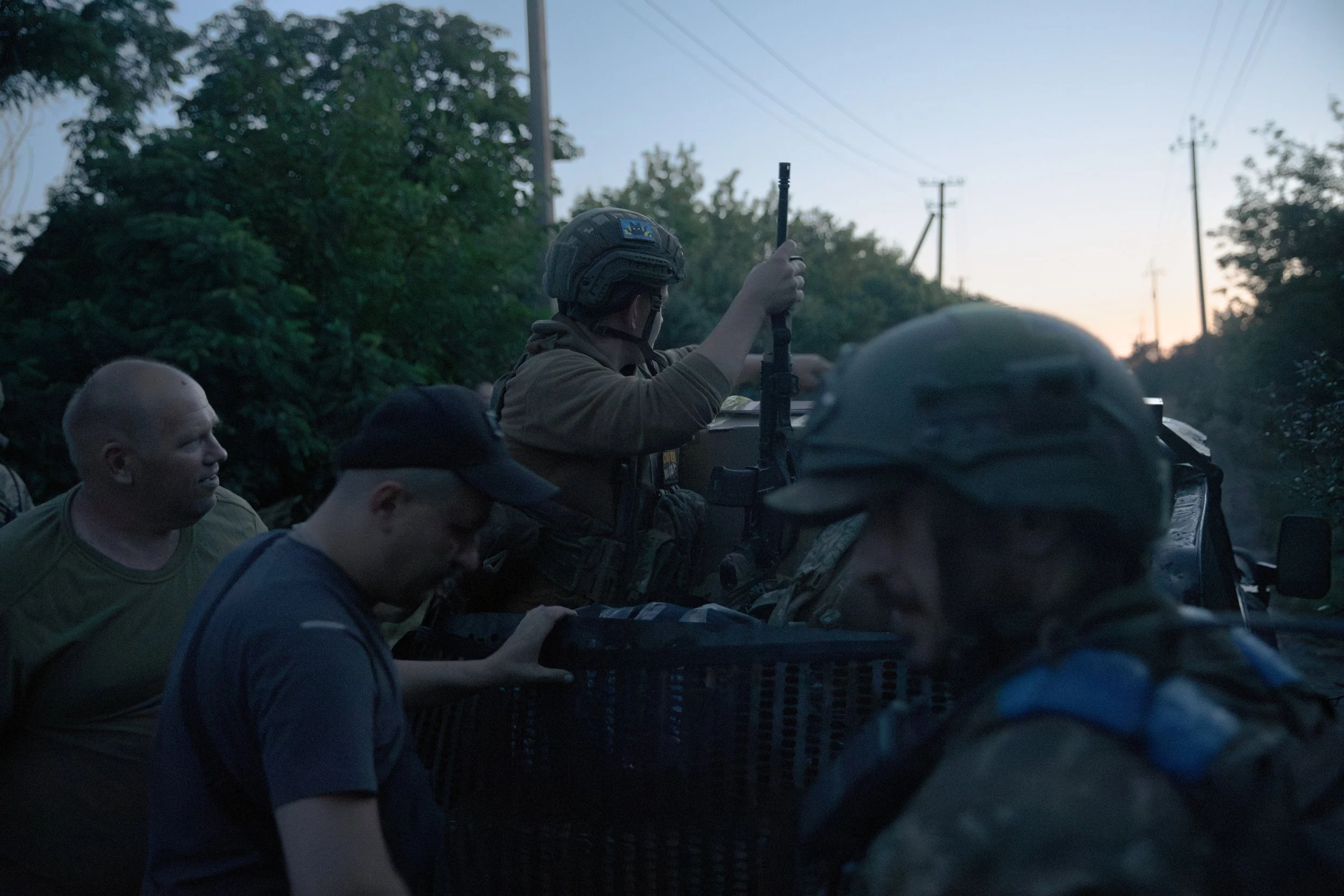
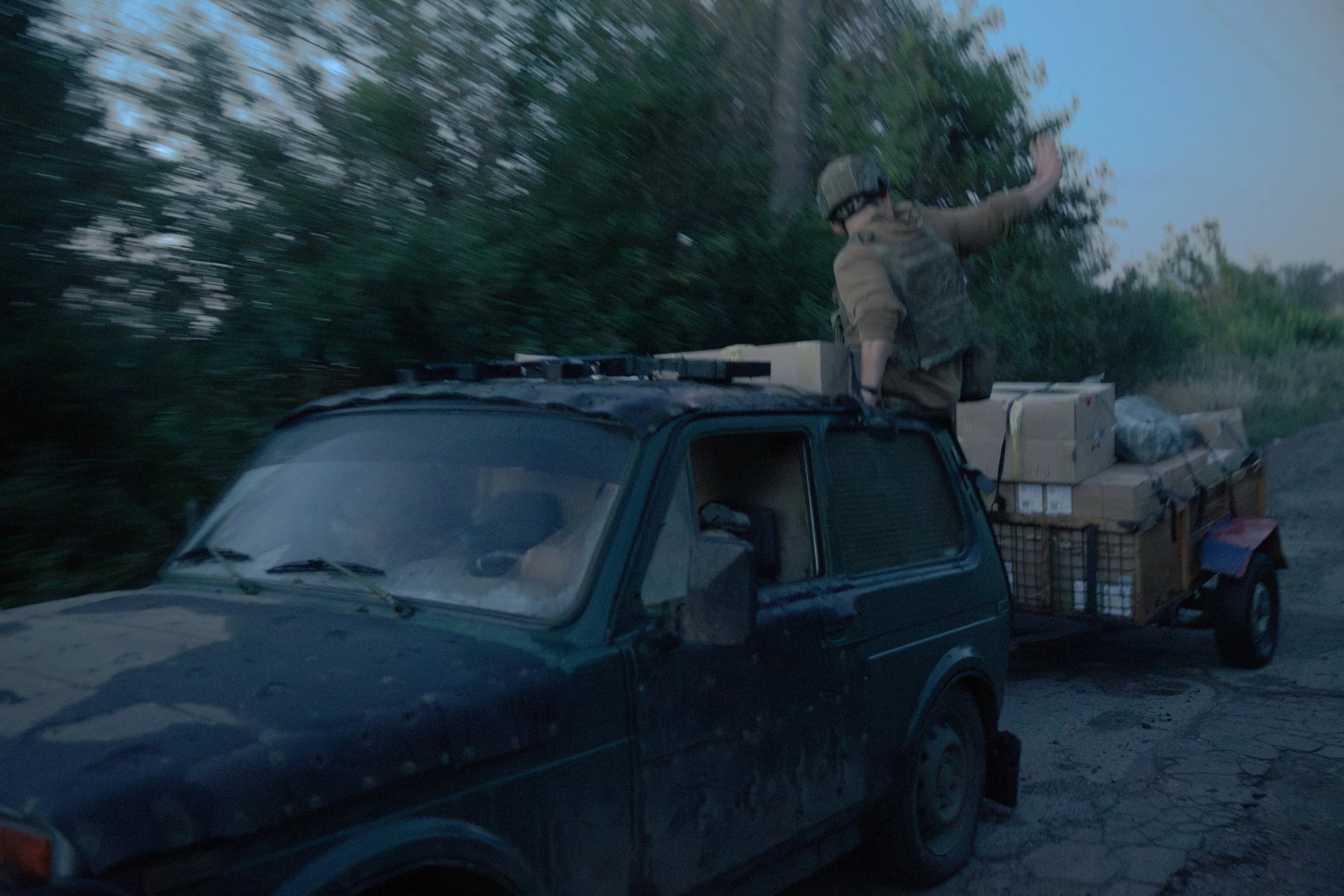
At first light, the men pile boxes into the back of an aging Lada. Haggard after a sleepless night, they work through the smoke of their cigarettes. A soldier still too young to grow a beard climbs in and settles on top of the damp cardboard boxes. He cracks one last joke, adjusts his helmet and chambers a round. At the first buzz, he must be ready to shoot down incoming drones. The tired Lada rumbles towards the Zaporizhia front. The farther it goes, the more dangerous the sky becomes.
In the south-east of Ukraine, 450 kilometres from Kyiv, the Zaporizhzhia front has become the focus of a renewed Russian offensive, a sharp reversal for an area that had remained relatively stable for nearly four years. In the first days of the full scale invasion, Russian columns crossing from Crimea swept through much of the region, eventually leaving more than two thirds of the Oblast under occupation. Today, the city of Zaporizhzhia stands less than 30 kilometres from the frontline.
This proximity is felt across the city. “The situation is getting worse”, says the head of the local State of Emergency Service (DSNS). “FPVs are increasingly targeting the city, striking military targets and civilians alike”. The southern districts of the city, already well within range of Russian drones, risk becoming an extension of the kill zone. “Their goal is to put psychological pressure on civilians, terrorising them and pushing them to leave”. Beyond the growing threat posed by drones, an ongoing campaign of air strikes has intensified across Zaporizhzhia since June. Multiple times a day, Russian forces launch glide bombs carrying large payloads with little precision, striking civilian infrastructure and killing indiscriminately.
Fifty kilometers east, towards the region’s main hotspots of fighting, soldiers from the 225th Brigade spend their last quiet moments away from the front, concealed in a treeline. They are gathered here for one purpose: evacuating casualties and bringing infantry as close to the front as possible. Under the cover of dense summer foliage, the men sit around a fresh pot of coffee simmering over a campfire. They prepare to head deep into the kill zone.
A few days ago, some of their comrades came under attack. They could not be evacuated until now. “Two are wounded, and one died” says the unit’s driver, callsign “Viking”, as he stares into the glowing ember of his cigarette. The commander, Tatar, calls the men together. Crests of the unit, tattooed large on either side of his neck, pulse as he gives the orders. Alongside the evacuation, two men are to be dropped off to replace the wounded.
Quick looks and trembling hands holding their rifles. The soldiers check their equipment one last time, nervously eyeing the white pickup they are about to jump into. The drive to positions has become one of the most dangerous aspects of the war in Ukraine. With thousands of drones saturating areas closer to the front every day, these journeys are now made with the help of drone detectors capable of intercepting enemy camera feeds, often buying precious moments before detection.
Against the threat posed by drones, shotguns, bulletproof vests and detectors are not always enough, and the men know it. Tatar calmly reaches out to them, holding two red and green bracelets bearing silver medallions of Saint Michael, spiritual protector of Ukraine. He gently ties the talisman around the men’s wrists. “This will be your protection against drones” he assures them. “It’s our electronic warfare”. As one final gesture before the road, he offers ice cream to his men. After making sure everyone is holding a cone, Tatar puts on his armour. Jumping in the bed of the pickup, he racks his Kalashnikov with the hand holding the frozen treat. A few bites are enough for him to finish the whole thing. Behind him, the engine hums. Not a second to waste. It is time to go.
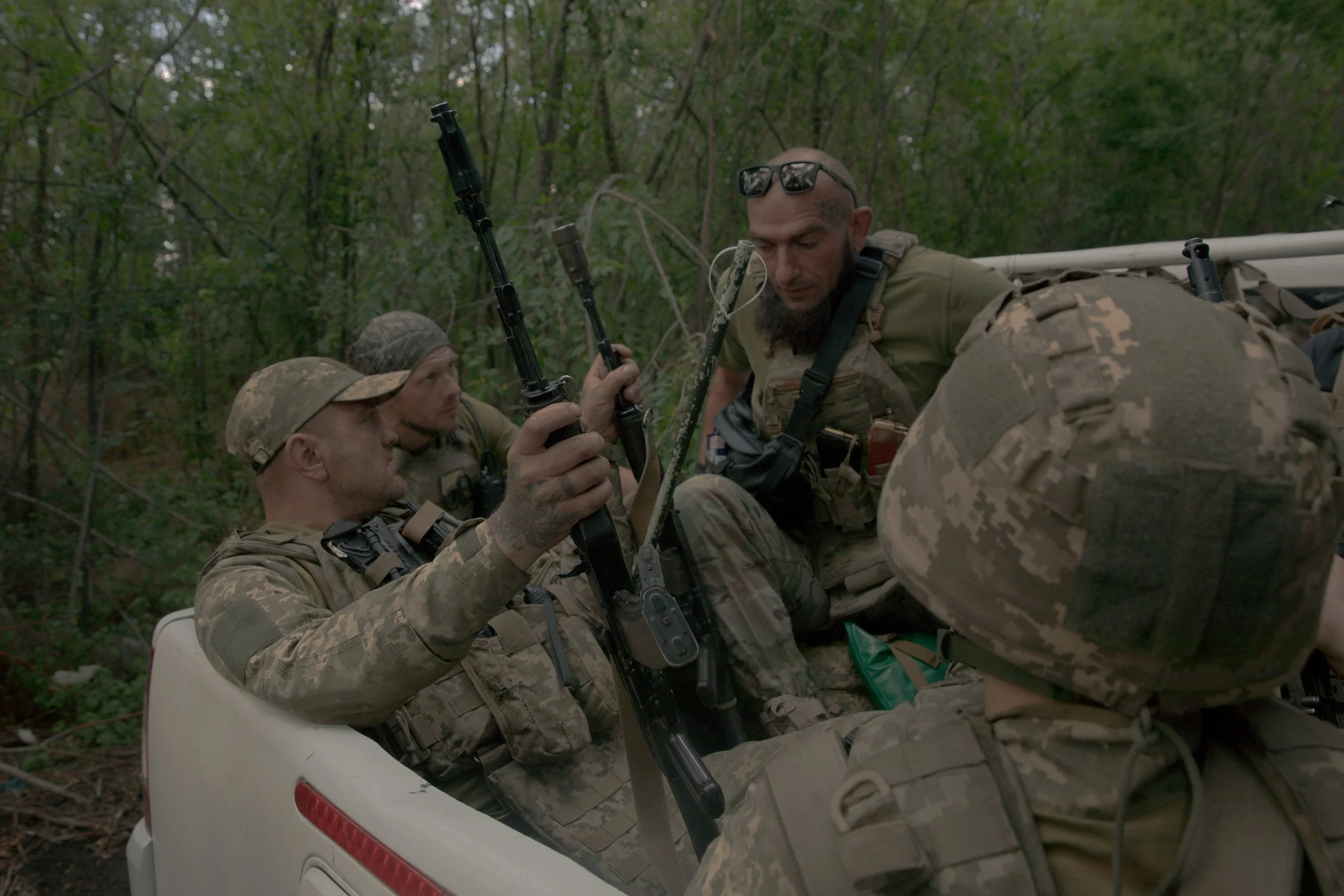
Jolted by cracks in the asphalt, the men cling to their rifles, anxiously scanning the sky for threats as wind and summer dust lash their faces. Columns of smoke rise lazily in the distance. The first anti-drone nets appear along the way, protecting the sparse traffic. Minutes and kilometres pass. Gutted houses line the road. A 19th-century church, built by German missionaries, lies shattered, its bricks hanging in the tattered nets. Empty concrete pillboxes and abandoned checkpoints remain from when the area was still in the rear.
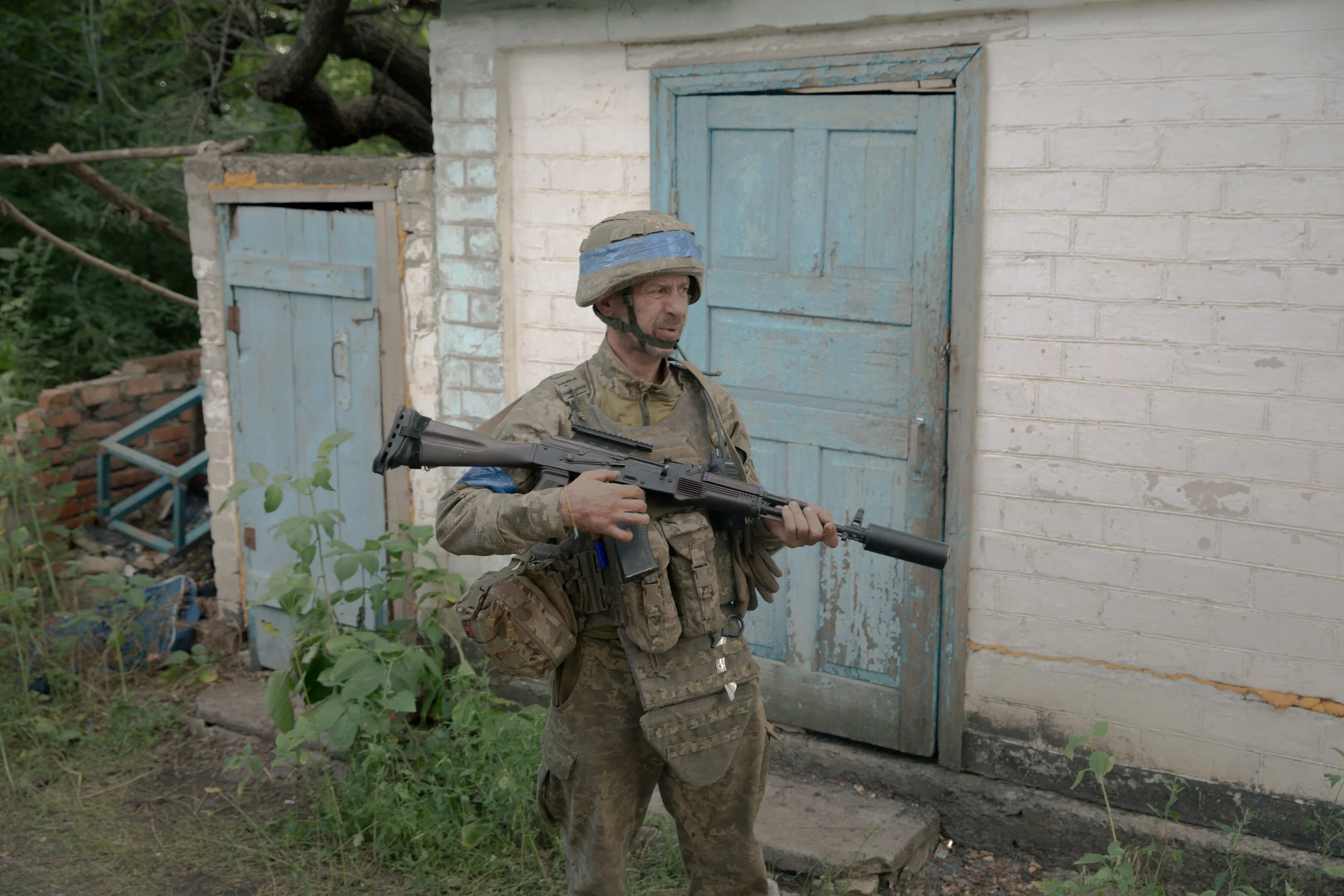
The stretch of deserted road is suddenly interrupted by a screaming soldier standing at the next intersection. “There was a drone there waiting for you guys. I shot it less than five minutes ago”, he says, pointing to burn marks on the side of the asphalt and a still smoking fiber optic canister. “There’s probably more up the road waiting” he warns before disappearing back into nearby bushes. The evacuation point is close, inside an abandoned farm hidden by overgrown vegetation.
The two soldiers will be dropped a couple of kilometres closer to the front. Neither knows whether he will come back. From the drop-off point, they will have to walk several kilometres to their position under artillery fire and drones, before spending the next months in a foxhole just a treeline from the Russians, repelling repeated enemy assaults. One of the soldiers grips his cap tightly to shield his eyes from the dust as the pickup speeds away, disappearing behind a treeline.
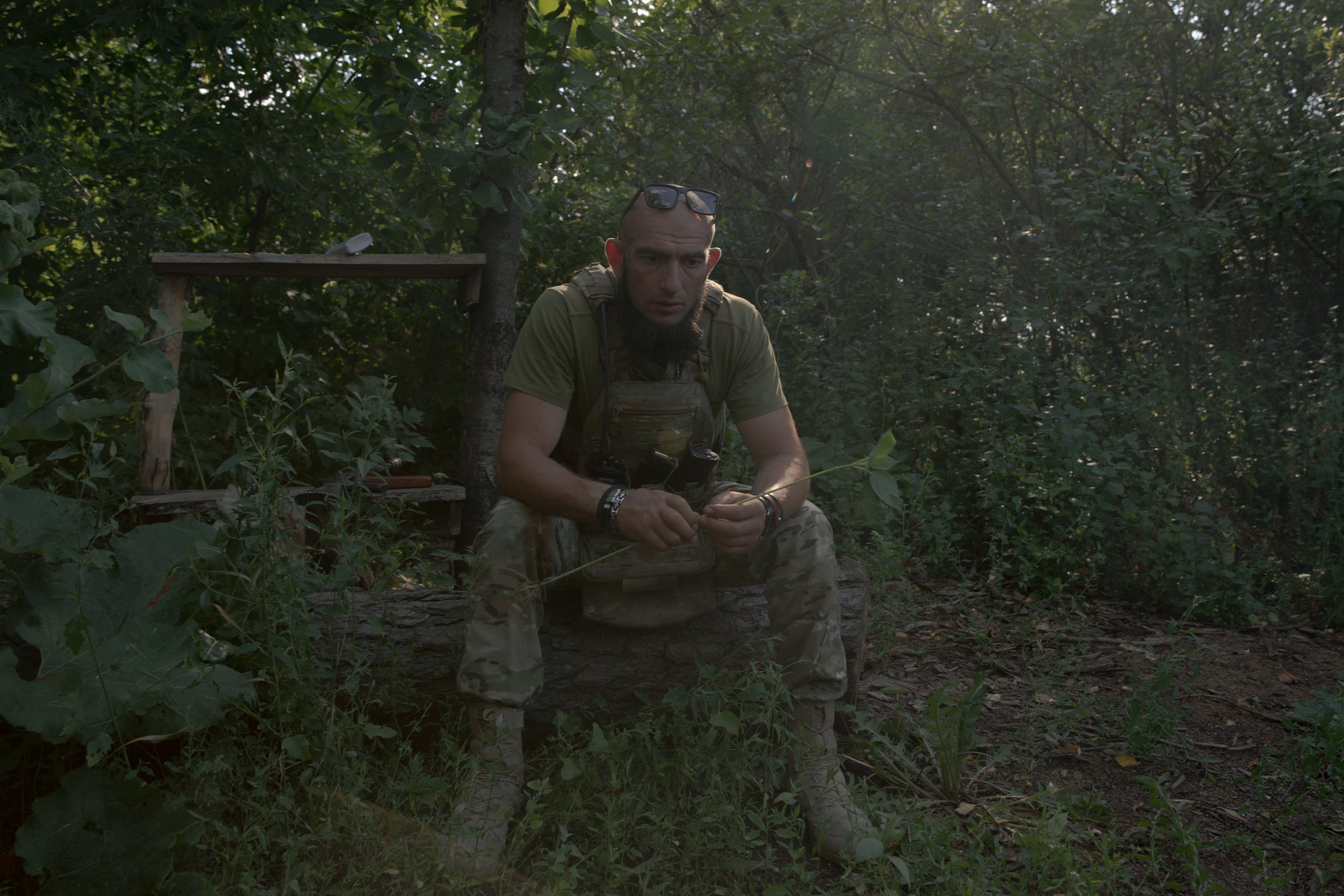
Five minutes go by. Ten. Then twenty. The group listens for the buzz of drones, hiding inside the farmhouse whenever one sounds too close. Layers of dust cover the creaking floorboards. Tatar and his men wait for the wounded. “The most difficult part is reaching the point where the wounded can then be picked up by a vehicle, because they first have to get there on foot,” Viking explains, as artillery shells whistle overhead. In the few kilometres between here and the frontline, any movement can be spotted by drones. Vehicles make larger targets and are easier to hit. The drone detector chirps constantly, and Tatar keeps an eye on the grey static of the screen. “The guys will be arriving soon with the wounded.” After more than thirty days on their position, and four days waiting to be evacuated, they are finally nearing the end of the road.
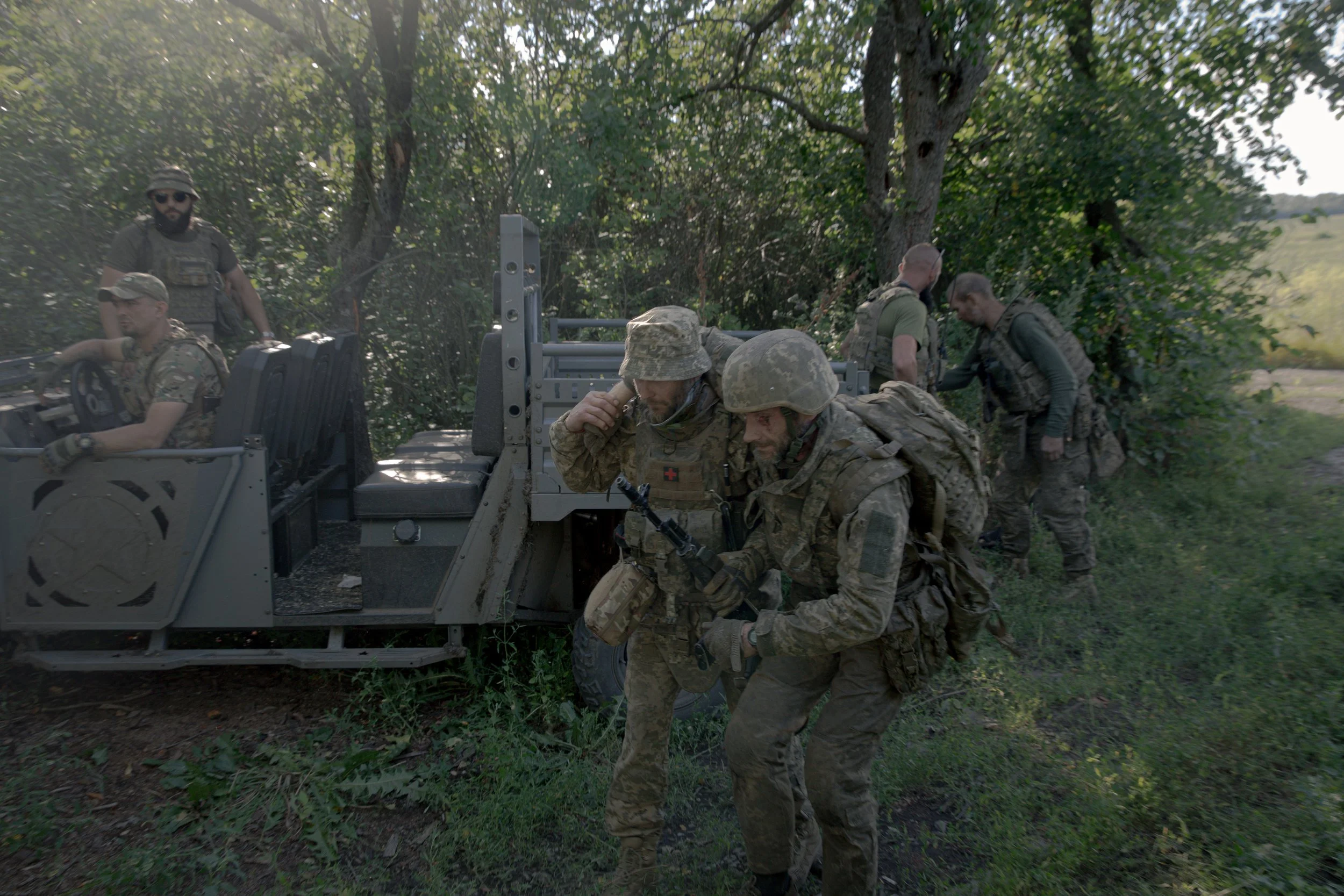
All of a sudden, the distinctive sound of a diesel engine draws closer, and the team gets ready. A buggy rolls in. Two soldiers, slumped in the back seats in filthy uniforms and reeking of blood and sweat, hurriedly clamber out. One struggles to walk, leaning heavily on his comrade. Where his left eye should be is nothing but a crust of dried blood. His legs are peppered with shrapnel. Within thirty seconds, they are transferred to the back of the pickup and are taken beyond the Killzone. Buggies and ATVs, smaller and more agile under contested airspace, can reach evacuation points that larger vehicles cannot, before transferring the wounded.
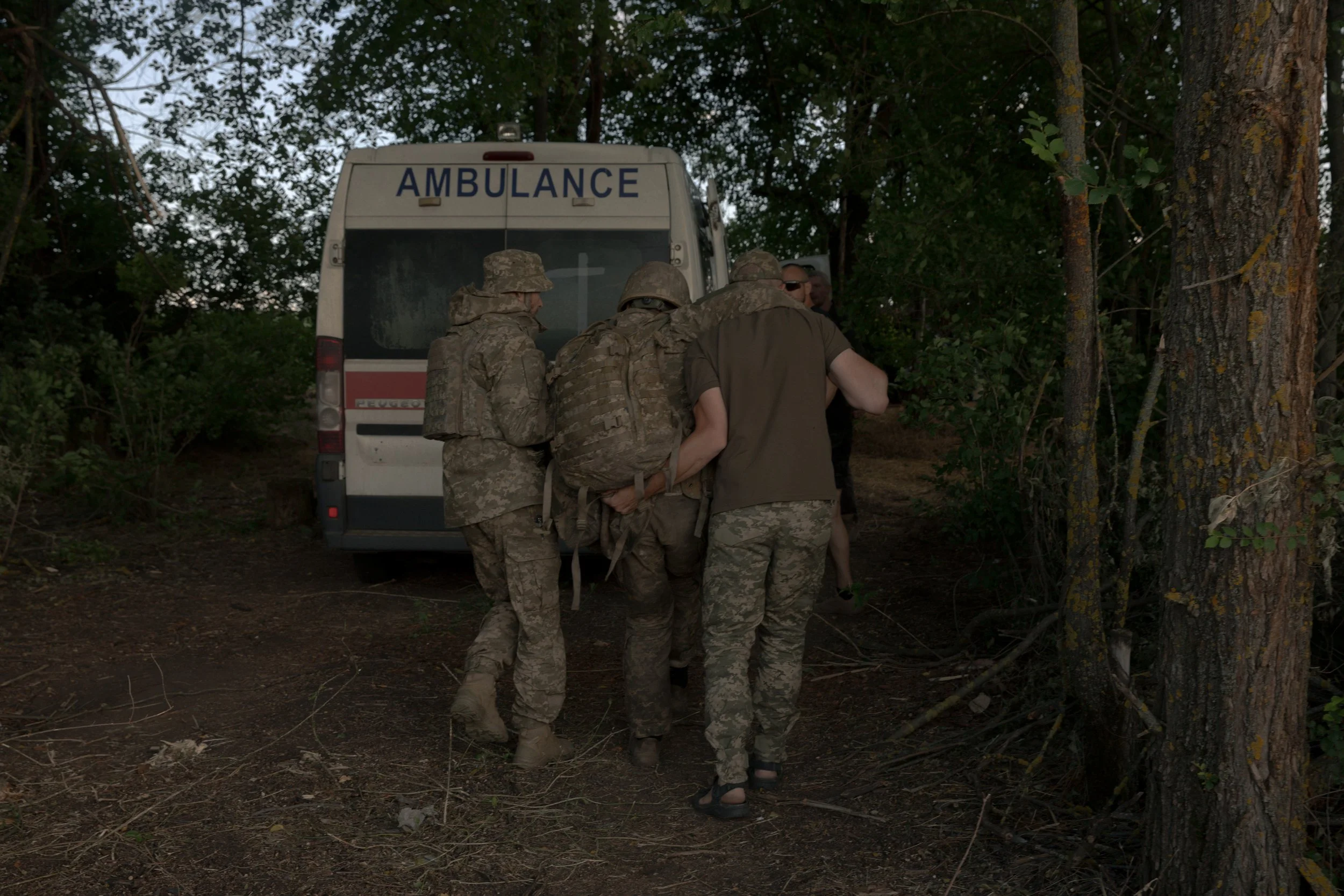
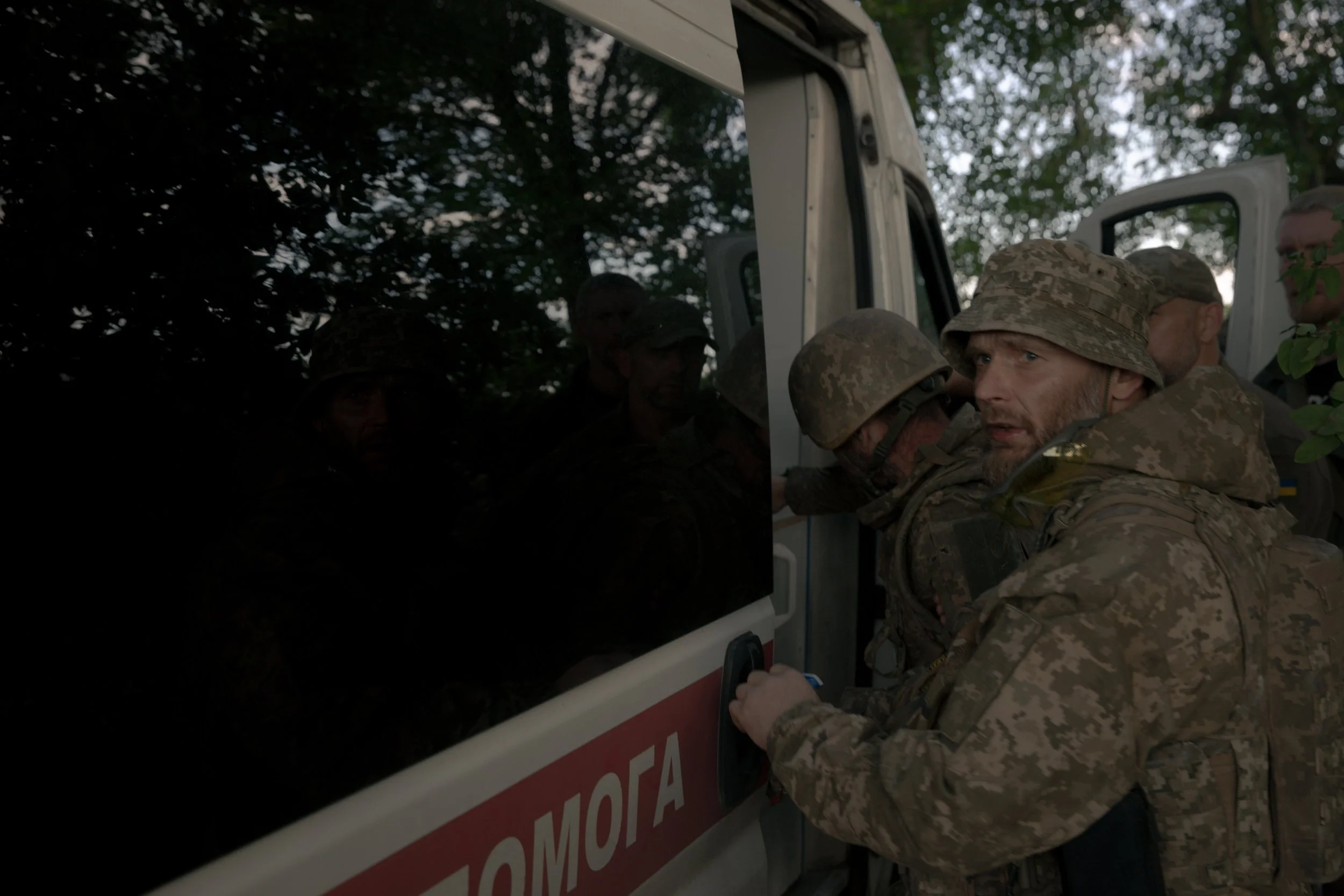
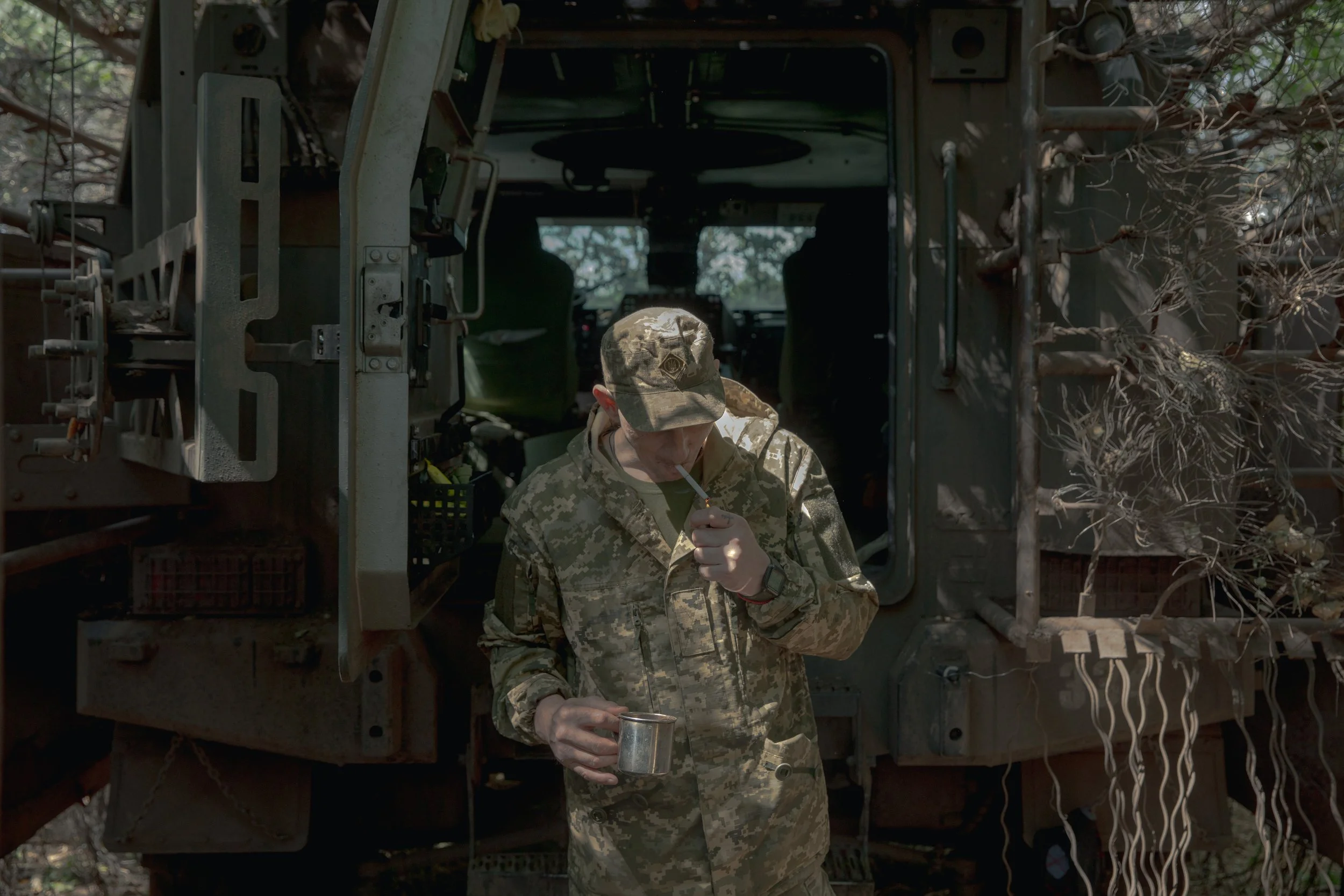
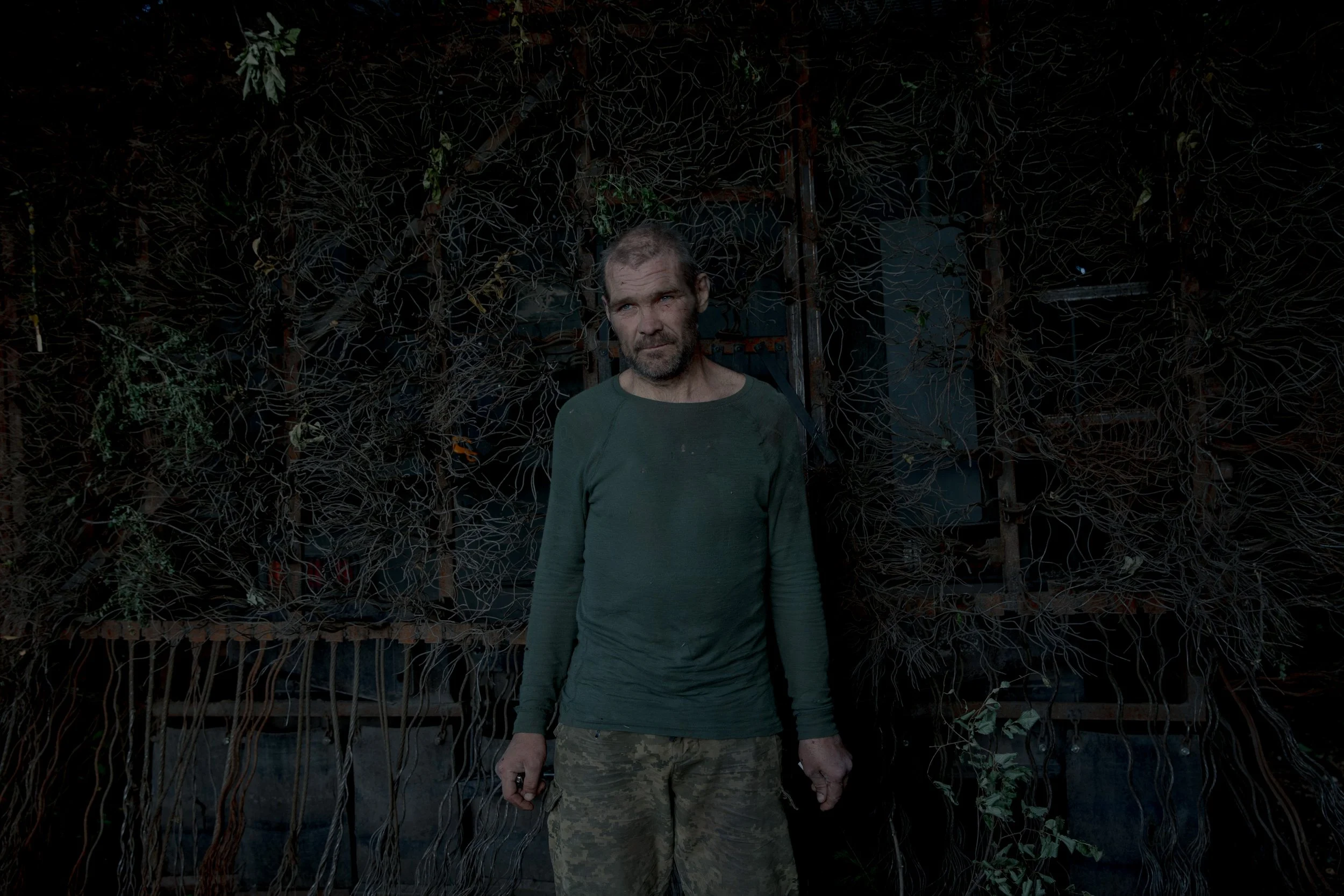
His face covered in cuts, Vova, 44, stands in the shade of an armoured car covered with anti-drone spikes. He lights a cigarette with trembling hands. “We’d been at the position for more than a month,” he finally says. For several days, he and two other soldiers waited under constant fire for a chance to evacuate. He glances towards his comrade, still being assessed by medics. “He could barely move. He was crawling on all fours under painkillers.” Vova had also dragged another comrade, whose intestines had been perforated by mortar fire. “For two days, I dragged a dying man. In the end, he died.”
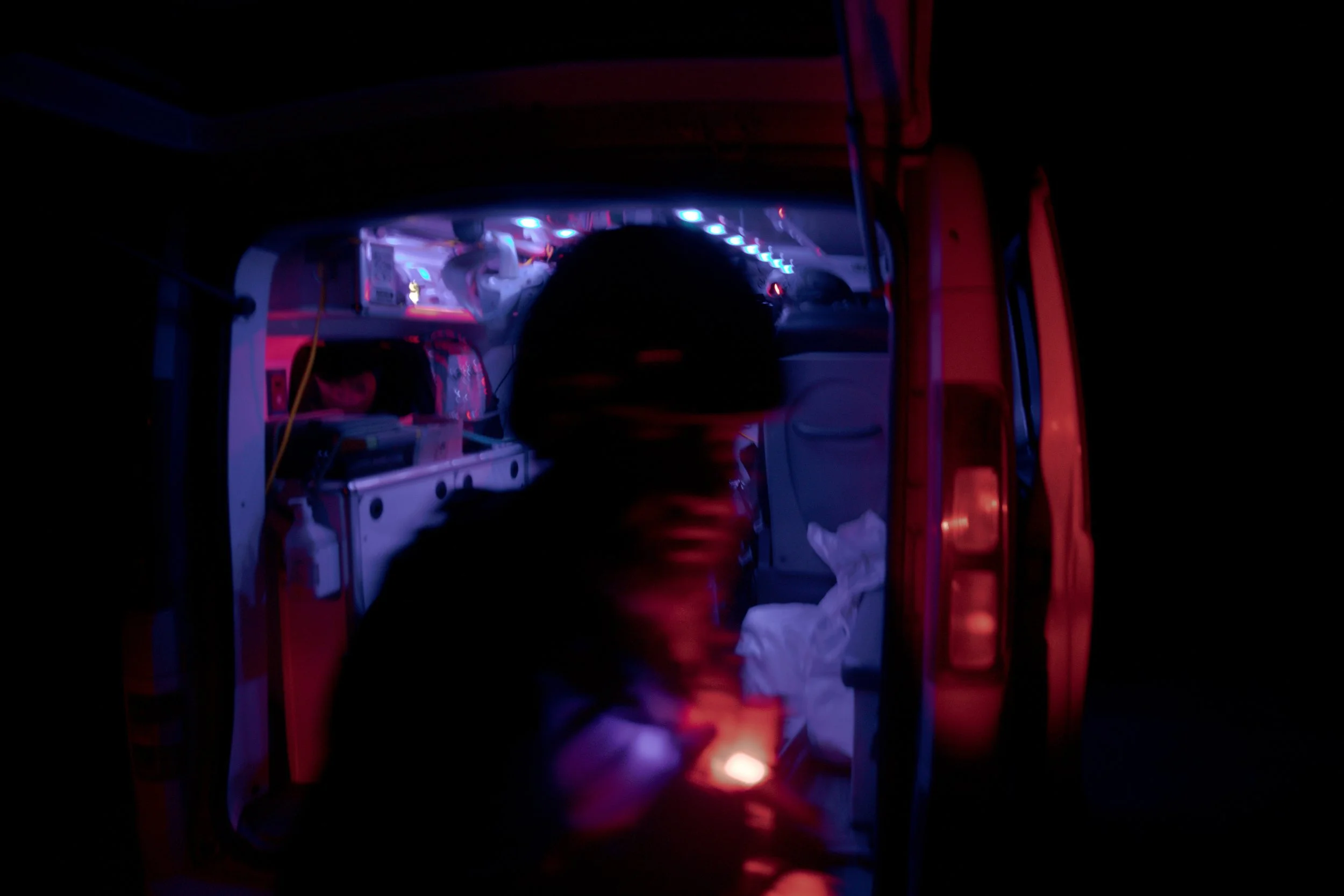
For the gravely wounded, getting out of the kill zone is only the first step. Hidden beneath the ruins of a residential building in a nearby village, the medical team of the Da Vinci 1st Assault Regiment races to stabilise the wounded. A once grimy basement now houses a modern underground stabilisation point filled with the beeps of heart monitors. Two operating tables stand beneath bright surgical lights. Smaller treatment rooms extend deeper underground while a handful of recovery beds fill the adjoining corridors. Ahead of what could be a long night, surgical instruments line the tables as IV bags are readied for the next casualties.
Mykhailo knows this subterranean maze all too well. Since the beginning of the war in Donbas in 2014, he has anaesthetised the broken bodies of soldiers as they head into the operating room. He is currently two months into a six-month shift at the stabilisation point. “War is a trauma epidemic”, he says gazing absently at his steaming cup of tea as he waits for the first patients to arrive. “It takes days for many of the injured to get to the medical point, the evacuations are more and more difficult. But on the other hand, new medical procedures are keeping them alive longer.” The mass introduction of tourniquets has been a defining factor in prolonging the survival of wounded soldiers before treatment, despite certain drawbacks. “In 2014, bleeding was a big problem because we didn’t have tourniquets. Now, we have a problem with amputations because many tourniquets are not used correctly”.
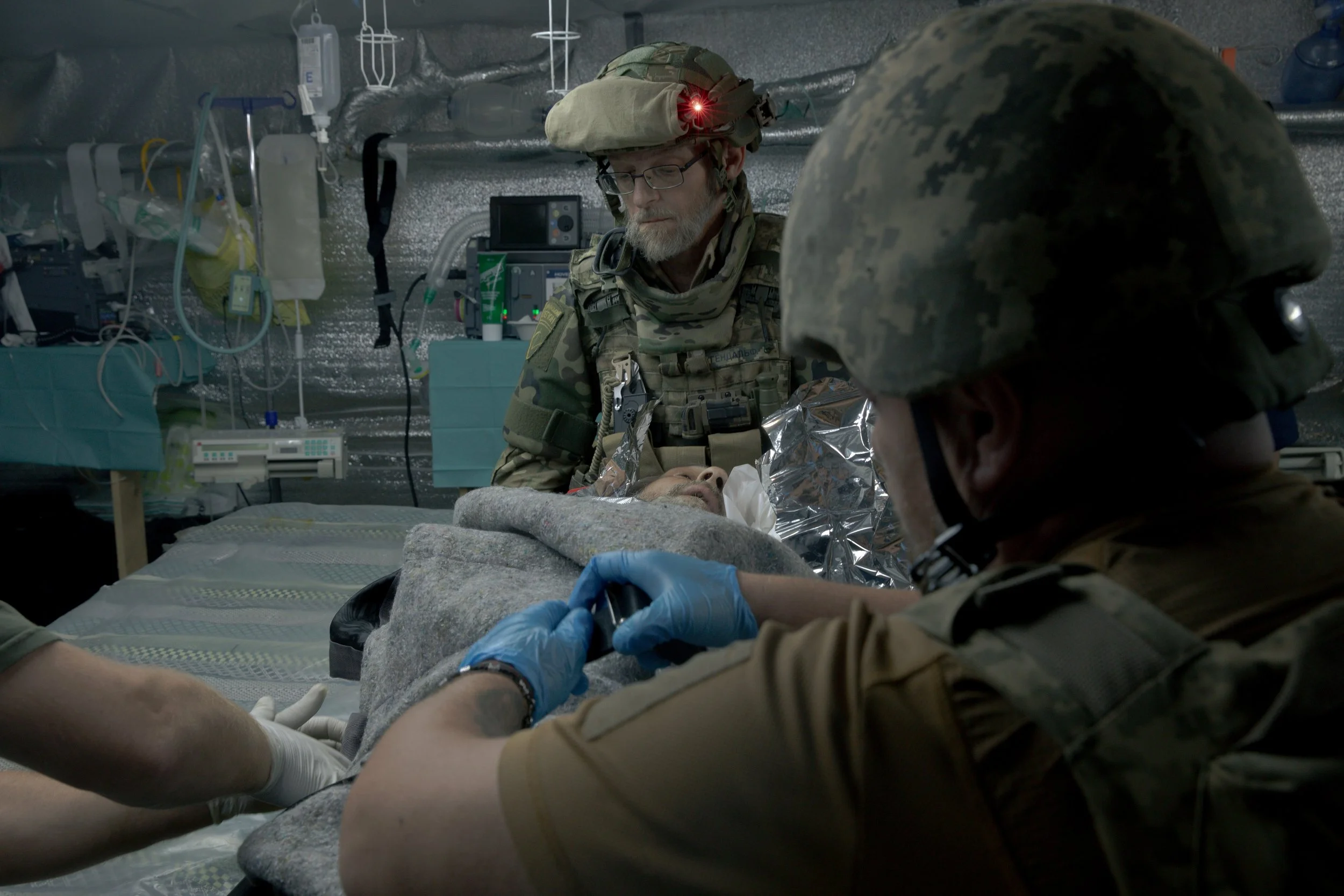
Mykhailo moves to his station and begins to prepare. The first casualty is about to arrive. Throughout the night, a steady flow of wounded soldiers passes through the stabilisation point. Concussions. Trench foot. Shrapnel. Third-degree burns. Paramedics in heavy armour come and go under the glow of red lights. 5:15 am. The bell rings in the corridor. It’s the signal. From the back of the operating room, a shout: “Traumatic amputation”. The team rushes outside into the dawn. In the trunk of a 4x4, a soldier puffs on a cigarette. What remains of his left foot dangles at the ankle in a bloody mess. He was sitting in a Humvee when an FPV carrying a shaped charge struck beneath the wheel arch. The blast tore through the chassis and his foot on the other side. He flicks his butt as he is rushed inside on a stretcher.
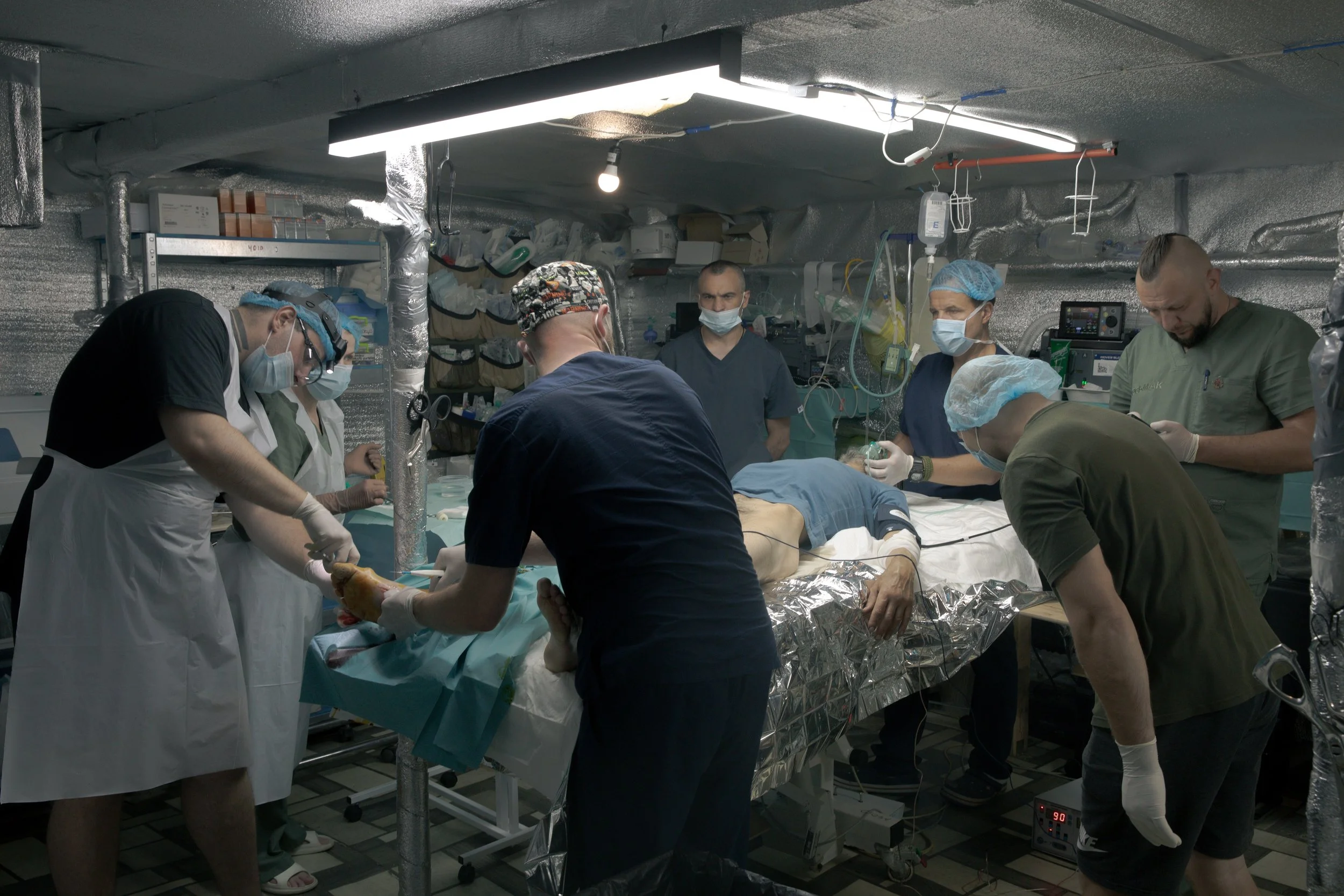
In the safety of the underground, the man is rushed to the operating room. A tourniquet tied around his upper thigh has prevented further blood loss, but he is still in critical condition. Medical personnel bustle around the stretcher, readying the room for the procedure. On the operating table, his clothes are cut off with trauma shears while Mykhailo administers the anaesthesia. Each member of the team repeats gestures they have honed over hundreds of surgeries, over hundreds of different men with the same injuries.
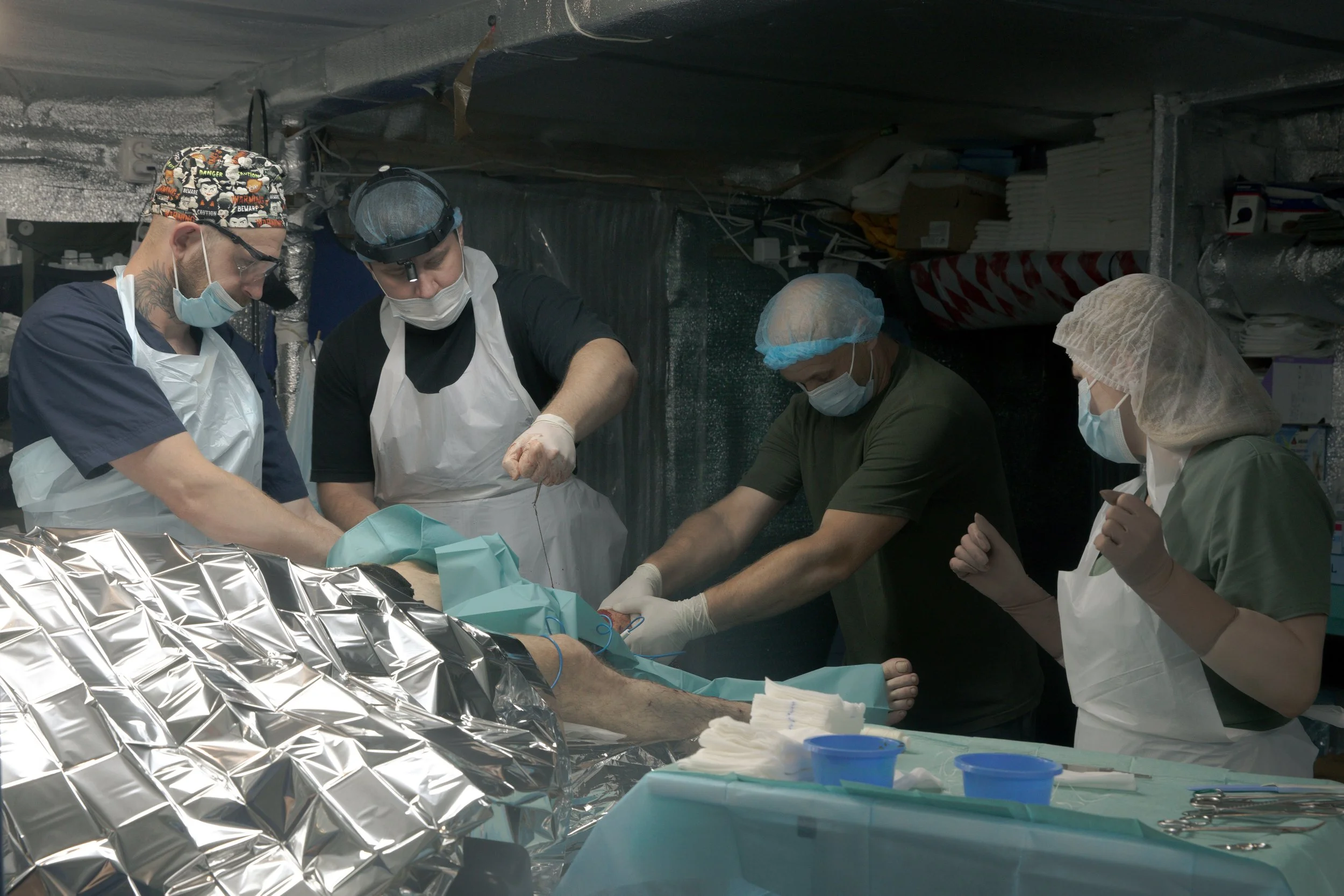
A nurse disinfects the wound, hydration fluids hanging from IV drips attached to the ceiling are injected in the soldier’s arms as he fades out of consciousness. With nothing left of his foot to save, amputation is necessary. Doctors make the necessary incisions along the leg. The cut will be above the ankle, but below the knee. The more joints left, the less rehabilitation needed. A surgeon takes out a Gigli saw, a long flexible wire used for bone cutting. Three doctors gather near his leg. One cuts while the others stabilise the leg. Less than ten minutes later, the amputation is complete. The table is cleaned. Soon, another casualty will be on the way.